Torn between the romance of a 1920s Coral Gables charmer and the ease of a brand‑new build? You are not alone. Choosing between historic character and modern comfort is one of the biggest calls you will make as a buyer here. In this guide, you will learn how these homes differ in architecture, layouts, maintenance, insurance, financing, and long‑term value so you can buy with confidence. Let’s dive in.
Coral Gables at a glance
Coral Gables was designed in the 1920s as a planned community with Mediterranean Revival influence. Many of the most prized homes stand near the Biltmore area, Miracle Mile, and the Old Cutler corridor. To understand the city’s origin story and design vision, explore the history at the Coral Gables Museum.
The city actively preserves historic character. If a property is designated historic, exterior changes typically require city review and a Certificate of Appropriateness. Across the city, construction follows the Florida Building Code for wind and hurricane resistance, which influences both new builds and permitted renovations.
Historic homes: what to expect
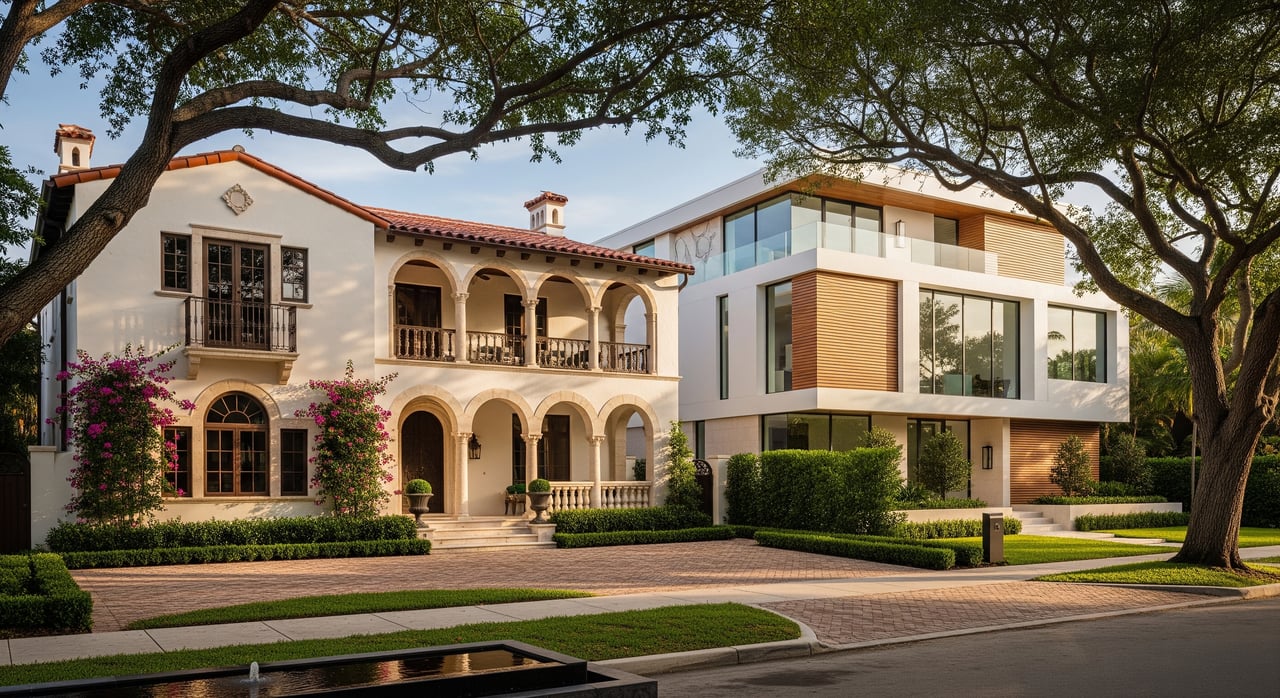
Historic homes in Coral Gables often showcase Mediterranean Revival, Spanish Colonial Revival, Mission, or Colonial Revival styles. Look for stucco exteriors, clay barrel tile roofs, arched openings, decorative tile, and ironwork. Many feature courtyards, loggias, and porches that fit South Florida’s climate.
Floor plans tend to be more compartmentalized. Expect defined living and dining rooms, smaller kitchens by modern standards, and 2 to 4 bedroom footprints. Some older layouts include service areas that can be reimagined during renovations.
Lots often have mature landscaping and established trees. Historic parcels near central Coral Gables can be smaller but carry strong per‑square‑foot values due to walkability and location. Materials are usually solid masonry or stucco over block with wood single‑pane windows and long‑lived clay tile roofs if maintained.
Newer homes: what to expect
Newer Coral Gables homes vary in style, from crisp contemporary to updated Mediterranean influences. Many new-builds borrow historic details while adding modern materials and energy‑efficient systems. Impact-rated windows and doors are common in recent construction.
Layouts favor open-concept living, larger kitchens, and generous primary suites. You often get multiple en‑suite bedrooms, higher ceilings, integrated indoor-outdoor spaces with large glass doors, and practical rooms like mudrooms and laundry. Garages, smart‑home features, and efficient lighting are typical.
Lots can be infill or larger assembled parcels for luxury builds. Landscaping is often newer and designed to be lower maintenance.
Lifestyle tradeoffs
Historic homes deliver unmatched curb appeal and uniqueness. Interiors feel cozy and character‑rich, and outdoor courtyards elevate daily living. That said, modern entertaining and large furniture can be harder to fit without thoughtful renovations.
Newer homes emphasize convenience. You get flexible, open spaces, big kitchens, and ample storage. If you prefer turnkey living with fewer near‑term projects, a new or fully renovated home may fit your lifestyle.
Maintenance and inspection realities
Buying in Coral Gables means planning for the climate and age of systems. Here is what to expect.
Common issues in historic homes
- Roofs: Clay tiles can last, but older underlayment and flashing often need replacement. Without modern underlayment, leaks are more likely.
- Electrical: Outdated panels or wiring can pose safety and insurance issues. Lenders and insurers may require updates before closing.
- Plumbing: Galvanized supply lines restrict flow and corrode. Cast‑iron drains can fail as they age.
- Windows and doors: Original wood sashes are beautiful but may be drafty and require specialized restoration or period‑appropriate replacements.
- Moisture and termites: High water table and tropical pests demand regular maintenance, grading, and treatments.
- Insulation and envelope: Many older homes lack modern insulation. Retrofits are possible but can be complex.
- Hazard materials: Pre‑1978 paint may contain lead. Some legacy materials can include asbestos in adhesives or older roofing components.
Common issues in newer homes
- Construction quality: Even new builds can show issues like improper flashing or grading errors. A detailed inspection is still essential.
- Systems complexity: Smart systems, pools, and advanced mechanicals require routine service and documentation. Warranties and permits matter.
What your inspector should cover
Use a licensed inspector who follows recognized standards, such as the ASHI Standards of Practice. Ask for a full roof evaluation, electrical service review, plumbing material identification, HVAC age and capacity check, moisture scanning, termite inspection, exterior envelope assessment, pool equipment review, and safety devices.
Insurance, financing, and code
Insurance is a major cost factor in Miami‑Dade. Roof age, impact protection, electrical updates, and prior flood claims affect premiums. Review your flood zone status with the FEMA National Flood Hazard Layer, and learn about flood insurance basics at the NFIP’s FloodSmart site.
Elevation and resilience planning matter. Sea-level rise projections from the NOAA Sea Level Rise Viewer and county policies from the Miami‑Dade Office of Resilience help frame long‑term risk. If the property is in a flood zone, ask for an Elevation Certificate and get quotes early.
Financing can require habitability and safety compliance. Lenders may call for repairs on roofs, utilities, and obvious hazards before closing. Unpermitted work can delay underwriting or trigger required corrections, so always verify permit history.
Resale and long‑term value
In Coral Gables, location often drives value. A well‑preserved historic home in a prime area can command a premium for its character and setting. Buyers who love authenticity and walkability may pay up for that charm.
New or fully renovated homes appeal to buyers who want convenience and lower near‑term maintenance. Impact protection, updated systems, and open layouts help resale by widening your buyer pool. A poorly maintained property, historic or not, will trade at a discount compared to a move‑in‑ready option nearby.
Quick decision framework
Ask yourself these questions to narrow your path:
- Do you value architectural authenticity enough to accept higher maintenance and potential exterior design rules on a historic property?
- Would you rather pay more upfront for new construction and enjoy lower near‑term maintenance and modern layouts?
- How does flood risk, insurance cost, and roof age affect your total cost of ownership?
- Are you willing to renovate to align a historic layout with your lifestyle, or do you prefer turnkey?
Showing and inspection checklist
Before you tour
- Confirm if the home is in a designated historic district or individually designated. Contact the city’s Historic Preservation office for status.
- Pull the property record from the Miami‑Dade County Property Appraiser to verify year built, lot size, and past sales.
- Check available permit history to see what was done and if final inspections were closed.
Questions to ask at showings
- When were the roof, electrical service, plumbing lines, and HVAC last updated? Any warranties or roof certification?
- Are windows and doors impact‑rated? If so, which certification and what year?
- Any history of water intrusion or flood claims? Is there an Elevation Certificate?
- Were renovations permitted and inspected by the city? Can you share documentation?
- For historic homes, what exterior changes have been approved before, and what is the review process today?
What your inspector should review
- Structure and slab movement, roof underlayment and flashing, electrical capacity and panel safety.
- Plumbing materials, sewer line condition, water heater age, and visible leaks.
- Moisture and mold signs, termite and wood‑destroying organism evidence.
- Window condition, exterior stucco cracks, and masonry or tile condition.
- Pool shell, pumps, filtration, heater, and deck surfaces.
- Smoke and CO detectors, stair and railing safety.
Red flags to budget for
- Unpermitted structural or major interior work.
- Recurrent flooding or multiple flood insurance claims.
- Roof near or past useful life with no documentation.
- Outdated electrical service that will not pass insurance review.
- Active termite infestation or severe wood rot.
- Significant foundation movement or concealed structural repairs.
Budget and next steps
- Compare insurance early. Use the FEMA flood map viewer and get quotes from your carrier for wind and flood.
- Verify historic status with the city if relevant, and learn about approval timelines for exterior changes.
- Order a licensed home inspection and add specialty inspections as needed, such as roof, sewer scope, termite, mold, and pool.
- Request permits, contractor warranties, and documentation for all major work.
- For older homes, budget proactively. Depending on condition, a 5 to 10 percent annual maintenance reserve can be prudent in the near term.
- If you prefer new construction, consider pre‑construction opportunities with professional guidance on contracts, timelines, and finishes.
Ready to compare homes?
Whether you are drawn to a 1930s Mediterranean Revival on a tree‑lined street or a sleek new build with impact glass and a chef’s kitchen, you deserve a clear plan and a smooth path to closing. Our team will help you weigh total cost of ownership, navigate preservation rules, price insurance, and negotiate with confidence. If you want bilingual support, relocation help, or access to pre‑construction options, let’s talk. Connect with Noel Barrientos to start your Coral Gables search today.
FAQs
How do Coral Gables historic rules affect renovations?
- If a property is designated historic, exterior changes typically require city review and a Certificate of Appropriateness, so plan timelines and design choices with that process in mind.
Where can I check flood risk for a Coral Gables property?
- Review the property location on the FEMA National Flood Hazard Layer viewer and read consumer guidance on the NFIP’s FloodSmart site before getting insurance quotes.
What inspections matter most for 1920s to 1940s homes?
- Prioritize a full home inspection with roof underlayment assessment, electrical panel and wiring review, plumbing material identification, moisture and termite checks, and window and stucco condition.
Do newer Coral Gables homes always include impact windows and doors?
- Many newer homes and permitted renovations include impact‑rated openings to meet code, but you should verify ratings, permits, and installation dates on each property.
How can I confirm permits and property records in Miami‑Dade?
- Start with the Miami‑Dade County Property Appraiser for basic records and request permit documentation from the seller or the city to confirm scope and final inspections.
How does sea‑level rise planning factor into my purchase?
- Use the NOAA Sea Level Rise Viewer for a big‑picture view and read local policies from the Miami‑Dade Office of Resilience to understand long‑term planning and potential infrastructure projects.