Trying to choose between a brand-new home and a resale in Homestead? You are not alone. For many buyers, this decision comes down to budget, timeline, lot size, and how much work you want to take on after closing. The good news is that Homestead gives you real options in both categories, and each path can make sense depending on your goals. Let’s break it down.
Why Homestead Draws Buyers
Homestead continues to stand out for buyers who want more space at a lower price point than many other parts of Miami-Dade County. Recent Census Reporter data shows a median owner-occupied home value of $409,600 in Homestead, compared with $547,200 countywide.
That gap helps explain why so many first-time and move-up buyers look here first. In addition, recent Miami Realtors Q4 2025 MLS metrics in the research report put Homestead single-family median sale prices at $510,000 in 33033, $499,000 in 33034, and $459,500 in 33035, compared with $670,000 across Miami-Dade County. If you want a family-sized home without stretching as far as you might elsewhere in the county, Homestead deserves a close look.
What New Construction Looks Like
In Homestead, new construction usually means homes in planned communities rather than fully custom builds. Current active options in the research include communities like Lennar’s Sunstone, Parker Pointe, Altamira, and Terra Sol, with a mix of townhomes and single-family homes across different price points.
You will usually be choosing from builder floorplans, elevations, and finish packages instead of designing everything from scratch. That can make the process simpler, but it also means less customization than a true custom home build.
New-build layouts and features
Many new homes in Homestead follow a similar layout trend: open-concept living, connected kitchen and dining spaces, flexible bedroom placement, and attached garages. For example, D.R. Horton’s Robie plan in Homestead highlights a great room layout with a ground-floor bedroom.
These designs often appeal to buyers who want a modern flow and newer finishes. Communities like Terra Sol and Sunstone also promote features such as impact-resistant windows and smart-home elements, which can be attractive if you want a more current setup from day one.
New construction lot sizes and timeline
One of the biggest things to watch is lot size. In Homestead, that can vary a lot by product type. The research report notes that townhomes may sit on roughly 1,870 square foot lots, while single-family homes in planned subdivisions can be around 4,000 square feet, and larger estate-style homes in western Homestead or Redland can reach 0.39 to 1.25 acres.
Timeline matters too. New construction is not always a long wait, but it often can be. According to the National Association of Home Builders, the average U.S. single-family home took 10.1 months to complete in 2023, while homes built for sale averaged 8.9 months. In Homestead, some builder inventory is move-in ready, some is under construction, and some is still coming soon.
What Resale Homes Look Like
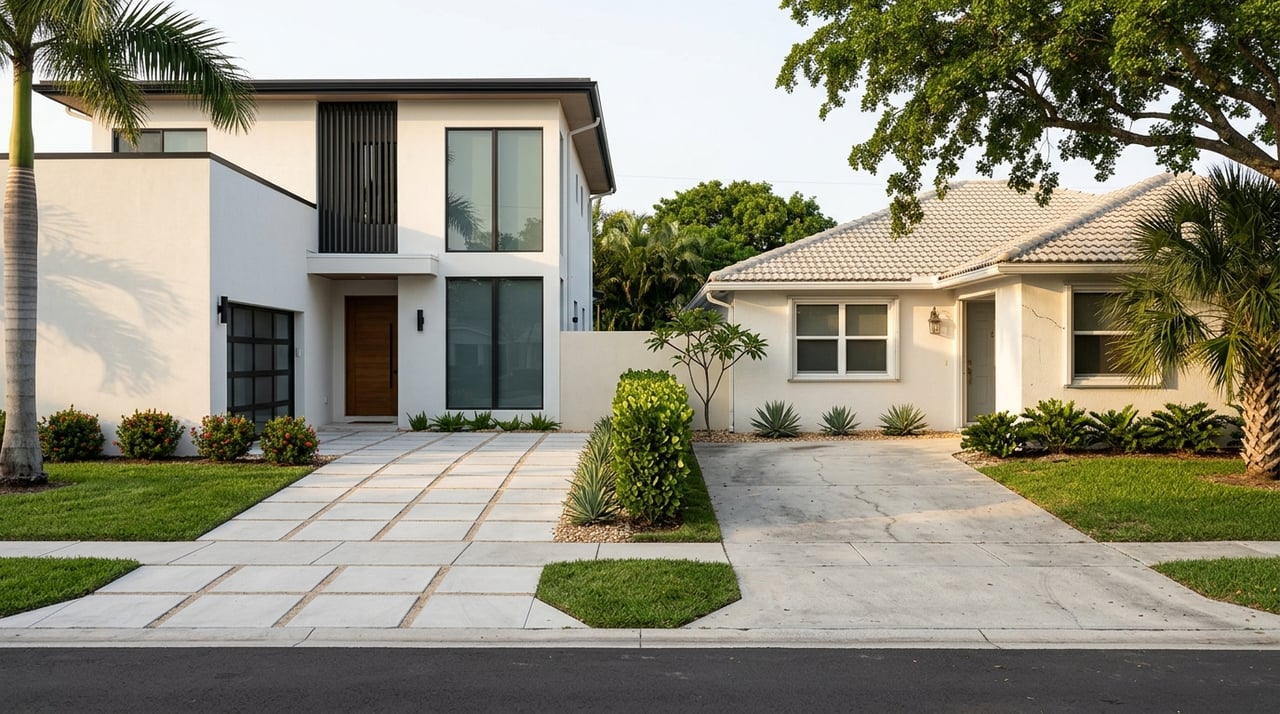
Resale homes in Homestead offer much more variety. You may find a newer townhouse, a home from the early 2000s in an established subdivision, or an older property on a much larger lot. That broader range can be a major advantage if you want more choices in location, yard size, or overall character.
The research report points to recent examples that include homes on 6,000 square foot lots, a 2015 townhouse on a roughly 2,007 square foot lot, and an older 1987 home on 1.25 acres with well and septic service. That kind of spread is why resale shopping in Homestead can feel very different from one home to the next.
Why buyers choose resale
Resale is often the better fit if you need to move faster. Because the home already exists, you can usually close and occupy it sooner than waiting for a home to be completed.
Resale can also offer mature landscaping, larger lots, and more neighborhood variety. If you are looking beyond a builder-controlled community and want to compare different settings, resale usually gives you more flexibility.
What to watch in resale homes
The tradeoff is that resale homes may come with more maintenance and upgrade needs. Older roofs, aging systems, dated interiors, or hurricane-mitigation updates can all affect your budget after closing.
Utility setup can vary too. One newer Homestead construction example in the research includes public water and sewer, while another older acreage property uses well and septic. As you compare homes, details like utility type, roof age, and storm-related features can affect both maintenance and insurance costs.
New Construction vs Resale in Homestead
If you are deciding between the two, the real question is not which option is better overall. It is which option fits your timeline, budget, and lifestyle better.
Here is a simple side-by-side view:
| Factor | New Construction | Resale |
|---|---|---|
| Layout | Modern, open-concept floorplans | Wider variety of layouts and home styles |
| Condition | Typically fewer immediate repairs | May need updates or maintenance |
| Timeline | Can be move-in ready or months away | Often faster path to occupancy |
| Lot Size | Often smaller in townhome and subdivision product | Can range from compact lots to acreage |
| Customization | Limited to builder options and packages | Greater freedom to renovate over time |
| Utilities | More often standardized in planned communities | Can vary by property, especially on larger lots |
When New Construction Makes Sense
New construction may be the better fit if you want a home that feels current from the start. If modern layouts, newer finishes, and reduced early maintenance matter most to you, builder inventory can be very appealing.
It can also make sense if you are comfortable choosing from a set menu of floorplans and finishes. Some buyers prefer that simpler decision-making process, especially when they want a more predictable experience.
You should still review the full monthly cost carefully. For example, the research report notes that Terra Sol lists HOA, tax-rate, and special-assessment costs. That means the price of the home is only one part of the payment picture.
When Resale Makes Sense
Resale may be the stronger choice if speed is important. If you need to move on a shorter timeline, an existing home can remove the uncertainty of construction schedules.
It may also be the better path if you want more lot space or a less standardized setting. In Homestead, resale can include everything from townhomes to larger single-family homes to acreage properties, which gives you more room to match the property to your daily needs.
Resale can also work well if you are comfortable making updates over time. Instead of paying a premium for everything to be brand new, you may prefer to improve the home gradually based on your priorities.
Questions to Ask Before You Decide
Before you choose new construction or resale in Homestead, it helps to focus on a few practical questions.
How much monthly payment room do you have?
Look beyond the purchase price. Property taxes, HOA fees, insurance, and any special assessments can change what feels affordable each month.
How much lot space do you really need?
Think about how you will use the outdoor space. If you want room for a pool, pets, storage, or extra breathing room, lot size deserves close attention.
Do you want fewer surprises now or more flexibility later?
New construction often reduces near-term repair exposure. Resale may give you more room to personalize and improve the home over time, but it can also bring more immediate maintenance decisions.
A Smart Way to Compare Homes in Homestead
In Homestead, the best comparison is often not just new versus resale. It can also be townhome versus single-family, planned subdivision versus established neighborhood, or compact lot versus acreage.
That is why a side-by-side strategy matters. When you compare payment, lot size, condition, utility setup, and move-in timing together, the right choice usually becomes much clearer.
If you are weighing new construction against resale in Homestead, working with a local advisor can help you compare builder inventory, existing listings, and total monthly cost with less guesswork. If you want personalized guidance, connect with Noel Barrientos for practical, responsive support as you explore your options.
FAQs
Is new construction in Homestead always more expensive than resale?
- Not always. New construction often carries a premium for newer finishes and lower early maintenance, but resale pricing can vary widely based on lot size, location, age, and condition.
Are Homestead new construction homes fully customizable?
- Usually not. In most planned communities, you are choosing from builder floorplans, elevations, and finish packages rather than creating a fully custom design.
Can you move into a new construction home quickly in Homestead?
- Sometimes. Builder communities may offer move-in ready homes, but other homes may still be under construction or coming soon, which can mean a longer wait.
Do resale homes in Homestead usually have larger lots?
- They can. Resale inventory in Homestead includes a broader mix of lot sizes, from compact townhome lots to properties with more than an acre.
What should you review before buying a resale home in Homestead?
- Pay close attention to the home’s condition, utility setup, roof age, hurricane-mitigation features, possible repair needs, and any HOA costs.
Is Homestead more affordable than other parts of Miami-Dade County?
- Based on the research report, Homestead remains more attainable than Miami-Dade County overall, though it is not a low-cost market.