Buying a Brickell condo takes more than falling in love with the view. In today’s market, you also need to know how the building is handling inspections, reserves, and repair funding before you commit. If you understand Florida’s newer condo reserve rules and how they interact with Miami-Dade’s local recertification process, you can spot issues earlier and make a more confident decision. Let’s dive in.
Why reserve rules matter in Brickell
In Brickell, many condo buyers focus first on finishes, amenities, and monthly fees. Those details matter, but they do not tell you the full story of a building’s financial and structural planning.
Florida now separates condo due diligence into two tracks. One track covers structural safety through milestone inspections, and the other covers long-term funding through structural integrity reserve studies, also called SIRS. For you as a buyer, the real question is whether the association has current reports and a funding plan that matches them.
Florida’s two key condo requirements
Milestone inspections
Under Florida law, a condo or co-op building that is three habitable stories or higher must have a milestone inspection by December 31 of the year it reaches 30 years of age, and then every 10 years after that. Local enforcement agencies can require the first inspection at 25 years when local conditions justify it, including being close to salt water.
A milestone inspection is a structural safety inspection, not a full building code audit. Phase one is a visual inspection, and phase two only happens if the initial review finds substantial structural deterioration.
After notice is issued, phase one must be completed within 180 days. The licensed architect or engineer submits the report to both the association and the local building official, and the association must distribute the inspector-prepared summary to owners within 45 days.
Structural integrity reserve studies
A SIRS is different from a milestone inspection. It is a budget planning tool for residential condominium associations with buildings that are three habitable stories or higher, and it must be completed at least every 10 years.
The study must cover major building components, including the roof, structure, fireproofing and fire protection, plumbing, electrical systems, waterproofing and exterior painting, and windows and exterior doors. It must estimate remaining useful life, replacement cost or deferred maintenance expense, and a reserve funding schedule.
For many older unit-owner-controlled associations, the SIRS deadline was December 31, 2025. If a milestone inspection was also due on or before December 31, 2026, the SIRS could be completed at the same time, but not later than December 31, 2026.
What changed with reserve funding
For budgets adopted on or after December 31, 2024, members of a unit-owner-controlled association that must obtain a SIRS generally cannot vote to fund less than the amount required for SIRS items. In simple terms, many associations no longer have the same flexibility to waive or underfund reserves for those covered components.
That matters because buyers used to see buildings with lower monthly costs partly because reserves were kept low. Now, if the building falls under the SIRS rules, the budget is expected to follow the most recent reserve study unless a narrow exception applies.
Associations can still fund reserves and repairs in different ways. The statute allows funding through regular assessments, special assessments, lines of credit, or loans, and a special assessment or loan used for SIRS or milestone-related repairs must be approved by a majority of the total voting interests.
There is also a limited temporary pause rule. For budgets adopted on or before December 31, 2028, an association that completed a milestone inspection within the previous two calendar years may, with majority approval, pause or reduce reserve contributions for up to two consecutive annual budgets to fund milestone-related repairs. After that, the association must update the SIRS before resuming.
Why Brickell buyers need extra caution
Miami-Dade adds a local recertification layer
Brickell is not just dealing with statewide condo rules. It also sits inside Miami-Dade’s recertification environment, which adds another important layer to your due diligence.
Miami-Dade says buildings in the county may be recertified at 30 years and every 10 years after that. Coastal condominium and cooperative buildings within three miles of the coastline can be triggered at 25 years and every 10 years afterward, and recertification reports must be submitted within 90 days of notice. The county also notes that each municipality has jurisdiction over the process.
This means a Brickell building may be dealing with milestone inspections, recertification requirements, or both. In some cases, a recent milestone inspection or similar local inspection that meets the legal requirements can substitute for the visual inspection portion of a SIRS if it was performed within the last five years and accepted by the local enforcement agency.
Updated does not always mean compliant
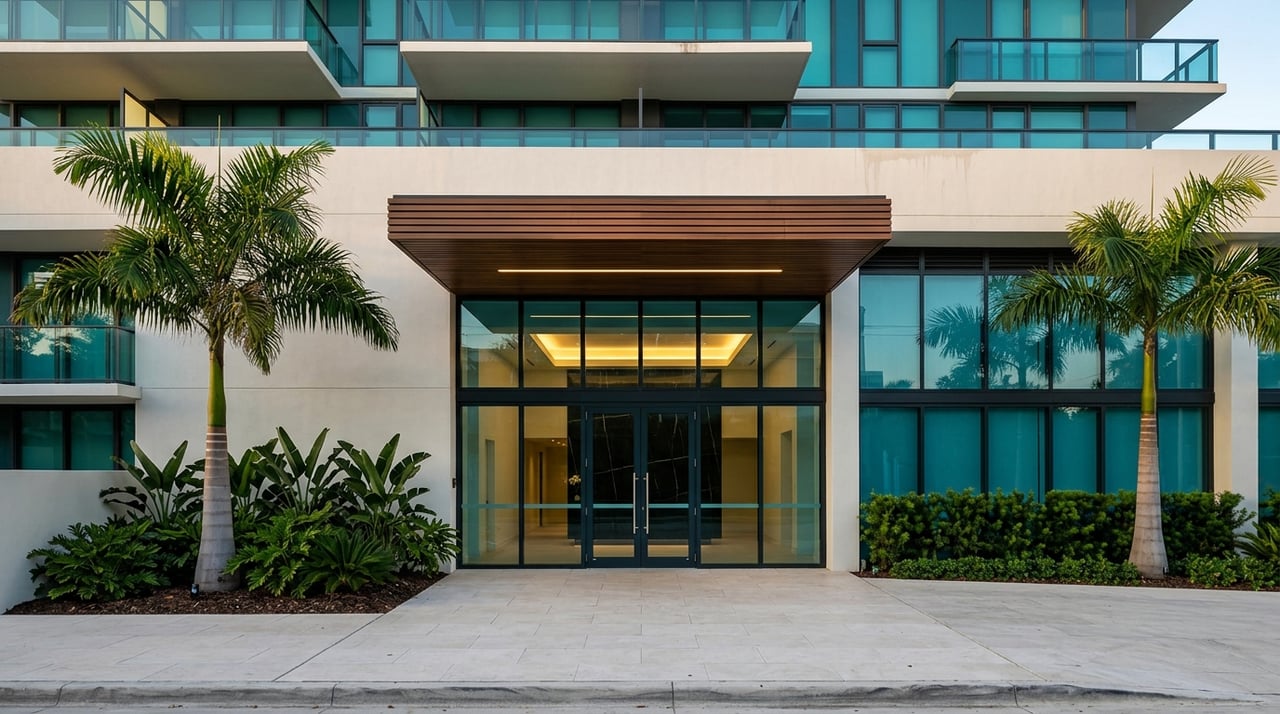
A building lobby renovation or fresh exterior paint can make a condo feel move-in ready. Still, cosmetic updates do not confirm that the association has completed the right inspections, distributed the required summaries, or funded reserves according to the latest study.
That is why buyers should verify the paperwork, not just the presentation. In Brickell, where many towers are older high-rises in a coastal environment, the association’s records can tell you much more than the brochure.
How reserve issues can affect financing
A building can be occupied and functioning, yet still become harder to finance. That usually happens when reserve funding is weak, major repairs are unresolved, or special assessments create concern for lenders.
Fannie Mae says projects with critical repairs or unresolved significant deferred maintenance are not eligible for sale to Fannie Mae until required repairs are completed. It also says lenders must review current special assessments and special assessments that have already been approved but not yet collected.
Freddie Mac also requires review of special assessments, reserve allocations, and unfunded repairs. For you, that means building financial health is not just an association issue. It can affect loan approval, monthly affordability, and resale potential.
Fannie Mae’s examples of critical repairs include balconies, elevators, foundation, parking structures, stairwells, and electrical systems. If any of those issues remain unresolved, you should treat that as both a financing issue and a property condition issue.
Documents to review before you make an offer
Florida law gives prospective buyers access to several important condo documents. These records can help you understand whether the building is current on inspections, reserve planning, and disclosure.
Here are the core items you should review:
- Declaration, articles of incorporation, bylaws, and rules
- Annual financial statement
- Annual budget
- Inspector-prepared summary of the milestone inspection report, if applicable
- The association’s most recent SIRS, or a statement that no SIRS has been completed
The association’s official records should also include audits, reviews, accounting statements, inspection reports, building permits, and other records tied to association operations. SIRS records must be kept for at least 15 years, and inspection reports must also be retained for 15 years.
Board and committee minutes can be especially helpful. They may reveal discussions about upcoming repairs, contractor bids, reserve loans, or possible special assessments before those issues clearly show up in the annual budget.
Brickell condo red flags to watch for
Some warning signs deserve a closer look right away. They do not always kill a deal, but they should change the questions you ask and the level of review you expect.
Watch for these common red flags:
- A reserve study showing no reserve funding or unusually low funding
- A current budget that does not match the reserve plan in the most recent SIRS
- Repeated deferrals instead of a documented reserve funding plan
- A large current or planned special assessment
- Any mention of unfunded critical repairs or unresolved deferred maintenance
- Missing milestone summaries or missing SIRS records when they should exist
- A recent inspection being used in place of the SIRS visual inspection without clear confirmation that the local enforcement agency accepted it
A missing document is not always a minor paperwork problem. If the building should have provided a summary or study and has not done so, that can be a meaningful due diligence issue.
Smart questions to ask before closing
Questions for your attorney
Your attorney can help confirm whether the seller and association have delivered the required condo documents. This includes checking whether the resale contract contains the proper acknowledgments and whether any missing or late documents affect your cancellation rights under Florida law.
You should also ask whether there are contract terms tied to an outstanding milestone inspection, local recertification case, special assessment, or reserve loan. Those details can affect your risk and costs after closing.
Questions for your inspector or engineer
Ask whether the building has had a phase-one milestone inspection and whether it found substantial structural deterioration that triggered phase two. That answer gives you a better sense of whether the building is simply complying with routine requirements or dealing with more serious issues.
You should also ask whether any recent Miami-Dade or municipal recertification inspection was accepted in place of the SIRS visual inspection. If it was, ask what repair recommendations remain open.
Questions for your lender
Before you get too far into a deal, ask whether the project is warrantable for your loan program. Also ask whether the lender sees any issue with the association’s reserves, deferred maintenance, special assessments, or repair-related loans.
If the association has a line of credit or loan tied to repairs, ask how that affects the project review and your monthly housing-cost calculation. A building can look acceptable on the surface while still raising lending concerns behind the scenes.
The bottom line for Brickell buyers
When you buy a condo in Brickell, you are not just buying a unit. You are also buying into a building’s inspection history, reserve planning, and approach to future repairs.
The most important question is not whether the tower looks updated. It is whether the association has current milestone and SIRS compliance, a reserve plan that follows the law, and a financial profile your lender can accept. In Miami-Dade, you also need to confirm whether any local recertification case is in play for that specific building.
If you want help reviewing condo options in Brickell and asking the right due diligence questions before you write an offer, connect with Noel Barrientos for practical, high-touch guidance tailored to your goals.
FAQs
What are Florida reserve rules for Brickell condo buyers?
- Florida’s reserve rules require many condo associations in buildings that are three habitable stories or higher to complete a structural integrity reserve study and generally fund reserves according to that study for covered items.
What is the difference between a SIRS and a milestone inspection in Brickell?
- A milestone inspection focuses on structural safety, while a SIRS focuses on long-term budgeting for major building components and reserve funding.
What condo documents should Brickell buyers request before making an offer?
- You should review the condo documents required by Florida law, including governing documents, the annual budget, financial statement, milestone inspection summary if applicable, and the most recent SIRS or a statement that none has been completed.
Can reserve problems affect financing for a Brickell condo?
- Yes. Weak reserves, unresolved deferred maintenance, critical repairs, and special assessments can affect whether a project meets lender requirements and can impact your loan approval.
Do Brickell condo buildings also follow Miami-Dade recertification rules?
- Yes. Brickell buildings may also be subject to Miami-Dade recertification timing and municipal oversight, which can overlap with Florida’s milestone inspection and SIRS rules.
What are red flags in a Brickell condo association budget or reserve study?
- Red flags include unusually low reserve funding, a budget that does not match the latest SIRS, repeated deferrals, large special assessments, unresolved critical repairs, or missing required inspection and reserve records.