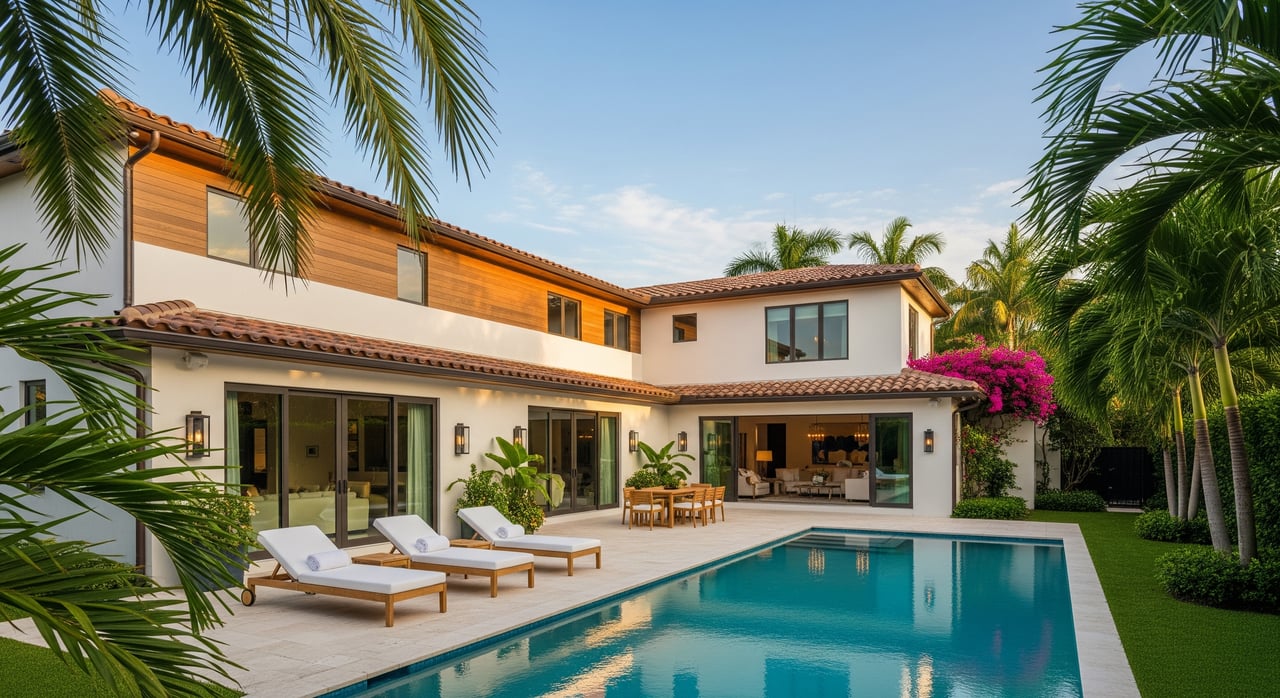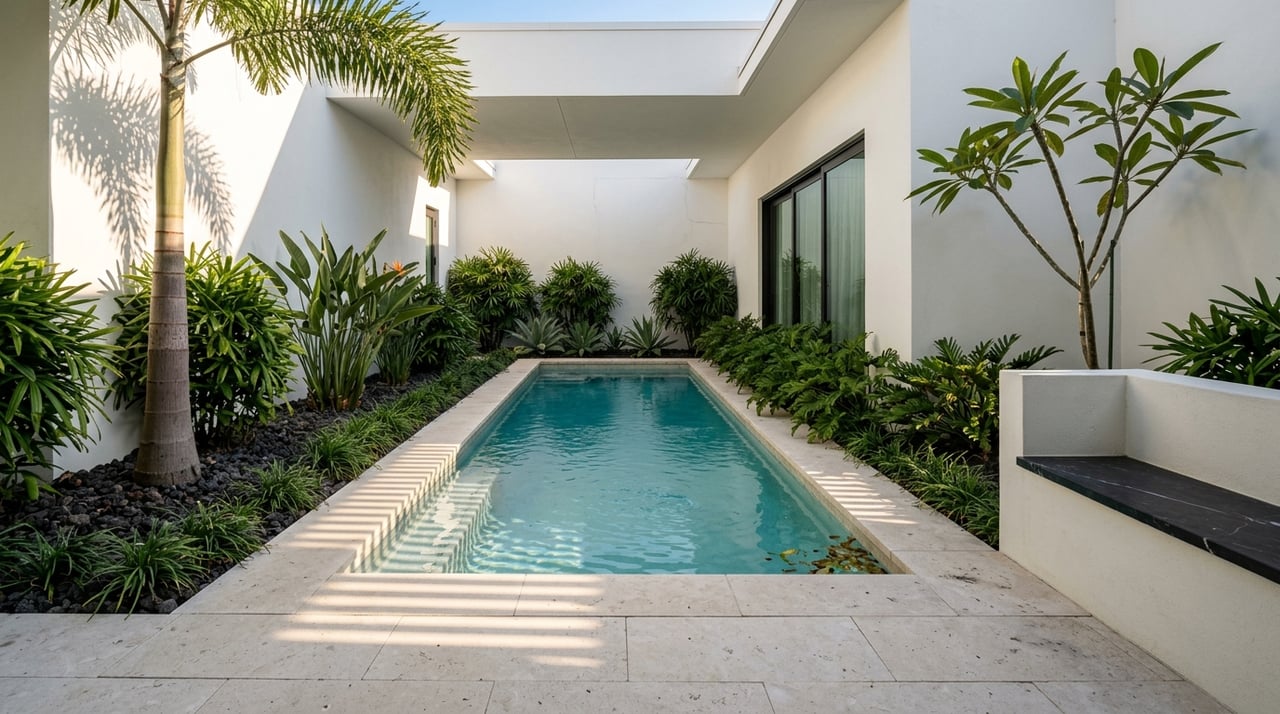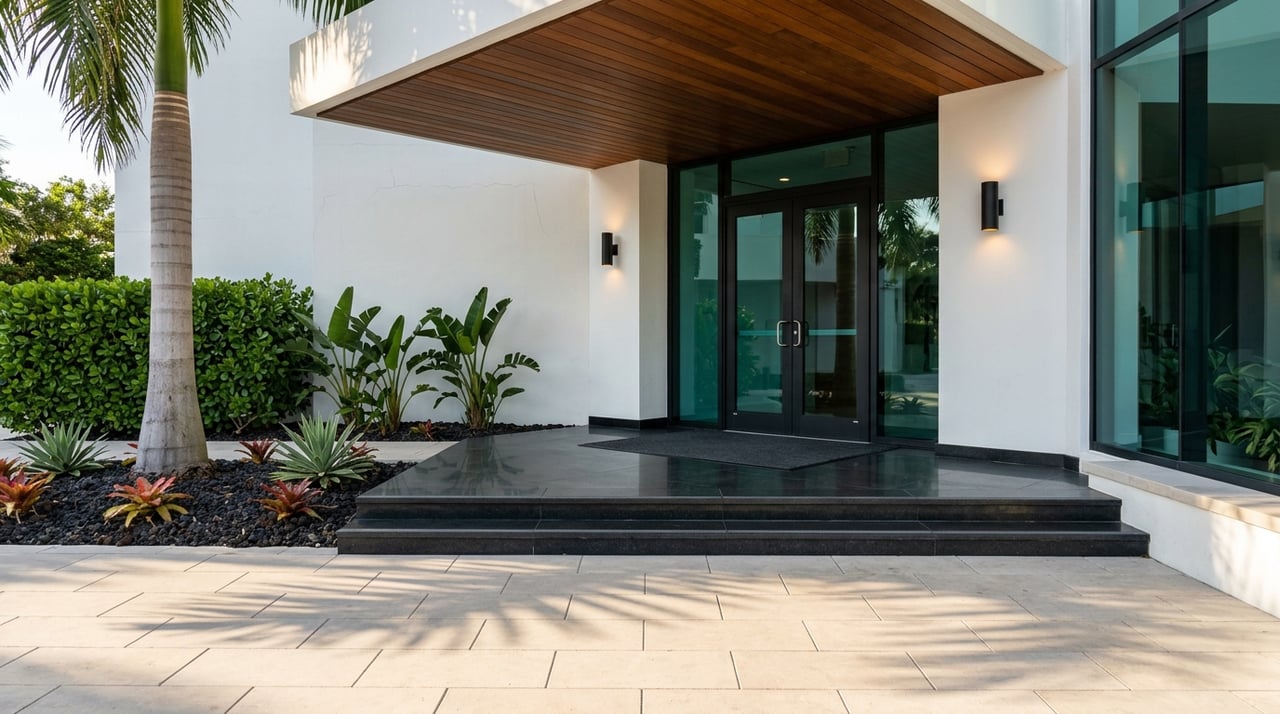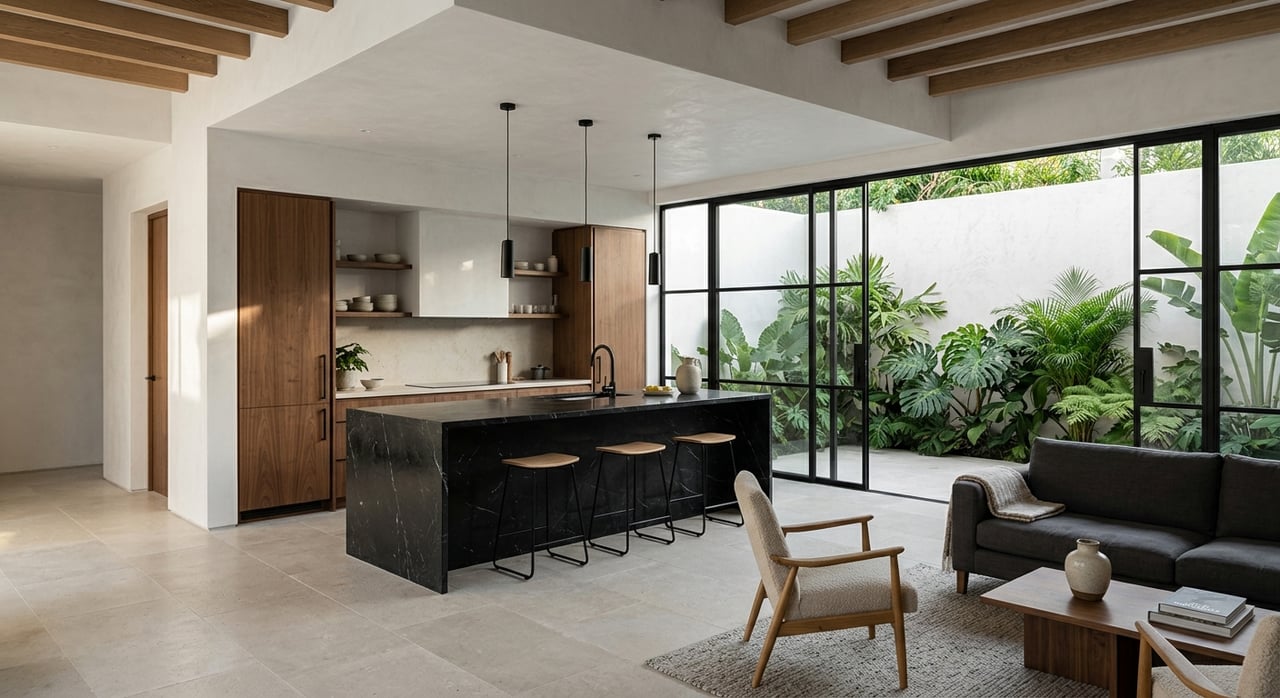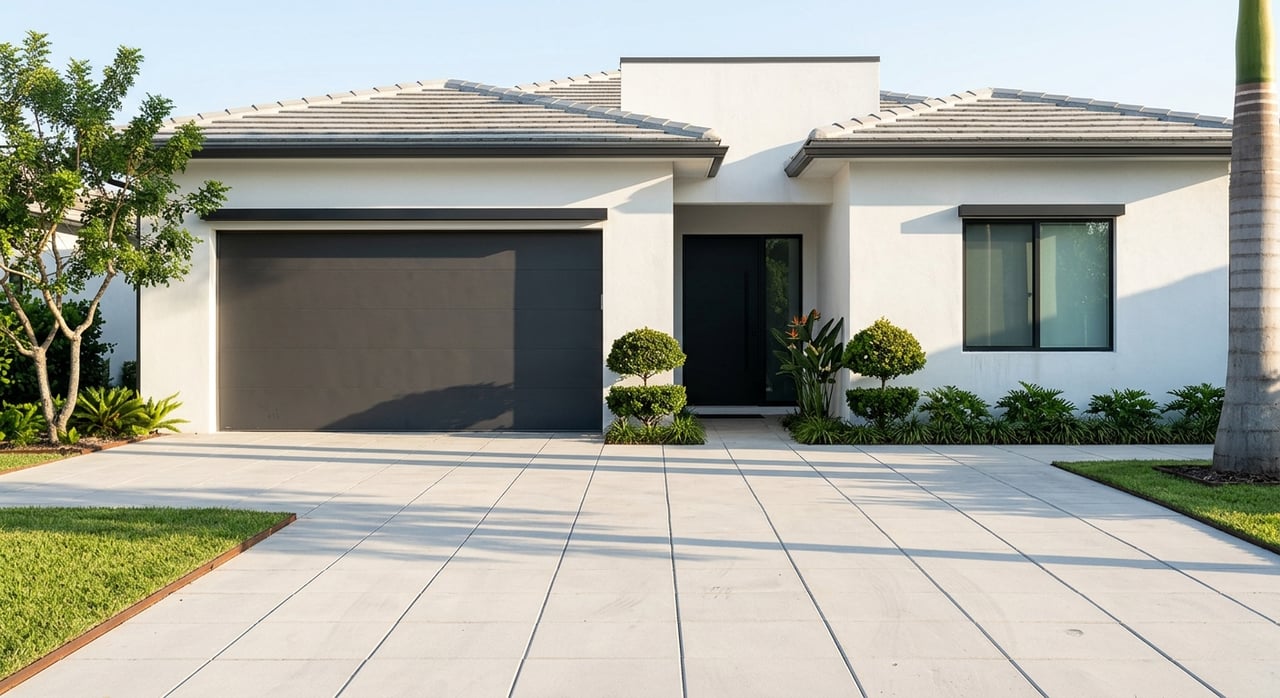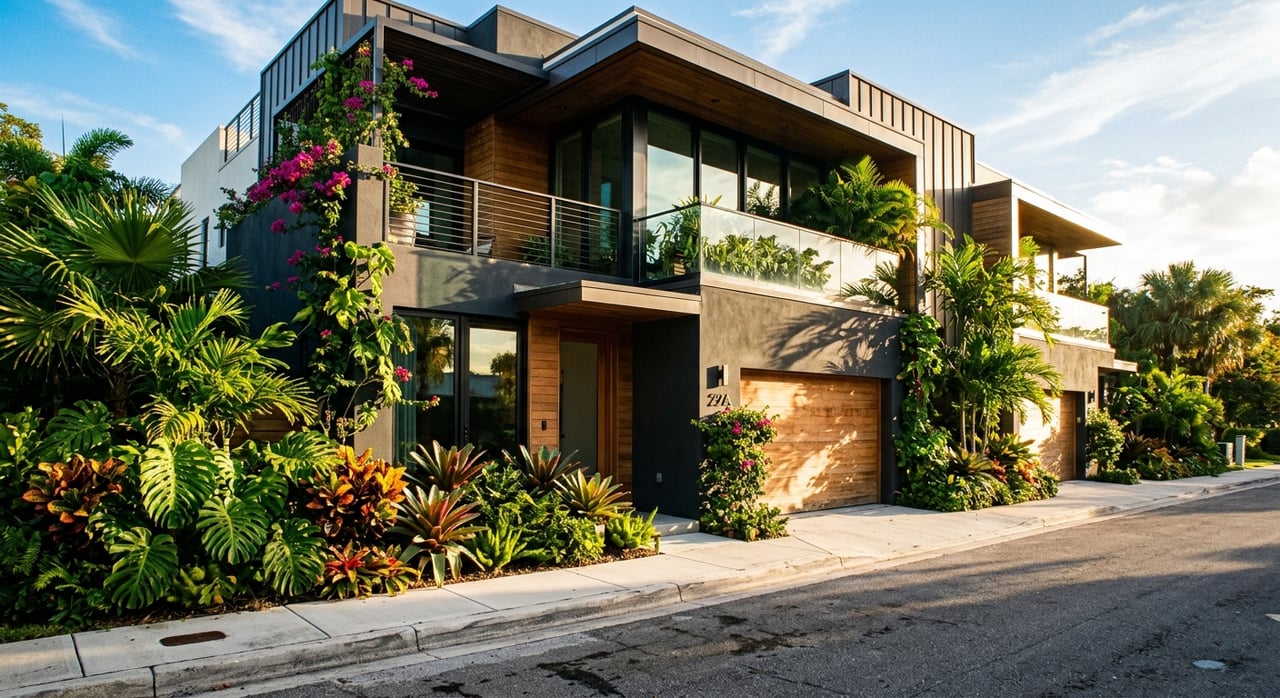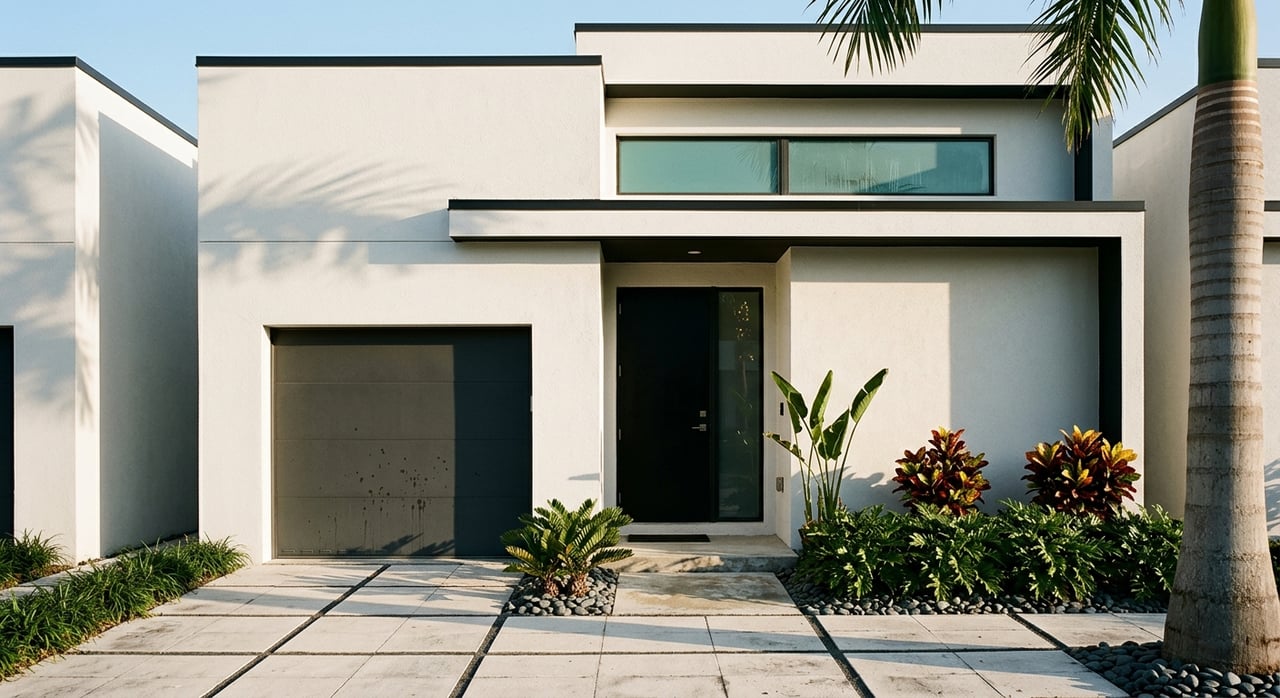
Welcome to
49,243 people live in Coral Gables, where the median age is 39 and the average individual income is $82,686. Data provided by the U.S. Census Bureau.
Total Population
Median Age
Population Density
Average individual Income
Coral Gables occupies a rare position in South Florida real estate: it is one of the few places where architectural preservation, institutional prestige, and genuine neighborhood identity coexist at scale. Founded in the 1920s by developer George Merrick, the city was conceived as a planned "garden city" with Mediterranean Revival architecture, grand boulevards canopied by live oaks, and a cohesive design vision that the city's Board of Architects actively enforces to this day. That continuity is not incidental — it is the foundation of Coral Gables' enduring value.
The city attracts a distinctive mix of buyers. Multinational executives drawn by the more than 150 corporate headquarters located here. Families who relocate specifically for the public school system, which includes some of the most competitive magnet programs in Miami-Dade County. Long-term Miami residents who want the walkability and social energy of an urban core without sacrificing privacy, green space, or architectural character. And increasingly, buyers who have outgrown the frenetic pace of Brickell or Miami Beach and are looking for something that holds its value as much as it holds its identity.
Coral Gables is not a neighborhood for buyers looking to get in and out quickly. Its high entry costs, strict regulatory environment, and deliberate pace of change reward patient, informed buyers who are making a long-term commitment.
As of April 2026, the Coral Gables market is best described as a strategy-driven seller's market in transition. Sellers retain a modest advantage given the area's prestige and constrained inventory, but the frantic bidding-war conditions of 2021 through 2023 have given way to a more deliberate, negotiation-friendly environment.
Homes are averaging around 113 days on market — down from 133 days the prior year, but still a pace that reflects buyers taking their time and doing their homework. On average, properties are closing at approximately 94.2% of their list price, which means well-prepared buyers are successfully negotiating meaningful discounts. About 30% of active listings have seen price reductions, a clear signal that sellers who overreached on pricing are being pushed back.
Price ranges as of early 2026:
Competition is currently low to moderate, which represents a meaningful shift from where this market was two years ago. Buyers who have been sitting on the sidelines have more options and more leverage than at any point since the pandemic-era run-up.
The Coral Gables market is in the middle of a deliberate reset — moving away from the volatility of the pandemic years toward a more predictable appreciation curve. Home prices rose approximately 5.9% year-over-year, which is a healthy and sustainable rate compared to the double-digit spikes that characterized 2021 and 2022. Analysts project roughly 3% appreciation through the remainder of 2026, with mortgage rates expected to hover near 6%.
What's changed most visibly is buyer behavior. Today's Coral Gables buyer is analytical and selective. Price-per-square-foot has become a primary decision metric, and move-in ready properties are receiving far more attention than homes requiring significant updates. Outdated or overpriced listings are sitting on the market for six months or more, while genuinely turnkey homes in desirable sub-neighborhoods still generate early interest.
Inventory has expanded to somewhere between 74 and 330 active listings depending on the specific sub-neighborhood, giving buyers meaningfully more options than they had in 2023. That increase in supply is the primary reason the market has moderated. The underlying fundamentals — scarcity of land, strict zoning, consistent corporate demand, and top-tier schools — remain intact and continue to support long-term value.
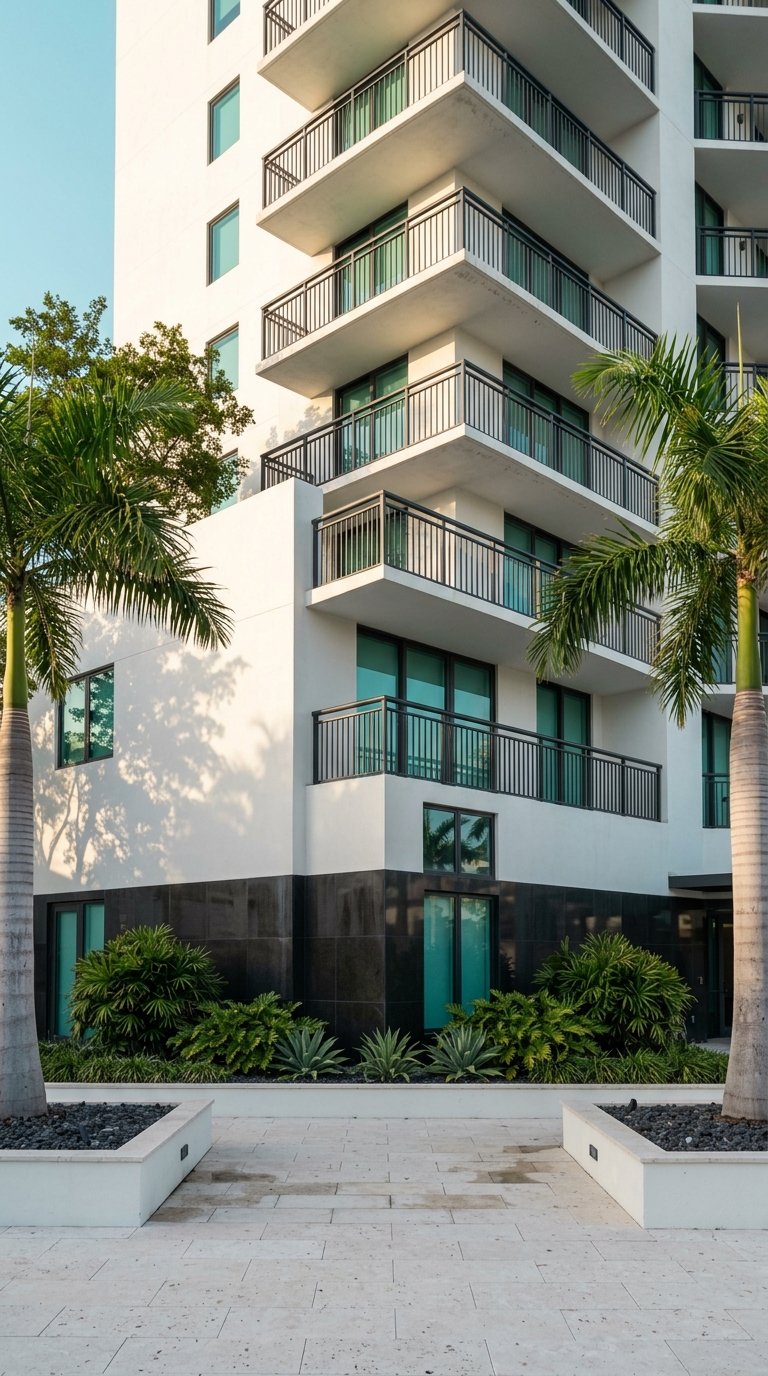
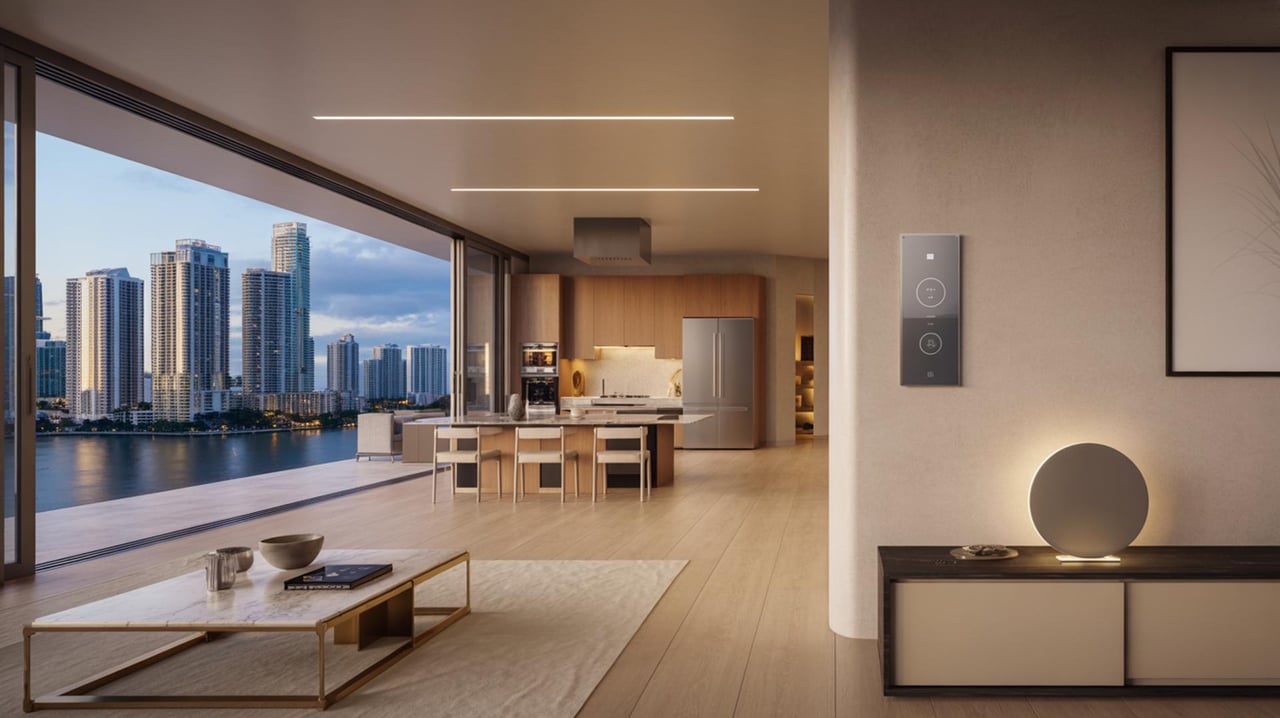
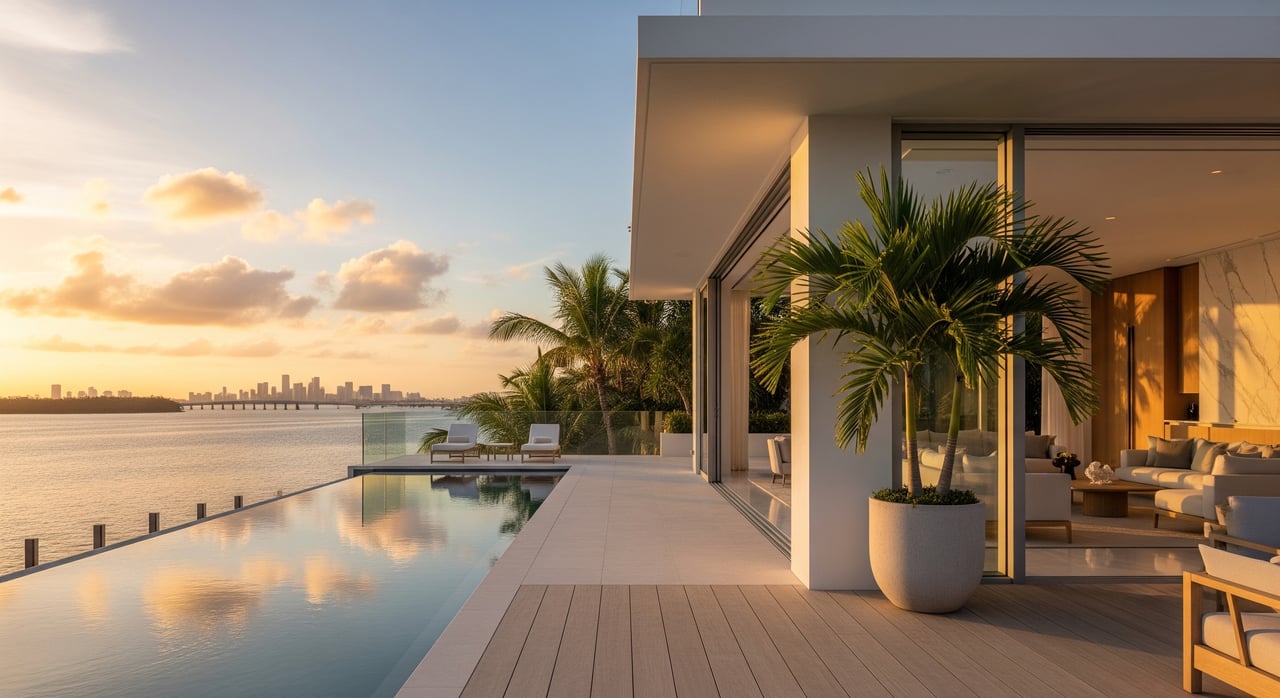
Coral Gables is experiencing its most significant vertical development wave in decades. The city's Mediterranean building codes have not relaxed, but developers have found sophisticated ways to work within them, producing projects that honor the architectural character of the area while delivering the amenities and floor plans that modern luxury buyers expect.
The shift toward what the market is calling "vertical living" is notable. For the first time at scale, Coral Gables is seeing luxury condos and townhomes that genuinely compete with single-family homes on privacy and finish quality. Projects like Ponce Park Residences and Alhambra Parc are leading this category, with units ranging from $2M to over $5M.
Key active developments include:
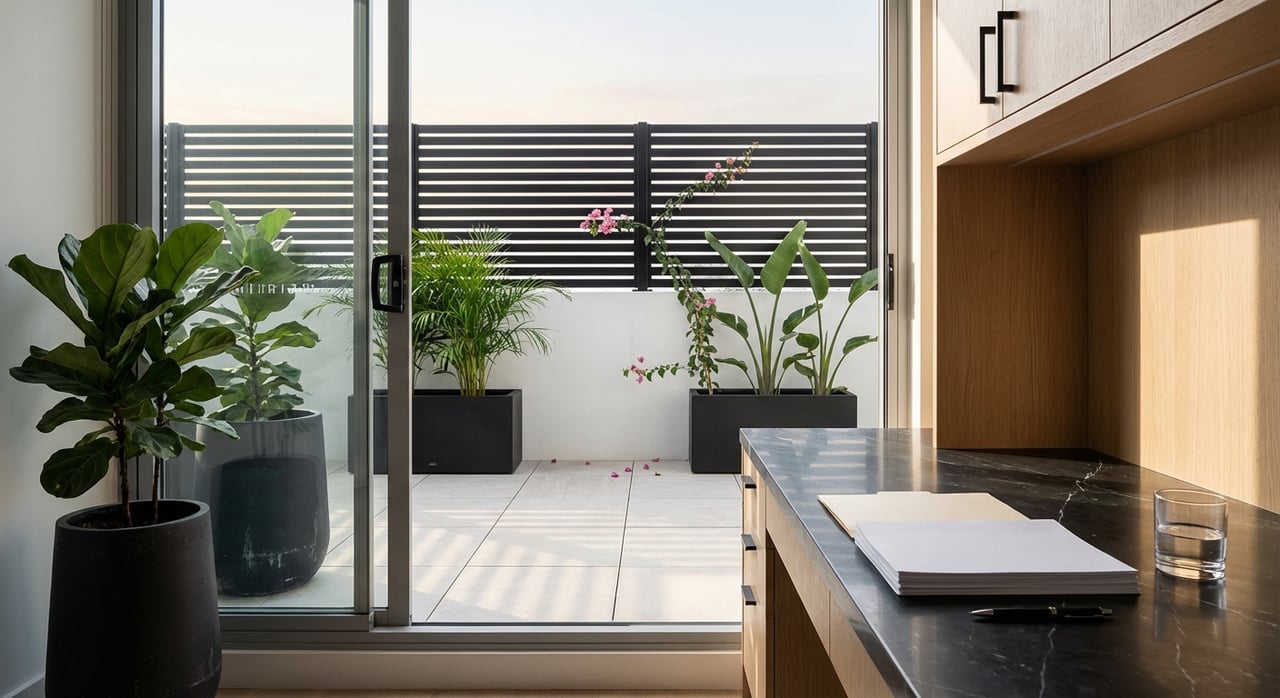
New construction in the Gables commands a 20% to 30% premium over comparable resale homes. In exchange, buyers receive biohacking amenity suites (recovery pods, infrared saunas), AI-integrated security systems, and large terraces — features that the city's historic stock simply cannot offer.
Coral Gables rewards a buy-and-hold investment philosophy. High acquisition costs have compressed short-term flip margins, but the asset's long-term fundamentals — corporate tenant demand, constrained supply, and consistent appreciation — make it a reliable wealth preservation play.
Long-term rentals represent the strongest yield opportunity at present. Average rents have climbed to approximately $3,250 per month across the market, with luxury units along the US-1 corridor commanding considerably more. Corporate demand is a significant driver here: with over 150 multinational headquarters in the Gables, the pool of well-qualified executive tenants is deep and stable.
Short-term rentals are a growing niche. The Gables has historically been one of the more restrictive markets in Miami-Dade for short-term rental activity, but new projects like The Avenue are being developed with this use case explicitly in mind — a meaningful shift in how the city approaches the category.
Fix-and-flip activity has tightened considerably. Entry prices for properties requiring significant work now routinely exceed $1.2M, which compresses margins substantially. Investors still active in this space are focusing on sub-neighborhoods like Sunrise Harbor and Central Gables, where period-accurate, high-end renovations can generate real value. The key word is discipline — the era of buying anything and profiting on the turn is over.
For 2026, appreciation forecasts of 2.2% to 3% make Coral Gables a primary choice for capital preservation rather than speculative return. The most compelling play right now is a high-end executive rental near the University of Miami or the Merrick Park district, where a quality asset can generate meaningful yield while appreciating in a supply-constrained environment.
Purchasing a home in Coral Gables requires fluency in two things the broader Miami market doesn't demand to the same degree: insurance navigation and historic preservation compliance. Understanding both before you make an offer can save significant time and money.
The purchase timeline is longer than most markets. With homes averaging 108 to 113 days on market, buyers have time to conduct thorough due diligence — and they should use it. Negotiation is not only acceptable but expected. Homes are closing at roughly 94.2% of list price, and properties that have been on the market for more than 45 days are almost universally open to meaningful negotiation on price and repairs.
Standard inspection periods have returned to 10-day windows, which is important because the age of the housing stock demands careful attention. A four-point inspection covering roof, plumbing, electrical, and HVAC is essential for any home built before 1980, and much of the city's most desirable inventory dates to the 1920s through 1950s. Buyers purchasing historically designated properties should also account for the Certificate of Appropriateness process — required for any exterior changes — and build that timeline into their renovation planning.
Appraisal contingencies have become standard practice again as prices stabilize. Given the variance between list price and actual market value on some longer-sitting properties, this protection is worth preserving.
The most common property types are Mediterranean Revival single-family homes and, increasingly, luxury boutique condos near Miracle Mile and Merrick Park for buyers prioritizing a lock-and-leave lifestyle.
The decision comes down primarily to your time horizon and your tolerance for the regulatory environment that comes with Gables homeownership.
| Renting | Buying | |
|---|---|---|
| Average Monthly Cost | ~$3,600 (median across all types) | ~$9,200+ (mortgage, tax, insurance on $1.5M home) |
| Typical Asset | Luxury apartment or condo | Single-family Mediterranean home |
| Flexibility | High; easy to pivot as the market evolves | Low; high closing costs require a 5–7 year minimum hold |
| Market Direction | Rents decreased ~3% YoY; rental supply is up | Prices increased ~5.9% YoY; steady appreciation |
The case for buying is strongest for families committed to a long-term stay, particularly those prioritizing access to Sunset Elementary or Coral Gables Senior High. You are entering a market with real negotiating leverage and the ability to lock in an asset that has historically outperformed virtually every other South Florida neighborhood over any 10-year window.
The case for renting is compelling for anyone whose plans extend fewer than five years or who wants to keep capital flexible while rates remain elevated. With the price-to-rent ratio still heavily skewed by high insurance premiums and interest costs, renting a quality Gables condo is a financially rational choice right now. New condo deliveries near Merrick Park have created a competitive leasing environment, and move-in concessions are available for well-qualified tenants.
The Country Club Section and Granada are currently seeing the most stable rental pricing, while the Merrick Park corridor is where renters will find the most room to negotiate.
Coral Gables offers something genuinely unusual in South Florida: a city with a distinct sense of place. The architecture is cohesive, the streets are maintained to a high standard, and the city operates its own police and fire departments — separate from Miami-Dade County — which produces some of the fastest emergency response times in the state. That operational independence is a real factor in why property values here are so stable.
For buyers arriving from outside Miami, orientation to the sub-neighborhoods is essential. The North Gables, centered around Miracle Mile and the Ponce de Leon corridor, is where walkable urban life meets professional energy. It is denser, more social, and home to the city's growing restaurant and nightlife scene. The South Gables transitions into lush, estate-scale residential streets, quieter and more private, terminating near Fairchild Tropical Botanic Garden and Matheson Hammock Park. The University District, surrounding the University of Miami campus, carries a more intellectual and youthful energy.
Commute logistics are better here than elsewhere in Miami. The free Coral Gables Trolley connects the downtown core to the Douglas Road Metrorail Station, providing a reliable 15-minute rail connection to Brickell. Miami International Airport is 15 to 20 minutes by car, which matters for the international executive crowd that makes up a significant portion of the residential base.
One practical note for buyers with multiple vehicles: many of the city's most architecturally significant homes were built in an era when single-car ownership was the norm. Tiny or absent garages are common. If off-street parking matters to your daily life, prioritize properties with updated circular driveways or porte-cochères and factor that into your search criteria from the start.
Civic amenities add measurable quality of life. Residents receive discounted access to the Venetian Pool and the Biltmore Golf Course, and the city's parks system is genuinely excellent.
Coral Gables is a city of long-term residents. People come here to stay, and the demographic profile reflects that permanence.
The largest and most visible segment is the global executive. With over 150 multinational corporations headquartered in the Gables, roughly 47% of households earn over $150,000 annually. Approximately 38% of residents are foreign-born, with deep cultural and linguistic ties to Latin America and Europe. The result is a sophisticated, internationally oriented community that is very different in character from the domestic-luxury enclaves you find elsewhere in Miami.
Families are the bedrock of the South Gables specifically. The draw is the school system — Sunset Elementary, Coral Gables Senior High, and the International Studies Preparatory Academy pull families who are willing to pay the Gables premium in exchange for public school quality that rivals private alternatives. Weekend life for these households revolves around youth sports at the Youth Center and afternoons at the Venetian Pool.
Near the University of Miami campus, the demographic shifts toward faculty, researchers, and graduate students, lending the surrounding streets an intellectual and conversational energy you don't find in most South Florida neighborhoods.
The fourth significant group is the longtime Miami resident who has graduated from a large estate into a luxury condo near Miracle Mile — trading square footage for walkability, fine dining, and a social life that doesn't require a car. This group is growing as new boutique condo inventory matures.
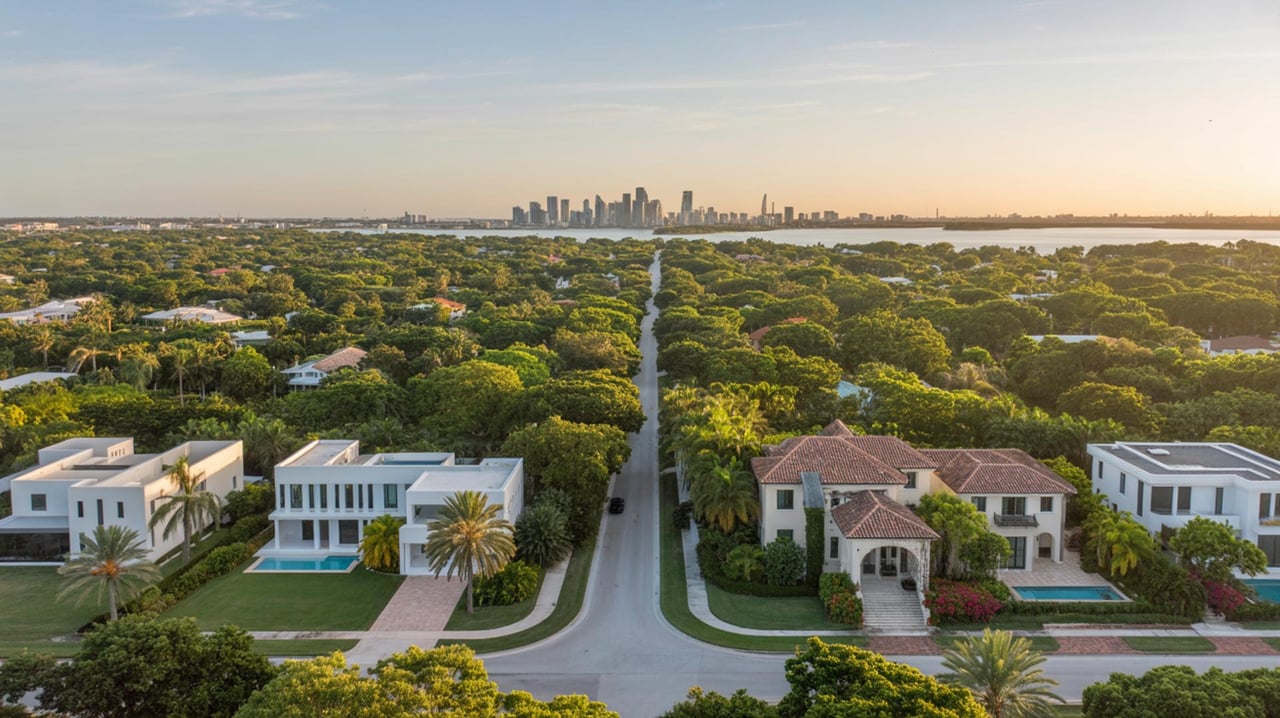
No city in South Florida — arguably few in the country — has maintained its architectural identity as consistently as Coral Gables. The city's Board of Architects actively enforces adherence to George Merrick's original Mediterranean vision, which means the streetscape you see today is, in essential respects, the one he designed in the 1920s.
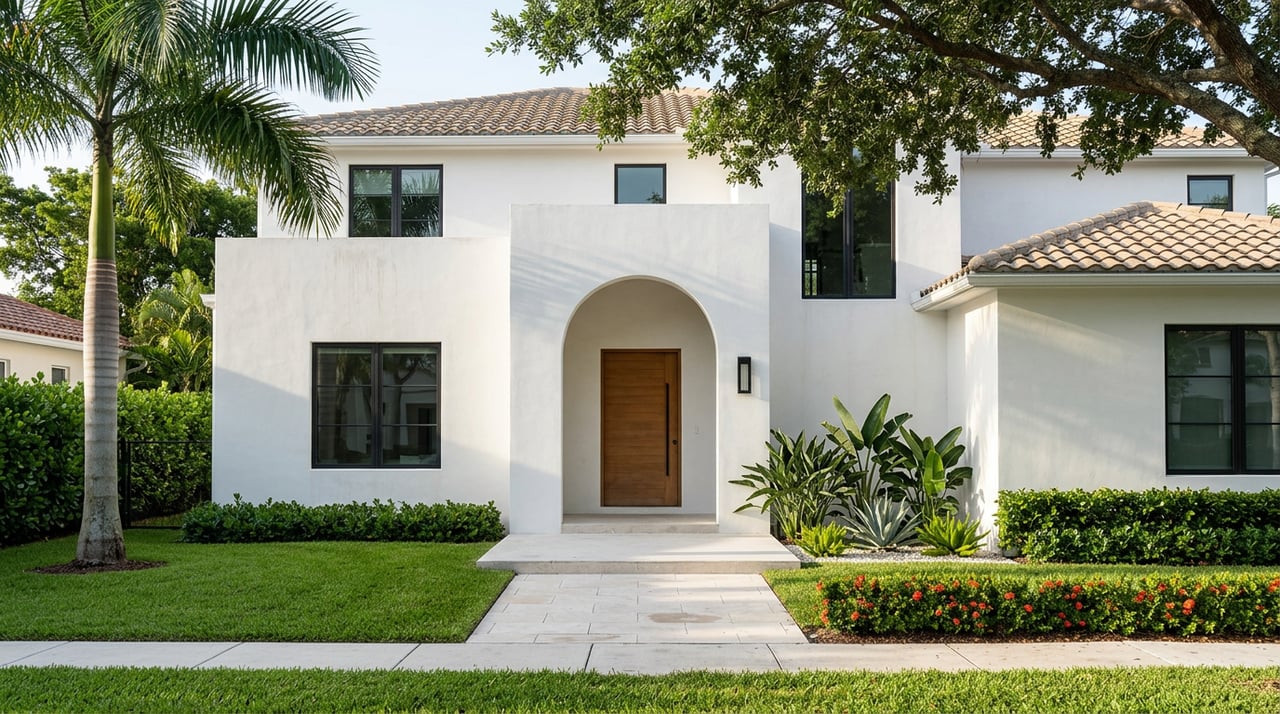
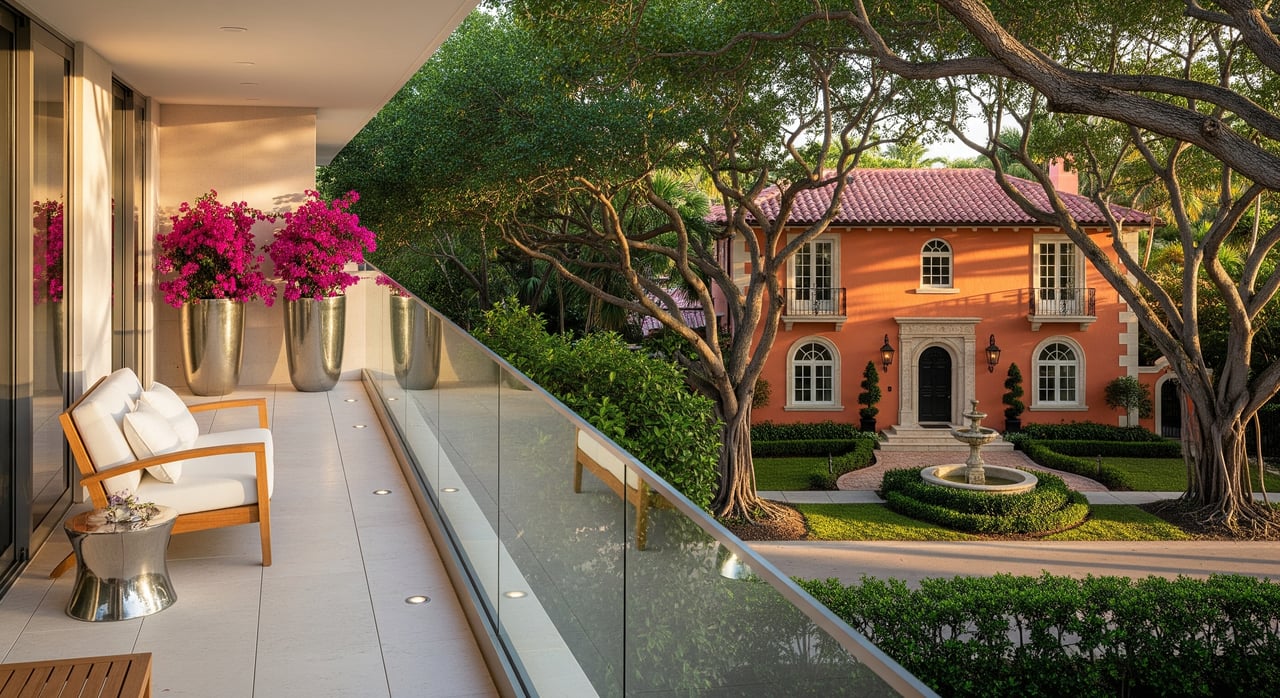
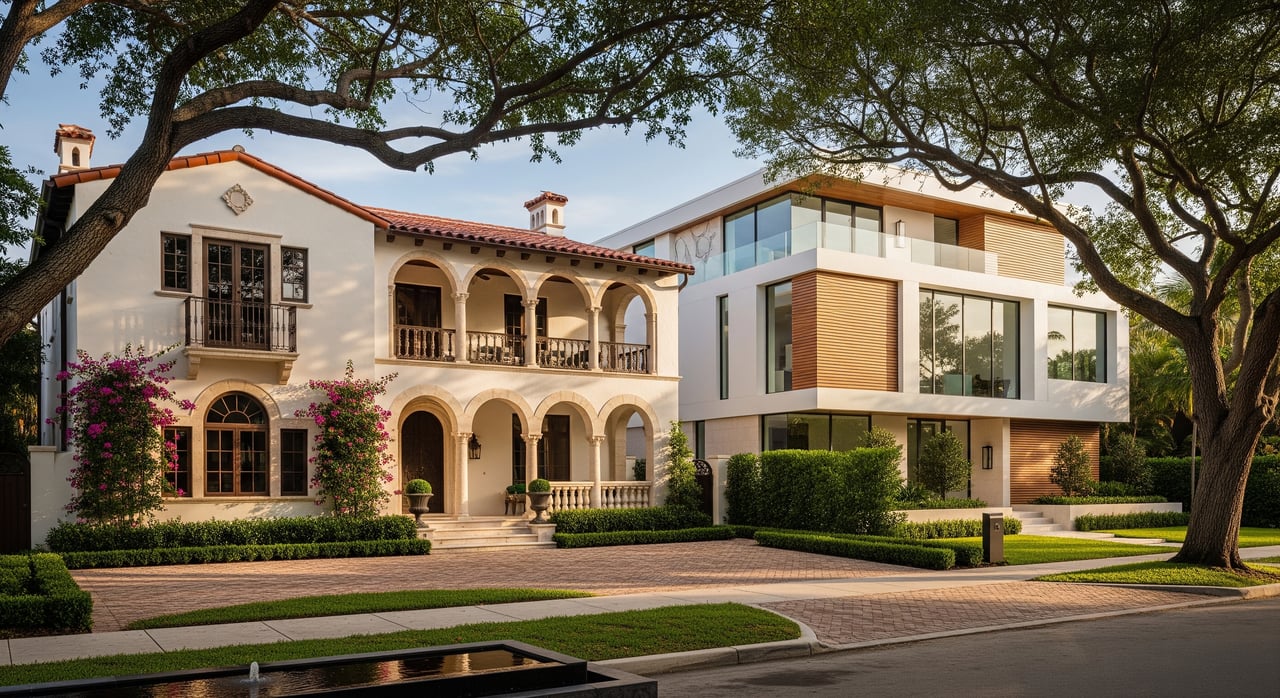
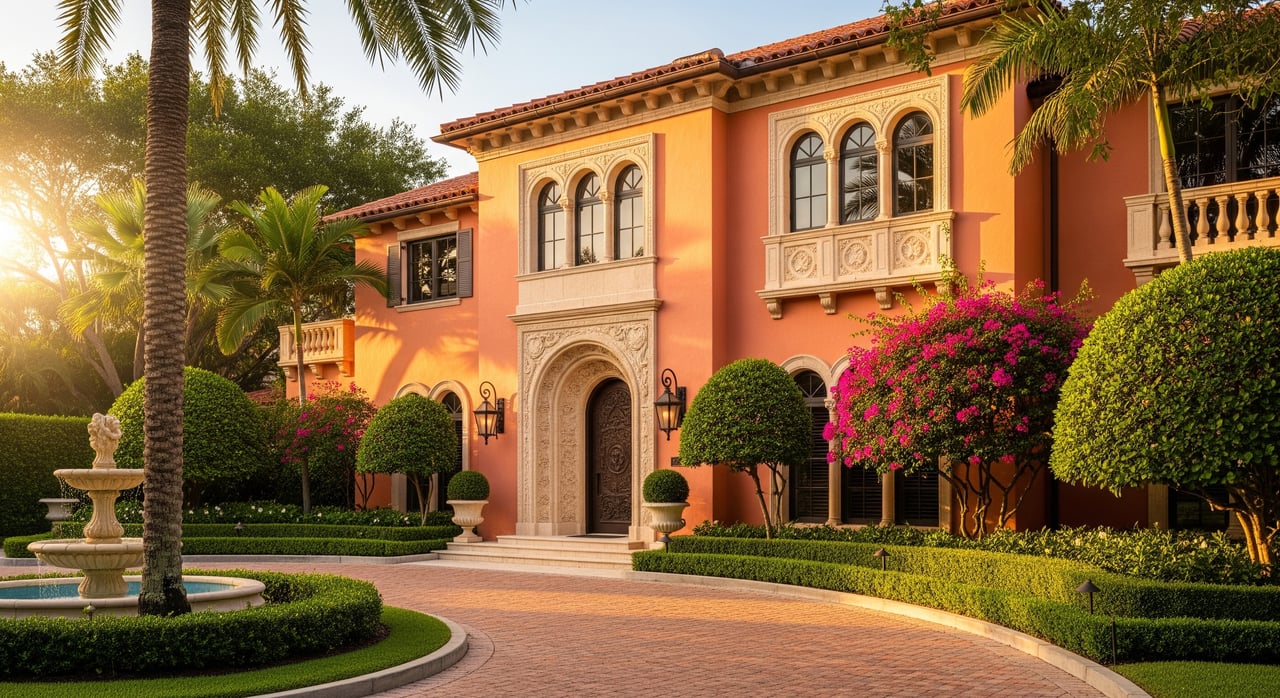
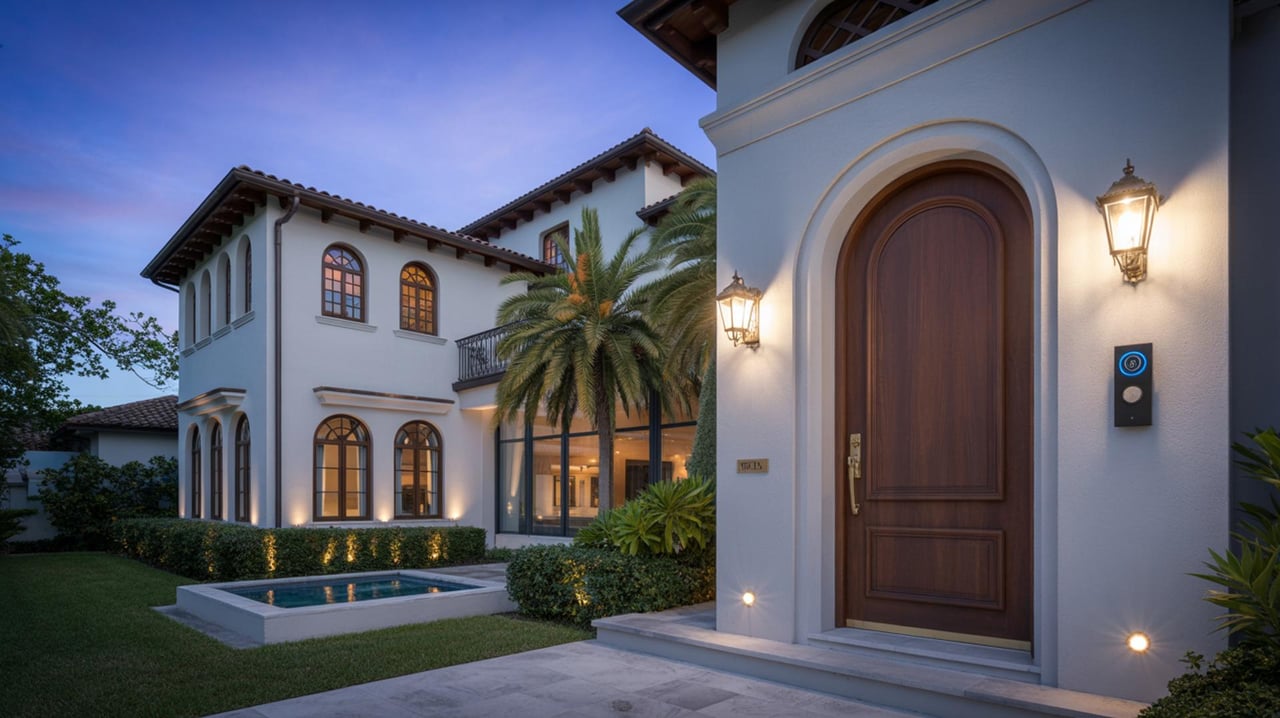
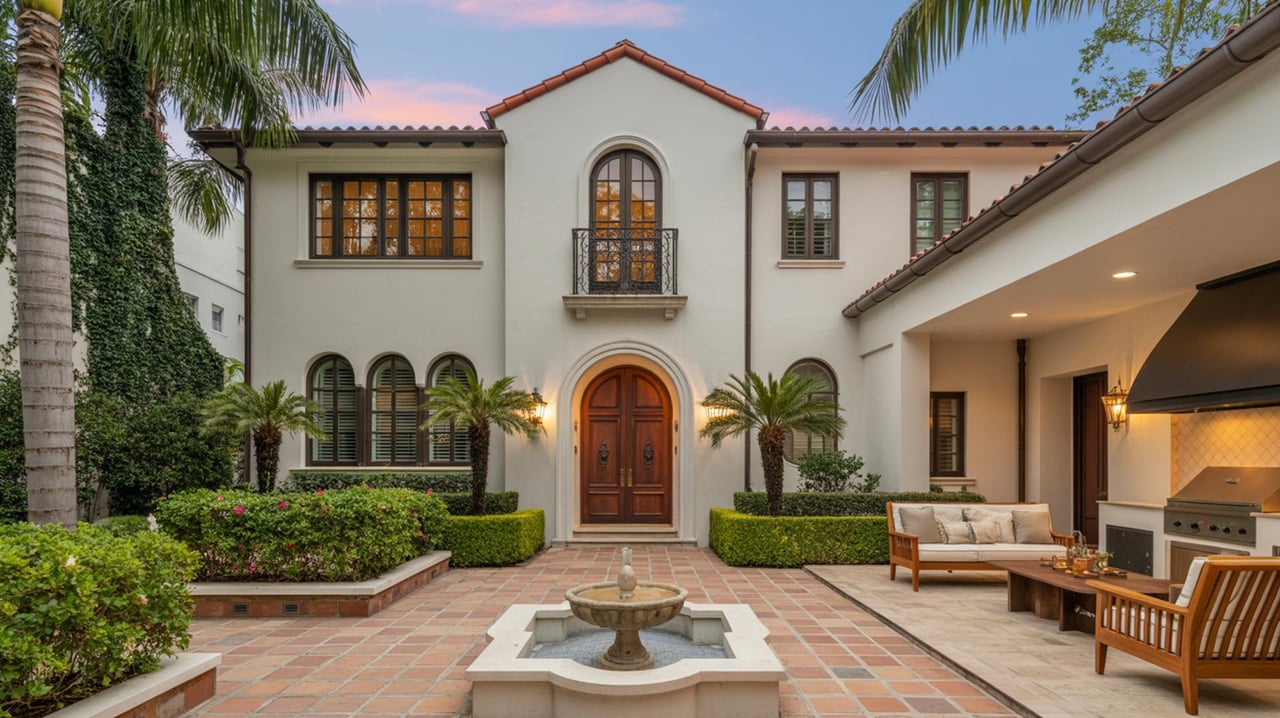
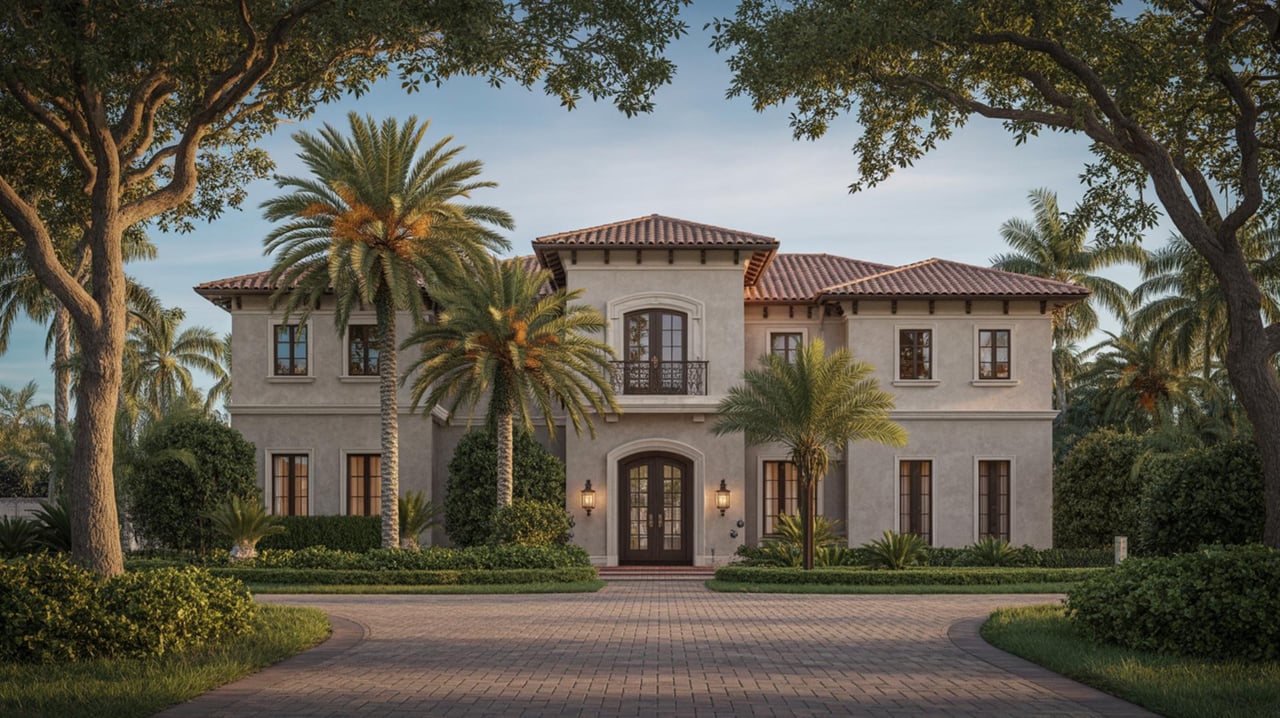
Mediterranean Revival is the dominant form. Barrel-tile roofs, arched entryways, stucco walls in warm earthy tones, and wrought-iron balconies define the aesthetic. These homes were designed for indoor-outdoor living in the South Florida climate, and the better examples feature central courtyards, loggias, and mature tropical landscaping that has had a century to develop into something genuinely beautiful.
Old Spanish and Mission styles represent a more rustic subset of the Mediterranean tradition. Heavy wooden doors, exposed ceiling beams, and coral rock accents — a native material that gives these homes a distinctly tropical-fortress character — distinguish them from the smoother, more formal Revival examples.
The Themed Villages are architecturally unique in the country. Built in the 1920s to introduce variety into the neighborhood, the seven villages each follow a specific international vernacular: the Chinese Village with its pagoda-style details and brightly colored roofs; the French Normandy Village with half-timbered facades and steeply pitched rooflines; the Dutch South African Village, identifiable by its scrolled gables. Owning one of these homes is genuinely unlike anything else available in South Florida real estate — but it comes with stewardship responsibilities that buyers should understand before making an offer.
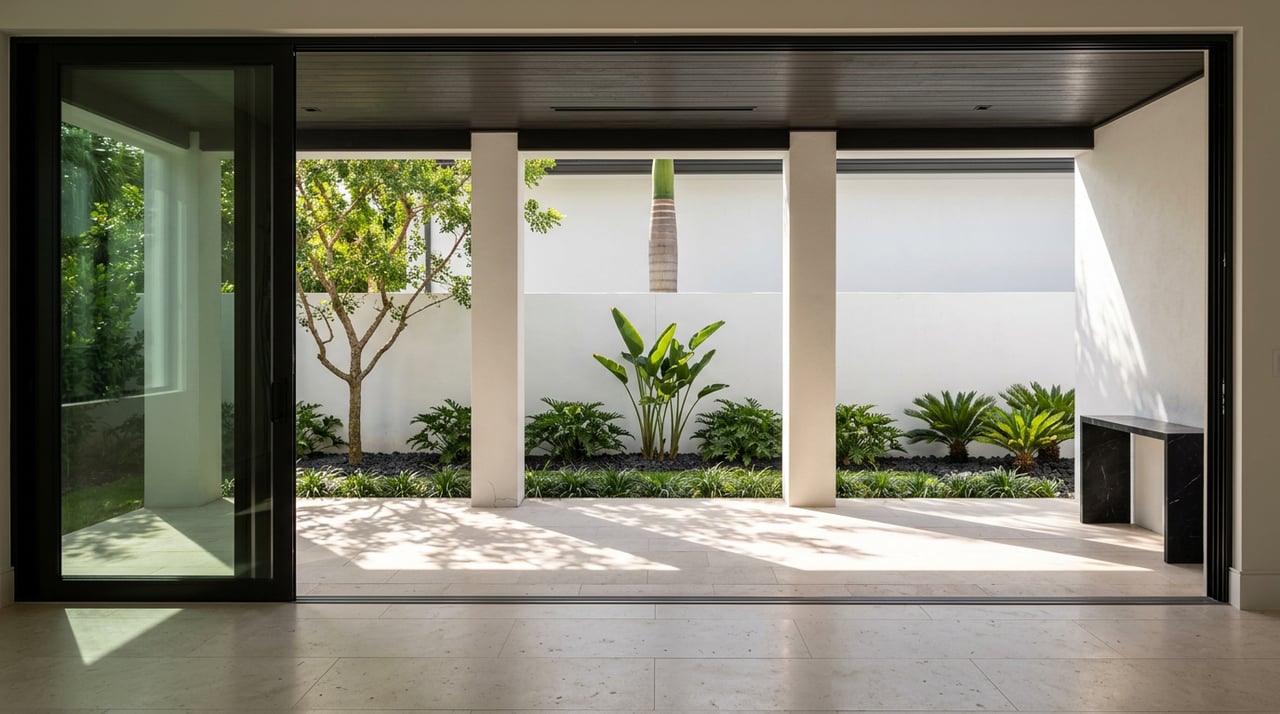
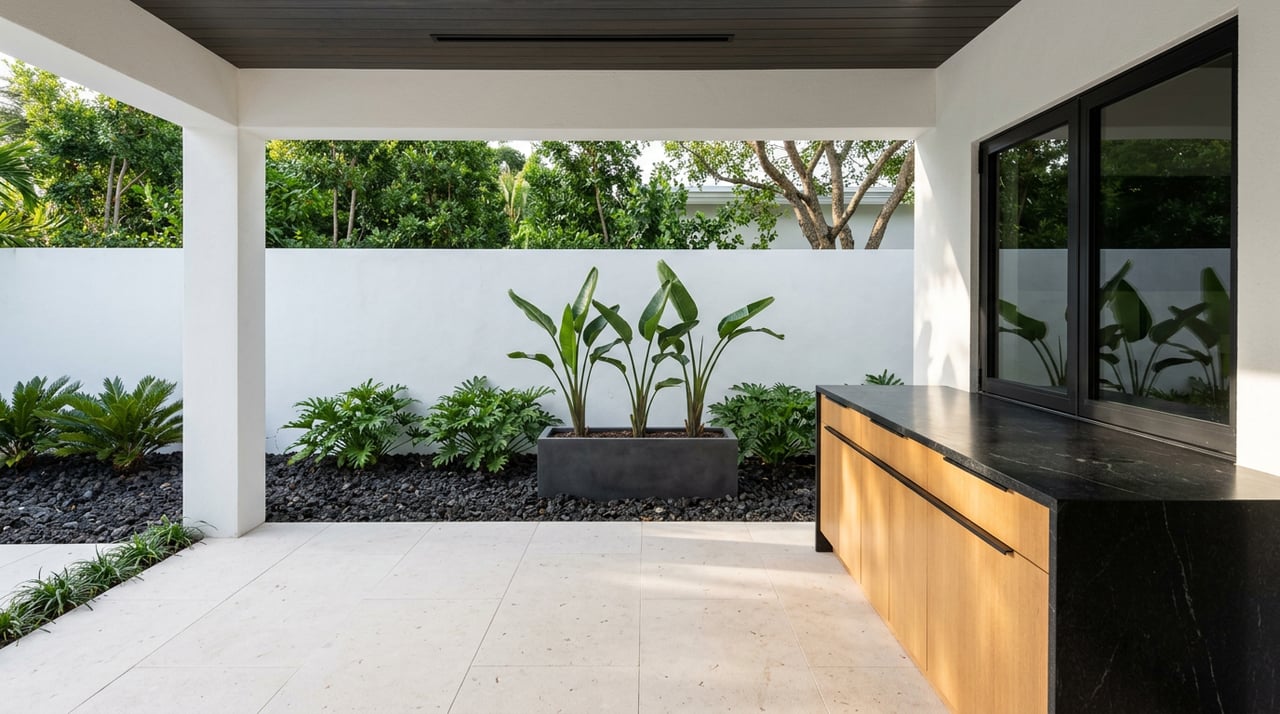
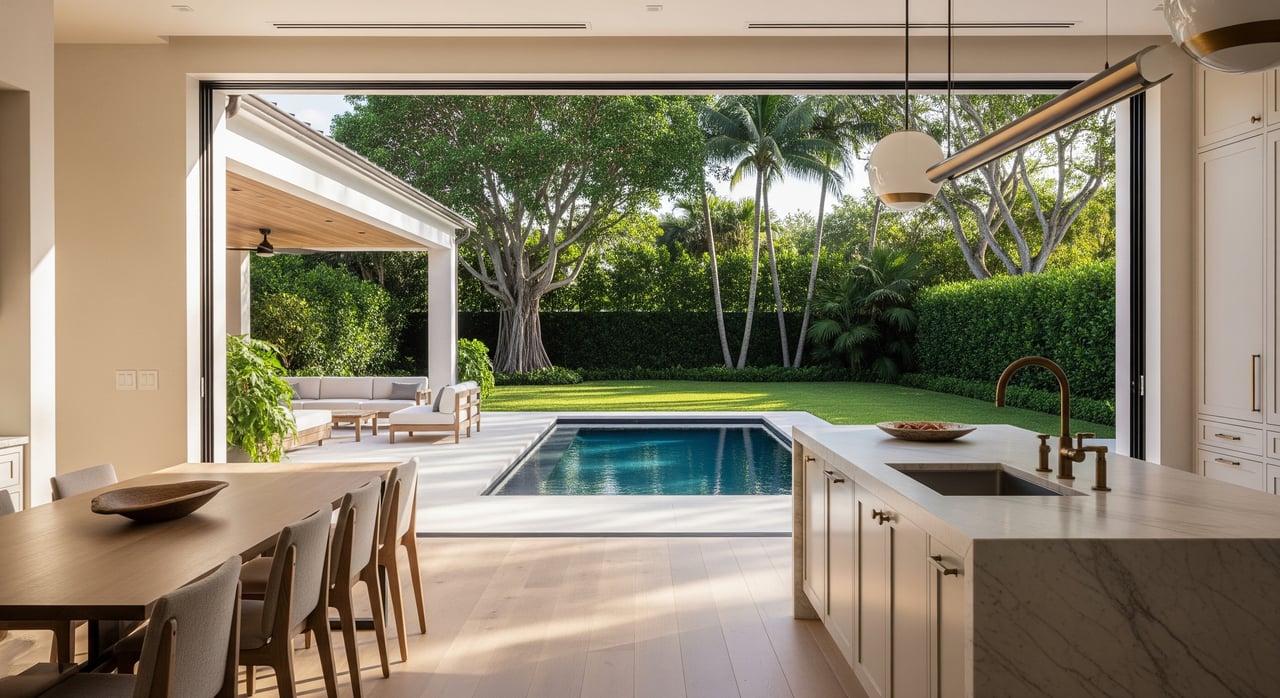
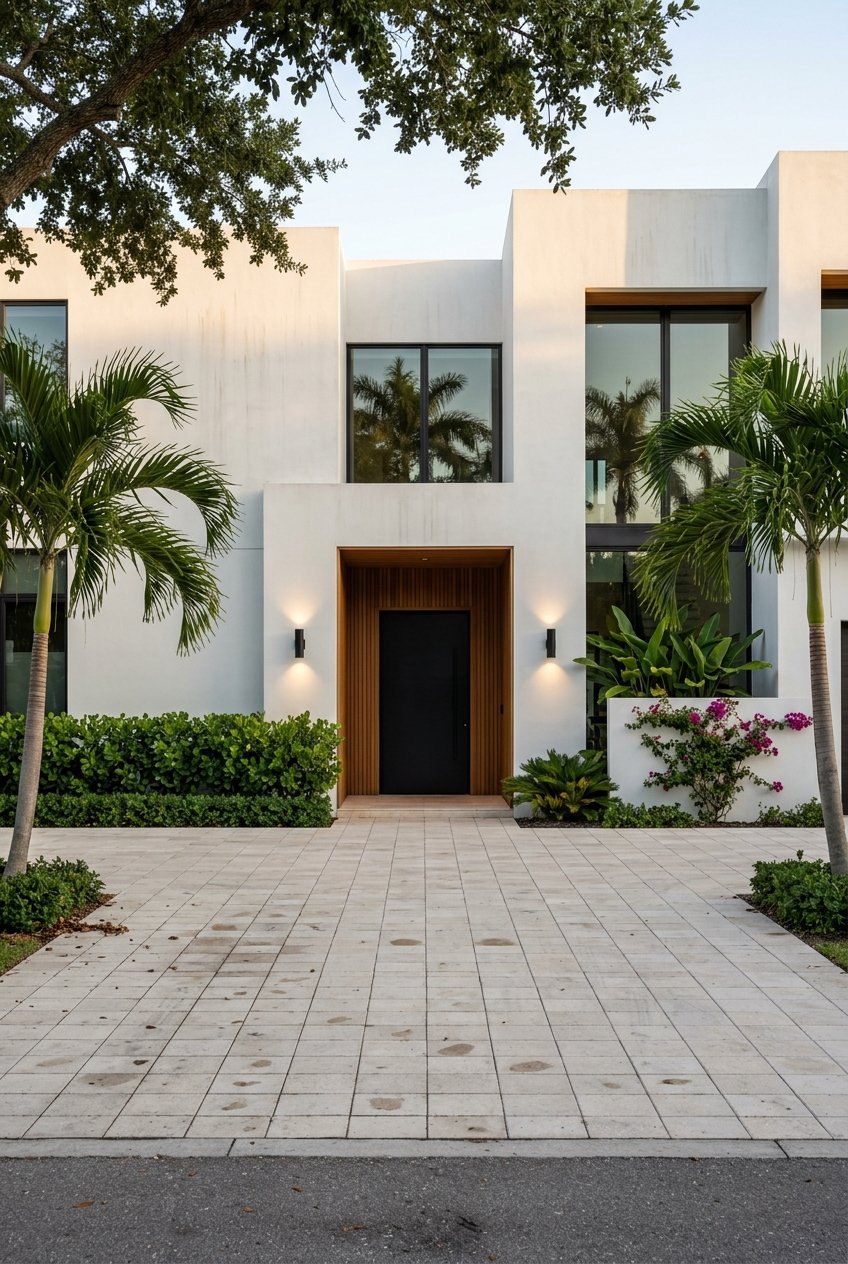
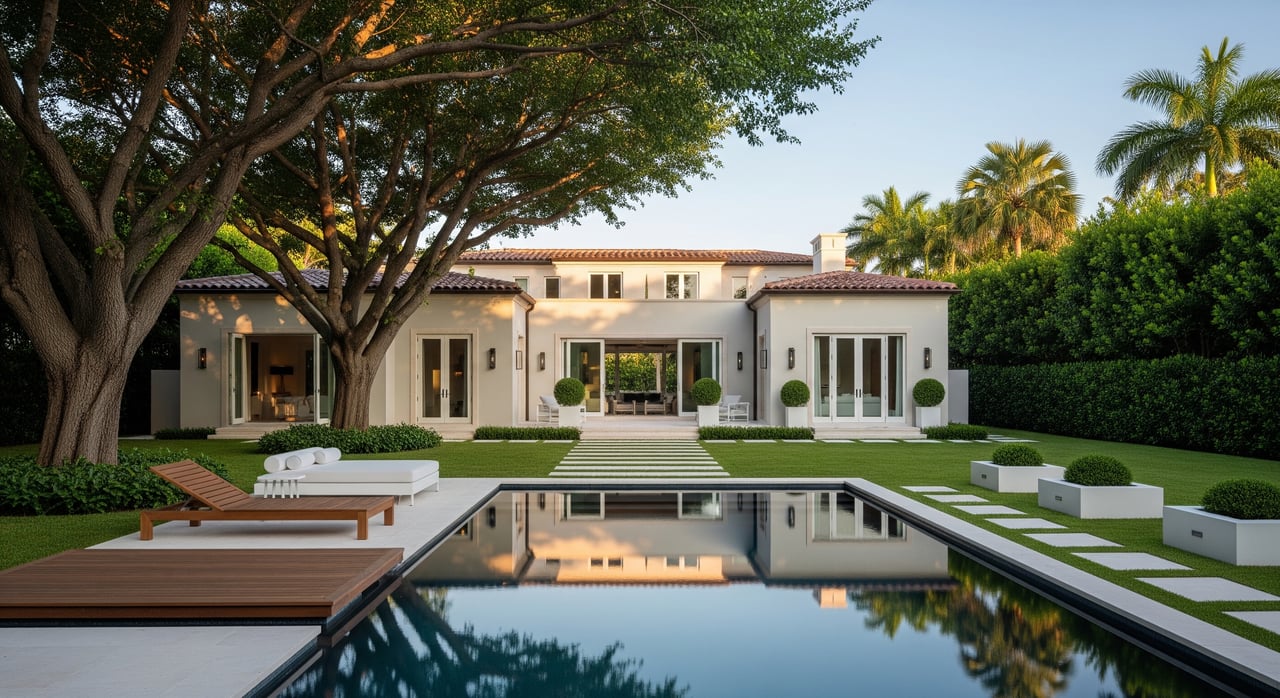
Modern infill in 2026 takes the form of what the market is calling "Modern Mediterranean" — new construction that respects the city's height and color palette requirements while incorporating floor-to-ceiling impact glass, clean concrete lines, and open floor plans. These homes offer the design flexibility the historic stock cannot, at a meaningful price premium.
For buyers considering a historically designated property: the Certificate of Appropriateness process governs exterior changes, and in some cases, meaningful tax abatements are available in exchange for preservation commitment. It is worth understanding both the obligation and the benefit before proceeding.
Coral Gables is one of the few places in South Florida where the phrase "car-optional" is actually true for residents living near the downtown core. The infrastructure to support it exists, and meaningful portions of the working-age population use it regularly.
The Coral Gables Trolley runs two primary routes along Ponce de Leon and Grand Avenue, connecting the northern business district to the Douglas Road Metrorail Station at no cost to riders. From Douglas, Brickell is a consistent 15-minute ride. For the city's large executive population, the Metrorail option is frequently more reliable than driving during peak hours.
By car, Brickell and Downtown Miami are 15 to 20 minutes during off-peak hours and 30 to 40 minutes during rush hour. Miami International Airport is 15 to 20 minutes in either direction — a consistent advantage for the international travelers who make up a significant share of the resident base.
The Underline, a 10-mile linear park and trail built beneath the Metrorail, is currently completing its final phase and has become the primary cycling artery connecting the Gables northward toward the city center. Combined with the city's shaded streets — Coral Gables has some of the most extensive banyan tree canopy in South Florida — recreational cycling is genuinely pleasant here in a way that is uncommon in the region.
Walk scores near Miracle Mile and Merrick Park reach into the 90s. As you move into the residential South Gables and estate-scale streets, the scores drop, reflecting a neighborhood built primarily around private automotive access. That is not a flaw — it is the nature of estate-oriented living — but buyers whose daily routine depends on walkability should calibrate their search accordingly.
Education is the single most consistent driver of the Coral Gables price premium, and the school system here earns that distinction. Miami-Dade County's strongest magnet programs are concentrated in this city, and families move here specifically to access them.
Public Schools (Miami-Dade County):
Private Schools:
The University of Miami campus sits within the Gables and shapes the cultural character of the surrounding area in ways that extend beyond higher education — access to Lowe Art Museum exhibitions, collegiate athletics, public lectures, and research partnerships with local institutions is a genuine quality-of-life factor for many residents.
Coral Gables earns its "City Beautiful" designation in part because of how its green space is distributed and maintained. The city effectively functions as a large landscaped environment, with its recreational assets spread throughout rather than concentrated in a few locations.
The Coral Gables dining scene has undergone a genuine transformation over the past several years. The neighborhood's reputation for quiet, conservative dining has been replaced by something more dynamic — a pedestrian-first social environment that functions as a destination for all of Miami, not just for local residents.
Giralda Plaza is the center of that energy. The pedestrian-only street hosts monthly Giralda Live events that bring live music, outdoor dining, and street-level social life to a setting that rewards lingering. The range runs from traditional Peruvian ceviche at Aromas del Perú to contemporary Mediterranean and Greek seafood concepts.
The Plaza Coral Gables has added a new layer of elevated dining near Miracle Mile. Rooftop venues like Cebada draw the corporate executive crowd with signature cocktail programs and panoramic views. The completion of this development has materially changed the evening character of the northern Gables.
The overall tone of the dining scene is what distinguishes it from neighboring Miami Beach. It is sophisticated and social rather than club-driven — built around 10 p.m. sidewalk wine service, rooftop jazz, and culinary events like the annual Tour of Kitchens and Taste the Gables. Long-standing Italian institutions like Zucca and Fratellino coexist with a newer generation of high-concept arrivals, and the emphasis on quality and atmosphere over volume is consistent throughout.
For buyers considering Coral Gables, the dining and nightlife scene functions as a lifestyle confirmation: this is a city that takes pleasure seriously without losing its sense of refinement.
If you are considering buying, selling, or investing in Coral Gables, working with someone who knows this market specifically — not just South Florida generally — makes a material difference.
Noel Barrientos is a Miami-based real estate professional with over 14 years of sales and customer service experience, operating across Coral Gables, South Miami, and the broader Miami-Dade market. His portfolio includes transactions ranging from entry-level condos to a $16.5M estate on Granada Boulevard, reflecting genuine familiarity with every price tier the Gables offers. Clients consistently describe Noel as someone who is accessible, honest, and focused on their outcome — not the transaction. Whether you are a first-time buyer navigating Coral Gables' historic designation requirements, a relocating executive looking for a home near the corporate corridor, or an investor evaluating yield opportunities in the US-1 rental market, Noel brings the local knowledge and client commitment to get it done right.
Reach out directly to start the conversation.
📞 (786) 757-2838 ✉️ [email protected] 🌐 themiamihomegroup.com
There's plenty to do around Coral Gables, including shopping, dining, nightlife, parks, and more. Data provided by Walk Score and Yelp.
Explore popular things to do in the area, including Male Shapewear, allCanes, and Unofficial Dog Park.
| Name | Category | Distance | Reviews |
Ratings by
Yelp
|
|---|---|---|---|---|
| Shopping | 3.13 miles | 0 reviews | 0/5 stars | |
| Shopping | 3.13 miles | 15 reviews | 4.7/5 stars | |
| Active | 1.81 miles | 23 reviews | 4.9/5 stars | |
| Nightlife | 2.93 miles | 17 reviews | 4.8/5 stars | |
| Beauty | 3.01 miles | 0 reviews | 0/5 stars | |
| Beauty | 3.02 miles | 1 review | 5/5 stars | |
| Beauty | 3.03 miles | 19 reviews | 4.8/5 stars | |
| Beauty | 3.05 miles | 0 reviews | 0/5 stars | |
| Beauty | 3.05 miles | 31 reviews | 4.1/5 stars | |
|
|
||||
|
|
||||
|
|
||||
|
|
||||
|
|
||||
|
|
Coral Gables has 18,941 households, with an average household size of 2.28. Data provided by the U.S. Census Bureau. Here’s what the people living in Coral Gables do for work — and how long it takes them to get there. Data provided by the U.S. Census Bureau. 49,243 people call Coral Gables home. The population density is 3,809 and the largest age group is Data provided by the U.S. Census Bureau.
Total Population
Population Density Population Density This is the number of people per square mile in a neighborhood.
Median Age
Men vs Women
Population by Age Group
0-9 Years
10-17 Years
18-24 Years
25-64 Years
65-74 Years
75+ Years
Education Level
Total Households
Average Household Size
Average individual Income
Households with Children
With Children:
Without Children:
Blue vs White Collar Workers
Blue Collar:
White Collar:
Miami FL
Miami FL