Welcome to
215,733 people live in Homestead, where the median age is 33.4 and the average individual income is $25,284. Data provided by the U.S. Census Bureau.
Total Population
Median Age
Population Density
Average individual Income
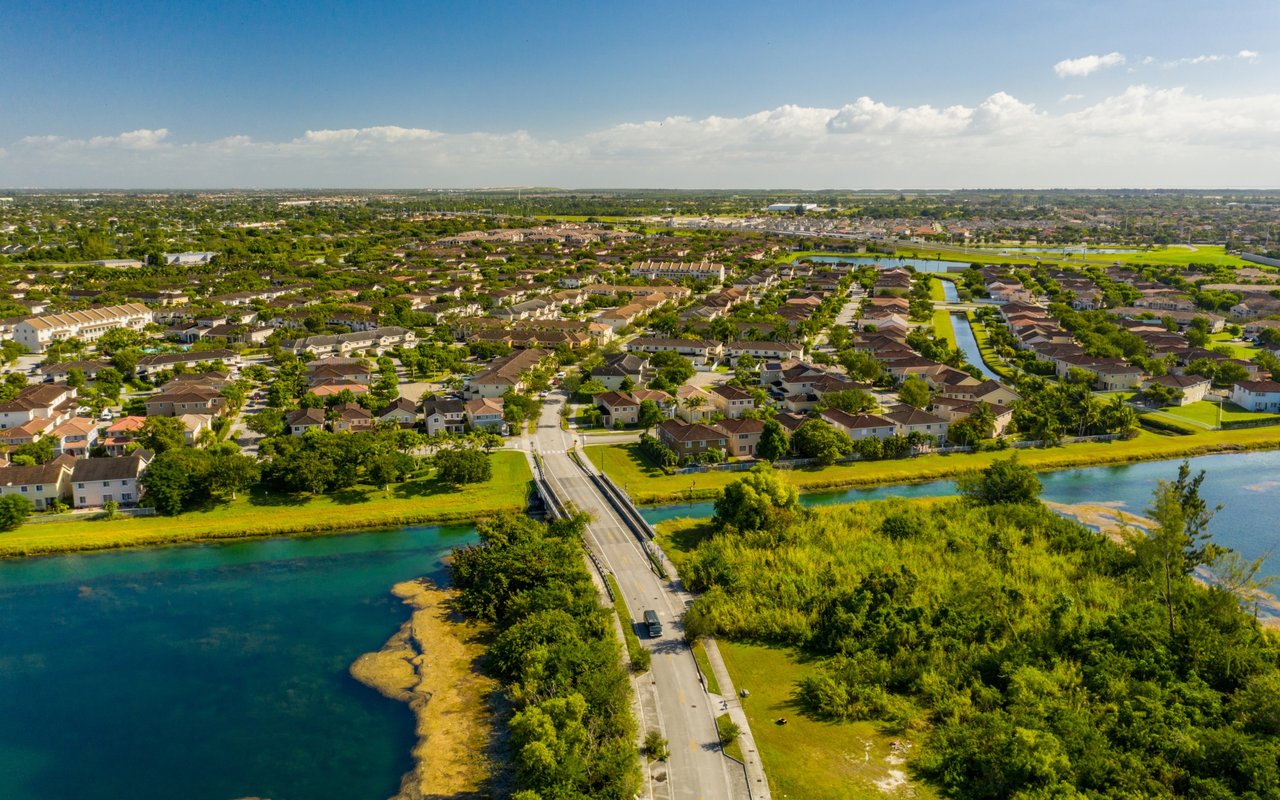
Homestead sits at the southern tip of Miami-Dade County, occupying a position no other South Florida city can claim. It is simultaneously the last true suburb before the county runs out of developable land and the land bridge that carries every car, truck, and boat trailer headed into the Florida Keys. Everglades National Park lies roughly ten miles to the west. Biscayne National Park lies about nine miles to the east. Between the two sits a city of master-planned subdivisions, working farmland, historic storefronts, and some of the last affordable single-family housing stock in the county.
That geography shapes everything about living here. Buyers moving south from Kendall, Doral, or Miami proper consistently find they can afford more house, more land, and newer construction — often substantially newer, since Homestead is one of the few places in Miami-Dade where open land still exists for residential subdivision. The tradeoff is distance. A commute to Downtown Miami or MIA is a real commitment, and buyers need to price that honestly into their decision before they fall in love with a floor plan.
What surprises most newcomers is how distinct Homestead feels from the rest of the county. The Redland's agricultural acreage north and west of town keeps rural character alive in a county otherwise defined by density. The city's Latin American and Caribbean communities give downtown Krome Avenue an authenticity that no lifestyle center can manufacture. And the two national parks mean residents live minutes from coral reefs and sawgrass prairie rather than an hour or two away.
Homestead works best for buyers who want space, value, and outdoor access, and who either work locally, work from home, or accept the drive as the price of everything else.
Homestead's road network is unusual because the city functions as a terminus rather than a through-point. Understanding the four main arteries is essential to evaluating any address here, since a fifteen-minute difference in where a home sits can translate into a meaningfully different daily commute.
Florida's Turnpike Extension (SR 821) ends in Homestead. This is the primary toll route north toward Downtown Miami, Doral, and Broward County, and it is the fastest option by a wide margin. The bottleneck is predictable: traffic slows through Cutler Bay and Palmetto Bay during morning and evening peaks. Proximity to a Turnpike on-ramp is one of the most underrated value drivers in Homestead real estate, which is why communities like Waterstone and Oasis command interest from commuters.
US-1 (South Dixie Highway) runs parallel to the Turnpike as the non-tolled alternative. It works well for local trips within South Dade, but the signal density and constant commercial access make it a slower choice for long-distance driving. Most residents use it for errands, not commutes.
Krome Avenue (SR 997) runs north-south along Homestead's western edge and bypasses central Miami entirely, connecting to West Kendall, Tamiami Trail (US-41), and eventually US-27. It is heavily used by commuters headed toward western industrial and warehouse employment, and by commercial truck traffic avoiding the central corridors. Homes on Homestead's western and northern edges — including much of Silver Palm and the Redland — benefit from this access.
Card Sound Road (CR 905A) heads southeast out of town toward Key Largo by way of the Card Sound Bridge and Alabama Jack's. It is a scenic, lower-traffic toll alternative to the US-1 Stretch, and locals treat it as essential knowledge on busy Keys weekends.
Driving to Downtown Miami or Miami International Airport during the 6:30 a.m. to 9:00 a.m. window generally runs 60 to 90 minutes. Off-peak, the same trip is 35 to 45 minutes. That gap is the single most important number for any buyer weighing Homestead against a closer suburb. Many residents who work in central Miami mitigate it by driving to the Dadeland South Metrorail station and riding in, using park-and-ride and express bus options along the US-1 corridor.
Heading the other direction, Homestead is the real gateway to the Keys. Key Largo is a 30- to 40-minute drive, which makes weekend day trips genuinely casual rather than an expedition. The flip side is Sunday afternoon, when northbound Keys traffic backs up along US-1 and the Stretch — a recurring reality that residents plan around rather than fight.
Homestead remains one of Miami-Dade County's most accessible residential markets. That single fact drives most of the activity here — first-time buyers priced out of Kendall, growing families needing a fourth bedroom, and investors drawn by inventory depth all end up looking south.
Market Snapshot | Homestead |
|---|---|
Single-family homes (median range) | $550,000 – $600,000 |
Townhomes and condos (median range) | $340,000 – $370,000 |
Average days on market | Roughly 50 to 80 days |
Dominant housing stock | Master-planned communities, new-construction townhomes, single-family homes, agricultural acreage |
The affordability gap is the headline. In Pinecrest, Coral Gables, or Doral, median single-family pricing routinely clears seven figures. In Homestead, that same budget buys considerably more square footage — and often a home built within the last ten to fifteen years rather than the 1950s or 1960s.
The details that matter most are the ones buyers tend to discover late. Many newer developments built by national builders like Lennar and D.R. Horton carry HOA dues covering clubhouses, pools, and gated entries, and a number of them also sit inside a Community Development District, which adds a CDD assessment to the annual tax bill. Together these can add $150 to $400 or more per month to the true cost of ownership. A home that looks $40,000 cheaper on the MLS can end up costing more monthly than a competing listing once those line items are accounted for.
Insurance is the other variable that separates a comfortable payment from a painful one. Homes built after 2000 under current Florida Building Code standards — concrete block construction, impact-rated windows and doors, newer roof — price dramatically better on windstorm coverage than older stock. In Homestead, where a large share of inventory postdates Hurricane Andrew's rebuild era, that works in buyers' favor more often than not, but it should still be verified property by property before the inspection period closes.
Inventory in Homestead has widened, and buyers know it. Homes priced against recent, genuinely comparable sales continue to move at a steady pace. Homes priced on aspiration sit, and the longer they sit, the more leverage the eventual buyer gains.
The features that actually move Homestead buyers are practical rather than cosmetic: roof and A/C age, impact windows, garage space, and low carrying costs. A modest HOA is a selling point worth advertising in the remarks. And for acreage properties in the Redland or western Homestead, the pitch is different entirely — space for RVs, boats, trailers, equipment, and livestock is the value, and marketing that should lead with the land, not the kitchen.
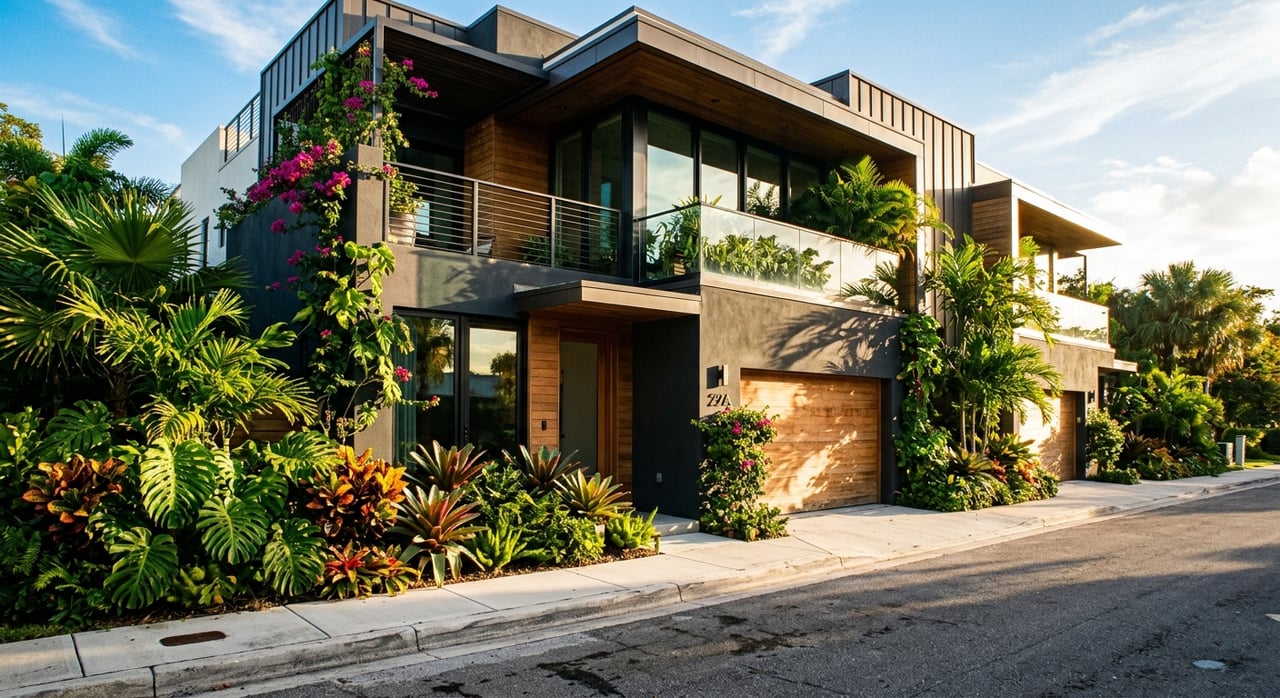
Homestead's residential geography breaks cleanly in two. The eastern and central corridors are dominated by large master-planned communities built over the past two to three decades. The northern and western edges transition into agricultural acreage. Knowing which subdivision a home sits in tells you more about the ownership experience here than almost anywhere else in the county, because HOA structures, amenity packages, and CDD obligations vary widely between communities that sit a mile apart.
Keys Gate is one of the largest and most established gated master-planned communities in the city. It is not a single HOA but a collection of sub-associations — North Gate, Towngate, and The Shores among them — which means dues, rules, and amenity access differ depending on which pocket a home falls in. Housing ranges from condominiums to single-family homes, and the community includes active adult (55+) enclaves. Buyers should always confirm which sub-association governs a specific address.
Waterstone is a large multi-subdivision gated development positioned near the Turnpike entrance, which makes it a perennial favorite with commuters. It features attended entry gates, lakes, walking trails, and a substantial central clubhouse. Housing spans entry-level townhomes through larger detached single-family homes, so the price range inside a single community is wide.
Malibu Bay sits in eastern Homestead and offers modern townhomes and single-family residences with a resort-style amenity package — pool, splash pad, and fitness center. It draws buyers who want newer construction and community amenities without stretching into the highest price tiers.
Portofino, including Portofino Bay and Portofino Estates, sits adjacent to Waterstone and delivers a gated mix of single-family homes and townhouses in Spanish-Mediterranean architectural styling. It appeals to buyers wanting a more cohesive architectural feel than a typical builder subdivision.
Oasis, including the Barbados and Fiji enclaves, is a Lennar-built master community off Campbell Drive. Townhomes and single-family homes cluster around a central clubhouse, with the practical advantage of quick access to shopping and the Turnpike.
Villages of Homestead dates to the late 1970s and 1980s, and its age is a genuine feature. HOA fees tend to run lower than in newer developments, the tree canopy is mature, and architectural styles vary in a way that newer subdivisions rarely do. Buyers who dislike the uniformity of recent construction often end up here.
Silver Palm sits along the northern boundary where Homestead meets West Kendall, offering two-story townhomes and larger single-family homes. Its northern position and proximity to Krome Avenue and SW 112th Avenue make it one of the most commuter-friendly addresses in the area, which is reflected in demand.
Property Type | Typical Range | What Defines It |
|---|---|---|
Townhomes and condos | $330,000 – $400,000 | Low maintenance, HOA-maintained exteriors, shared amenities |
Suburban single-family (in HOA) | $480,000 – $650,000 | Gated, 1,800–2,800 sq ft, two-car garage, compact lots |
Agricultural acreage / Redland estates | $800,000 – $2,000,000+ | 1.25 to 10+ acres, no HOA, room for farming, boats, RVs, custom pools |
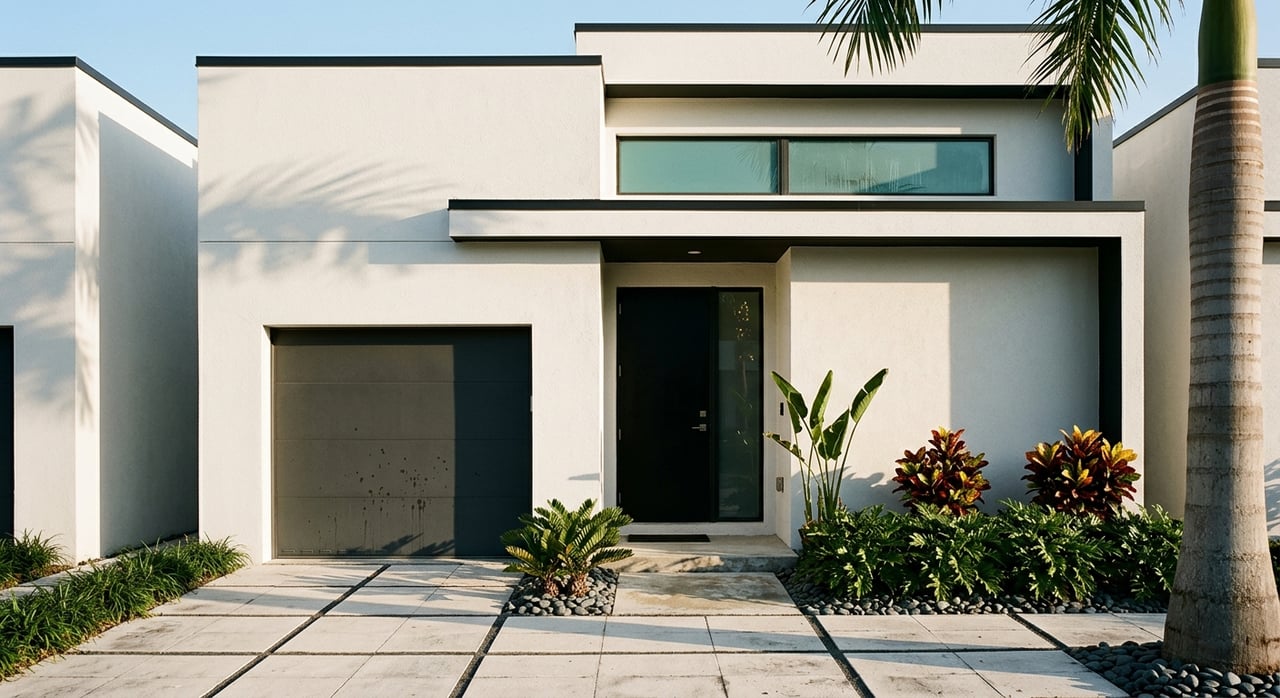
Townhomes make up a large share of Homestead's entry-level inventory. Typical layouts run three to four bedrooms with an attached one-car garage and a rear patio. They are the most straightforward path into ownership in South Dade, but the monthly HOA obligation needs to be underwritten alongside the mortgage rather than treated as an afterthought — on a $350,000 townhome, a $300 monthly assessment is the equivalent of roughly $50,000 in additional purchase price at current rates.
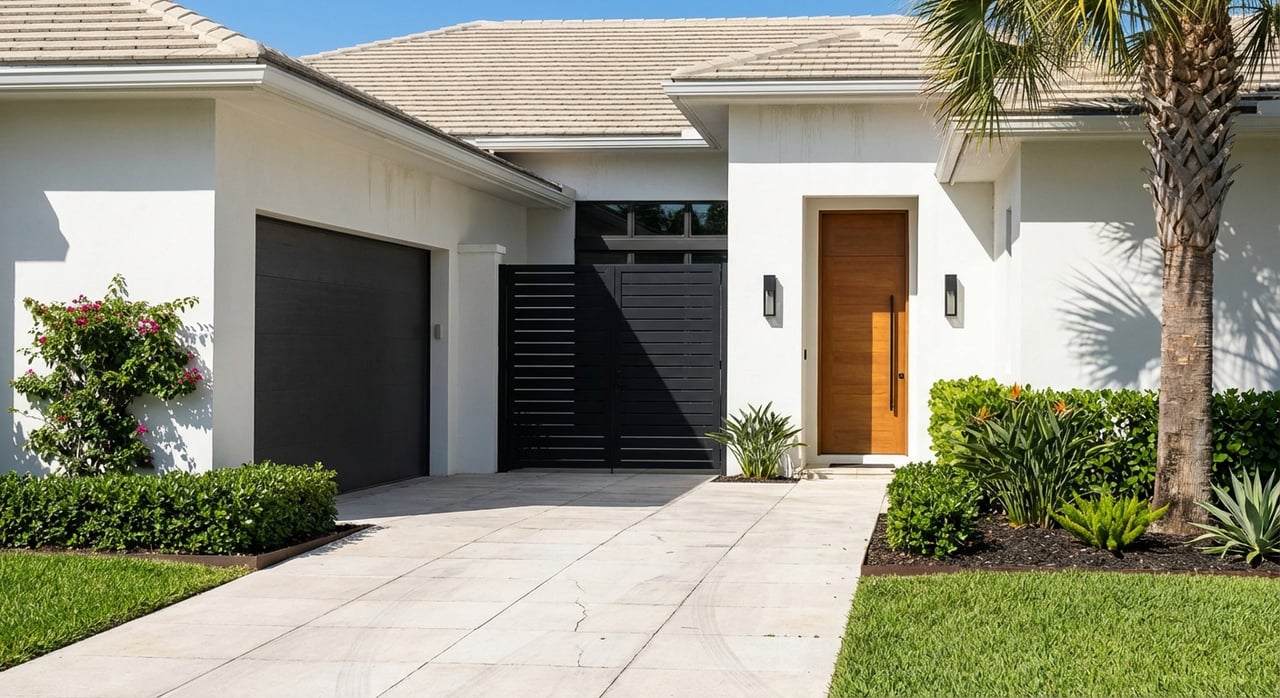
Homestead is one of the last places in Miami-Dade with land available for new residential subdivision, and the inventory reflects current builder trends. Next-Gen and multigenerational layouts — a separate entrance, kitchenette, and private suite within the main structure — appear frequently here and are genuinely useful for extended families or buyers offsetting a mortgage with rental income. Construction is concrete block with impact-rated windows and doors, built to post-2020 code, which pays off directly in insurance premiums. The compromise is lot size: zero-lot-line configurations are standard, trading private yard space for shared community parks and facilities.
Head north and west toward the Redland, along the unincorporated Miami-Dade and Homestead border, and the housing stock changes character entirely. Lots typically run from 1.25 acres to ten acres or more, zoned for agricultural or estate residential use (AU and EU designations), permitting livestock, fruit groves, equestrian facilities, and large detached workshops.
These properties operate outside HOA control, which is exactly the point for many buyers — commercial vehicles, boats, and RVs can be stored on site without approval. The offsetting consideration is infrastructure. Many acreage homes run on septic systems and private wells rather than municipal water and sewer, and buyers should plan for well water testing, septic inspection, and an honest conversation about ongoing maintenance before closing. It is a different ownership experience than a gated subdivision, and it rewards buyers who go in informed.
Homestead consistently ranks among the most affordable places to live in Miami-Dade County, but the picture is more nuanced than a single median price suggests. Housing is meaningfully cheaper. Transportation is meaningfully more expensive. How those two offset each other depends entirely on where a household works.
Category | Homestead vs. Countywide |
|---|---|
Housing | 20% to 35% below the county median — more square footage, newer construction, larger lots per dollar than Kendall, Doral, or Coral Gables |
Property taxes and HOAs | Tax rates track county baselines, but HOA dues and CDD assessments in newer communities can add $150–$400+ monthly |
Utilities | Electricity through Florida Power & Light; municipal water and sewer in the city core, private well and septic in surrounding rural areas |
Transportation | 15% to 25% above countywide for commuters — longer distances, higher fuel use, accelerated vehicle wear, and regular SunPass tolls |
The practical takeaway: a household working locally, remotely, or anywhere in South Dade captures the full affordability advantage. A household commuting daily to Brickell or Doral gives back a portion of it in fuel, tolls, and time. It is still usually a net win on total housing cost, but buyers should run the real numbers rather than assume.
Homestead falls within District 9 of Miami-Dade County Public Schools, and families here have a wider mix of options than the district designation alone suggests — traditional neighborhood schools, magnet programs, an unusually dense charter presence, and a full college campus in the middle of town.
On the public side, elementary and K-8 options include Homestead Base K-8 Center, Campbell Drive K-8 Center, and Gateway Environmental K-8 Learning Center, the last of which built its identity around agriscience and environmental education — a curriculum that makes obvious sense in a city bordered by two national parks and the Redland. At the high school level, Homestead Senior High School runs career pathways in health sciences, veterinary technology, and public service. Nearby South Dade Senior High School carries magnet programs in agriscience, International Baccalaureate, and law enforcement, and draws students from across the southern end of the county.
Charter schools are a significant part of the landscape here in a way they are not in every Miami-Dade submarket. Somerset Academy operates multiple campuses in the Homestead area, including Somerset City Arts and Somerset Academy South Homestead, with K–12 tracks in visual arts, STEM, and collegiate preparation. AcadeMir Charter Schools offers elementary and middle programs focused on STEM and international studies. The Charter School at Waterstone serves primary grades directly inside one of the area's largest master-planned communities, which is a meaningful convenience factor for families buying there.
The MDC Homestead Campus, located downtown, functions as the educational anchor for South Dade and is a genuine differentiator for the city. It houses the Eig-Watson School of Aviation, covering piloting, air traffic control, and aviation administration, along with the Benjamín León School of Nursing and Emergency Medical Services programs for EMT and paramedic certification. The campus also hosts the Honors College, a selective associate degree track for students transferring to four-year universities, and the School for Advanced Studies (SAS), a top-ranked collegiate high school where juniors and seniors earn a diploma and an Associate in Arts simultaneously. A 60,000-square-foot Student Success Center consolidates student services, computer labs, an entrepreneurial hub, and event space.
For families with college-bound teenagers, SAS in particular is worth understanding before choosing a neighborhood. It is one of the strongest academic opportunities in South Dade and does not require relocating north.
Homestead is the only city in the country positioned between two national parks, and residents treat that as a daily amenity rather than a vacation itinerary.
Biscayne National Park, roughly nine miles east, protects about 172,000 acres of open water, mangrove shoreline, barrier islands, and living coral reef. More than 95% of the park is underwater, so the experience is fundamentally boat-based — snorkeling, diving, and guided trips out to Boca Chita Key, Elliott Key, and the stilt houses of Stiltsville. The Dante Fascell Visitor Center serves as the mainland hub, with exhibits, boardwalk trails through mangrove forest, and kayak and canoe launch access for those who want the park without a vessel.
Everglades National Park lies about ten miles west, and Homestead is the primary gateway to its southern entrance. The Ernest F. Coe Visitor Center handles orientation, and the nearby Anhinga Trail at Royal Palm is the single best short walk in South Florida for reliable close-range sightings of alligators, wading birds, and turtles. Continuing south through the park leads to Flamingo on Florida Bay, where marina services, boat rentals, backcountry camping, and saltwater paddling routes open up an entirely different side of the park.
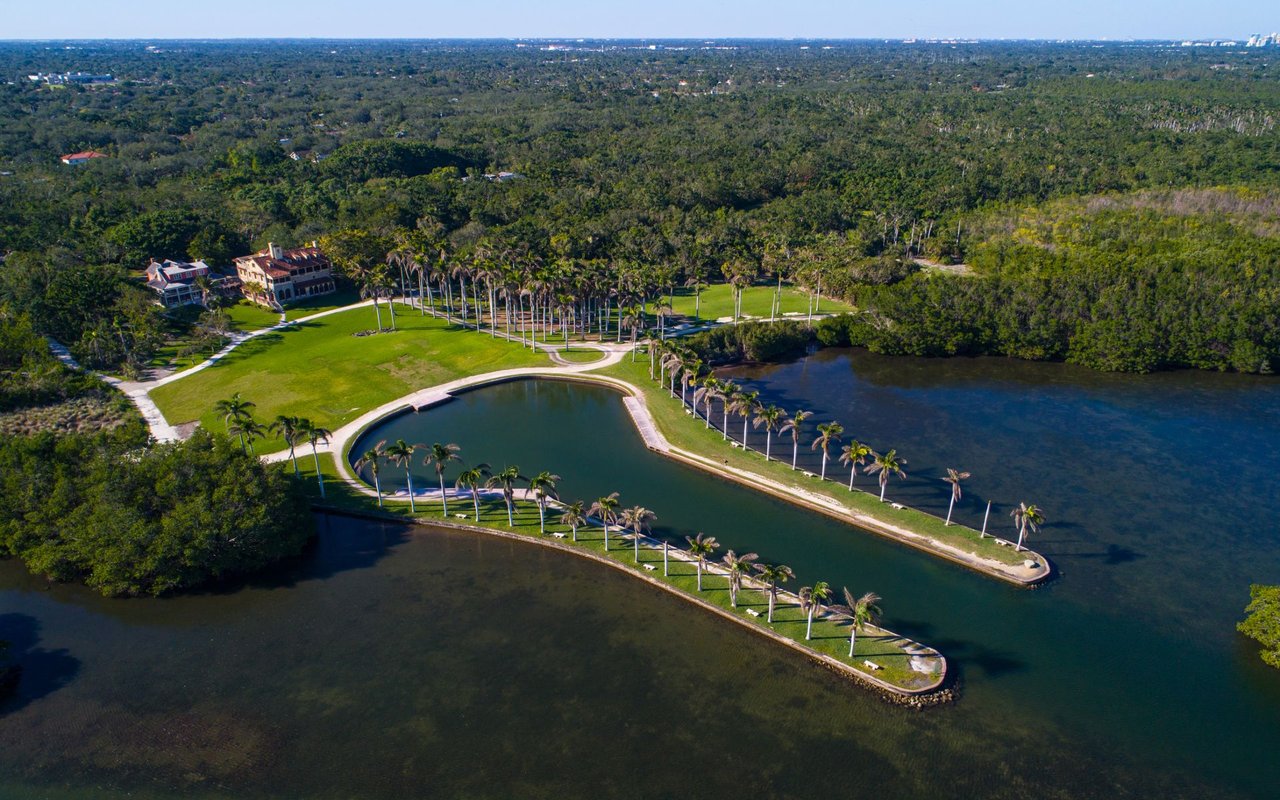
Homestead Bayfront Park and Marina, adjacent to Biscayne National Park, is the county-run facility that most residents actually use week to week. Its atoll tidal pool is a naturally filtered saltwater swimming basin ringed by palms — the local family swimming spot. Herbert Hoover Marina provides deep-water boat ramps, fuel docks, fish cleaning stations, and trailer parking, making it the practical launch point for anyone running out into Biscayne Bay or down toward the Upper Keys. For boat owners, proximity to this marina is a legitimate factor in choosing where to buy.
The former Homestead Sports Complex, once an MLB spring training facility, is now the site of a $280 million private redevelopment into the Sports Performance Hub on 92 acres. Plans include a 10,000-seat multipurpose stadium — future home venue for Miami FC and the long-running Homestead Championship Rodeo — plus multi-sport training academies, public athletic courts, a boarding prep school, and a sports medicine facility. Groundbreaking took place in March 2026. This is the kind of project that reshapes a submarket over a five- to ten-year horizon, and buyers with a long hold period should be tracking it.
Downtown Homestead centers on Krome Avenue (SW 177th Avenue), and it is the part of the city that most surprises visitors expecting nothing but subdivisions. Early twentieth-century storefronts still line the strip, occupied by independent businesses rather than national chains.
The food is the main draw. Krome Avenue and the surrounding blocks hold a genuinely strong concentration of Mexican taquerias, Cuban bakeries, seafood counters, and farm-to-table kitchens supplied by Redland growers a few miles north. This is not curated dining — it is the accumulated result of the agricultural workforce and immigrant communities that built the city. Alongside the restaurants sit antique dealers, specialty boutiques, auto suppliers, and neighborhood service businesses, all in a walkable footprint.
The Seminole Theatre anchors the cultural side. Damaged by Hurricane Andrew in 1992 and restored and reopened in 2015, it now serves as South Dade's primary performing arts venue, programming live theater, music, dance, comedy, and youth arts education. Its reopening was the turning point in downtown's revitalization.
Next door, Losner Park was expanded and redesigned into a modern urban gathering space. It includes an outdoor amphitheater used for concerts and movie nights, a veterans memorial, interactive splash features for children, and shaded lawn space that hosts festivals and the farmers market. Together the theatre and the park have given downtown a functioning civic center — something many South Florida suburbs never developed.
Northwest of central Homestead lies the Redland, an agricultural district built on fertile oolitic limestone soil and a tropical climate that supports crops grown almost nowhere else in the continental United States. It is South Florida's breadbasket, and it is also a weekend destination for the entire county.
Knaus Berry Farm is the institution. Family-run and open seasonally from roughly November through April, it draws lines that regularly stretch down the road for its cinnamon rolls, homemade ice cream, and strawberry milkshakes, with U-pick strawberry fields alongside. Locals plan around opening day.
Schnebly Redland's Winery and Miami Brewing Company is the southernmost winery in the continental U.S., and it does not use grapes. Wines and beers are fermented from local tropical fruit — mango, lychee, guava, passion fruit, avocado. The estate itself is heavily landscaped with coral rock waterfalls, tiki structures, live music, and farm-to-table dining, and it functions as one of the area's most popular event and wedding venues.
Preston B. Bird / Mary Heinlein Fruit and Spice Park is a 37-acre county-run tropical botanical garden holding more than 500 varieties of exotic fruits, herbs, nuts, and spices from around the world. Visitors on guided tours are allowed to taste fruit that has fallen naturally to the ground, which makes it one of the more genuinely unusual public parks in Florida.
Beyond the marquee destinations, the Redland's roadside stands and U-pick fields run year-round and seasonally. Robert Is Here, just south in Florida City, is the best-known, but dozens of smaller growers sell mamey sapote, longan, starfruit, passion fruit, dragon fruit, tomatoes, peppers, and heirloom winter vegetables directly. For buyers considering acreage out here, this economy is not background scenery — it is the working context of the neighborhood, complete with tractor traffic, seasonal labor, and crop spraying schedules.
Homestead's economy rests on a handful of large, distinct anchors — motorsports, military, healthcare, and heritage tourism — which gives the local job market more diversity than a city of its size usually has.
Homestead-Miami Speedway is a 1.5-mile oval hosting major motorsport series including NASCAR Cup Series playoff racing. Race weekends fill local hotels and restaurants and generate substantial seasonal revenue, and the facility operates year-round with driving experiences, track rentals, and community events. Residents in nearby communities should expect noticeable traffic and noise on event weekends — a factor worth raising before an offer, not after.
Homestead Air Reserve Base, just east of the city center, is home to the 482d Fighter Wing flying F-16Cs, along with units from the U.S. Coast Guard, U.S. Customs and Border Protection, and the Florida Air National Guard. It is among South Dade's largest employers and brings a steady population of service members, civilian contractors, and defense personnel — a consistent source of both buyer and rental demand.
Baptist Health Homestead Hospital, located off Campbell Drive near the Turnpike, is the primary full-service medical center for South Miami-Dade and the Upper Keys. It operates a 24/7 emergency center, surgical units, a birthing center, and outpatient diagnostics, and it employs a large share of the area's healthcare workforce. For families weighing a move this far south, having a full hospital in town rather than an hour north matters more than most buyers initially realize.
Coral Castle Museum is the local landmark that defies easy explanation — a complex carved single-handedly from more than 1,100 tons of oolitic limestone by Latvian immigrant Edward Leedskalnin between 1923 and 1951, built without heavy machinery. It remains a working tourist draw along US-1 and a piece of genuine South Dade folklore.
Homestead rewards buyers and sellers who know the specifics — which Keys Gate sub-association governs a given address, whether a community carries a CDD assessment on top of HOA dues, how a well and septic property should be inspected, and what a home's roof and window package will actually do to an insurance quote. Those details separate a smooth transaction from an expensive surprise.
Noel Barrientos of The Miami Home Group brings over 14 years of sales and client service experience to Miami-Dade real estate, with an active track record throughout Homestead and South Dade — from townhomes in the 33032 and 33035 corridors to acreage properties in the Redland. Whether you are buying your first home, selling a property that needs to be positioned correctly against current inventory, or weighing Homestead against communities further north, he will walk you through the numbers honestly and help you decide what actually fits.
Reach out directly at (786) 757-2838 or [email protected]. Florida License #3521348.
There's plenty to do around Homestead, including shopping, dining, nightlife, parks, and more. Data provided by Walk Score and Yelp.
Explore popular things to do in the area, including A E G Trading Co, Florida National Parks Association, and Frog Pond Wildlife Management Area.
| Name | Category | Distance | Reviews |
Ratings by
Yelp
|
|---|---|---|---|---|
| Dining | 4.63 miles | 0 reviews | 0/5 stars | |
| Active | 3.58 miles | 2 reviews | 5/5 stars | |
| Active | 4.36 miles | 0 reviews | 0/5 stars | |
|
|
||||
|
|
||||
|
|
||||
|
|
||||
|
|
||||
|
|
Homestead has 64,389 households, with an average household size of 2.7985714285714285. Data provided by the U.S. Census Bureau. Here’s what the people living in Homestead do for work — and how long it takes them to get there. Data provided by the U.S. Census Bureau. 215,733 people call Homestead home. The population density is 2,378 and the largest age group is Data provided by the U.S. Census Bureau.
Total Population
Population Density Population Density This is the number of people per square mile in a neighborhood.
Median Age
Men vs Women
Population by Age Group
0-9 Years
10-17 Years
18-24 Years
25-64 Years
65-74 Years
75+ Years
Education Level
Total Households
Average Household Size
Average individual Income
Households with Children
With Children:
Without Children:
Blue vs White Collar Workers
Blue Collar:
White Collar:
Miami FL
Miami FL