Welcome to
1,854,092 people live in Miami, where the median age is 42 and the average individual income is $35,299. Data provided by the U.S. Census Bureau.
Total Population
Median Age
Population Density
Average individual Income
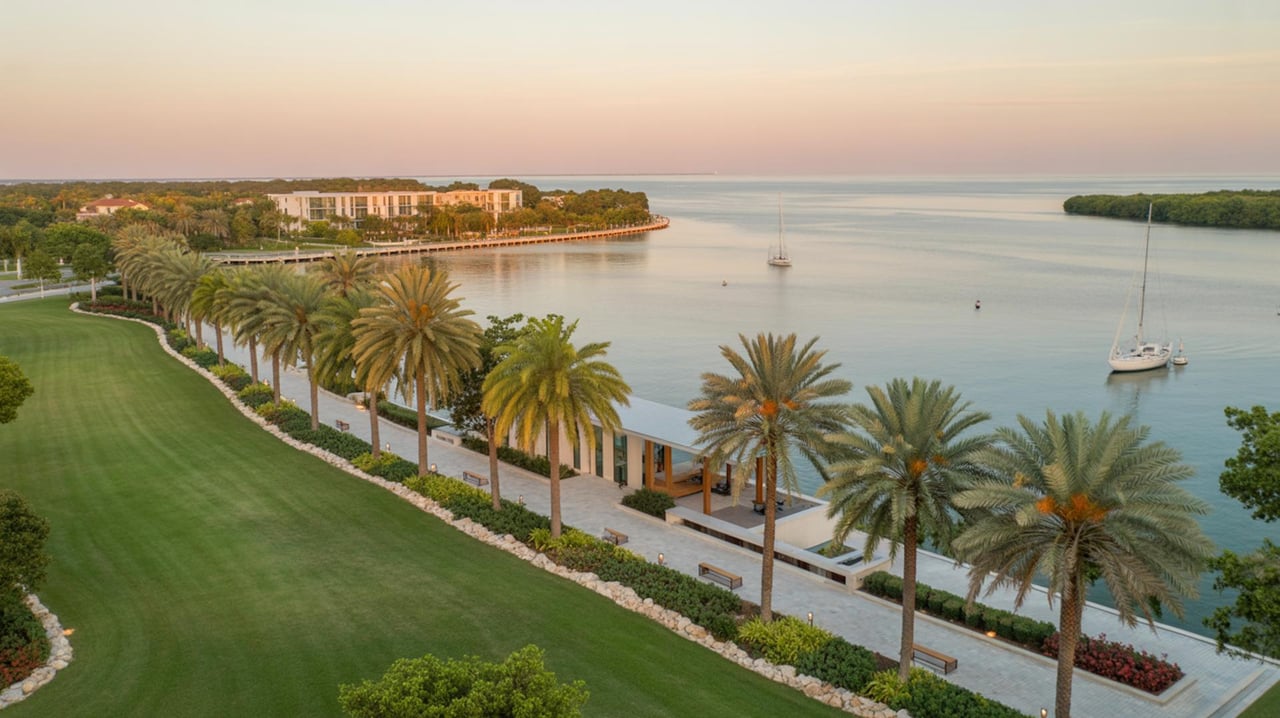
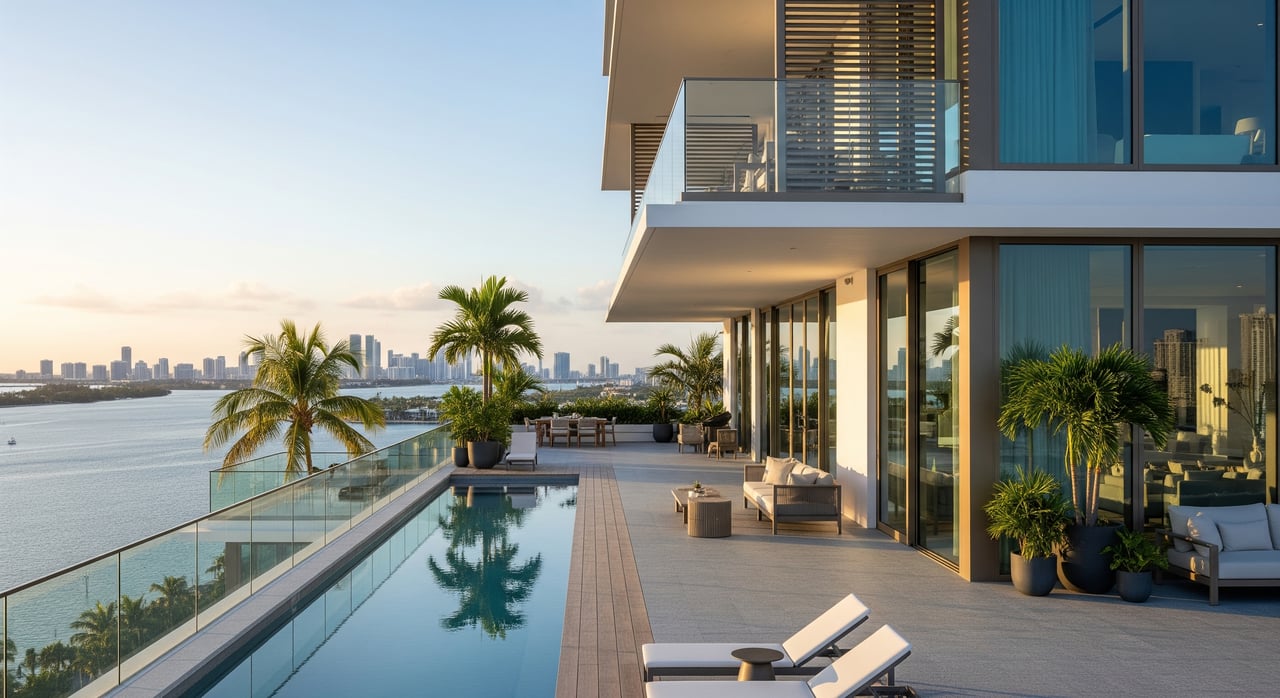
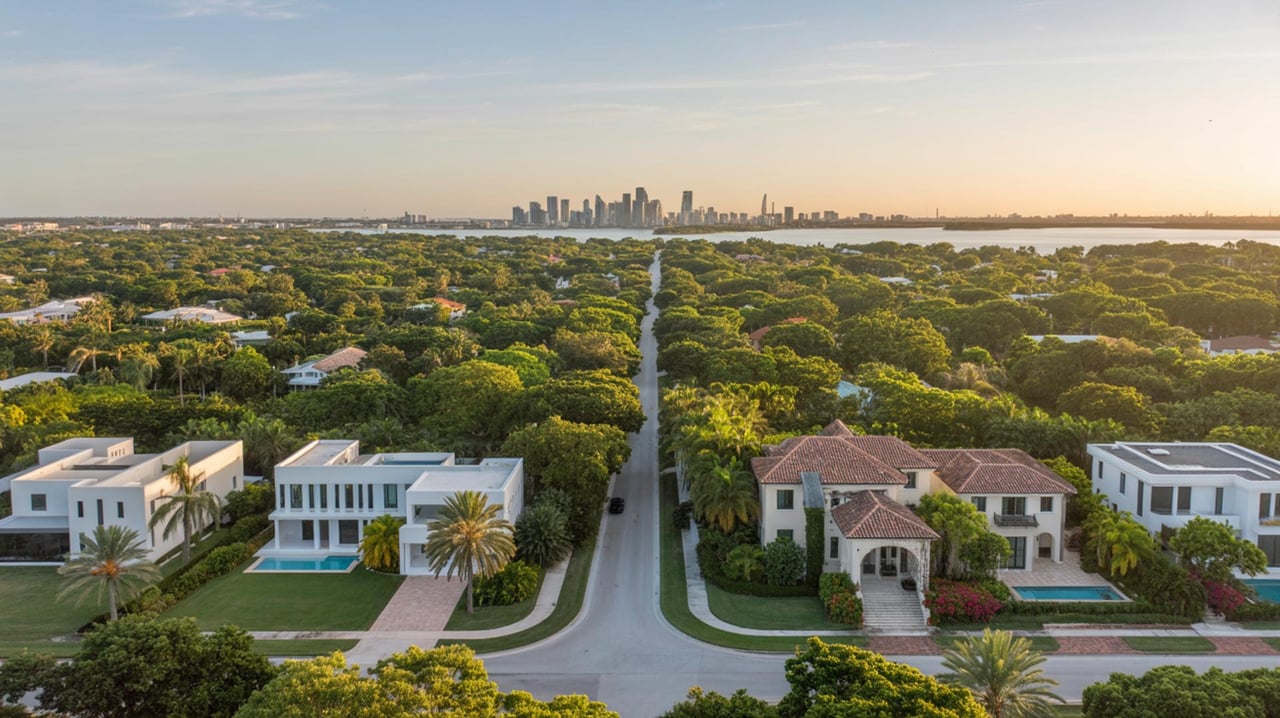
Miami is not simply a city; it is a full sensory identity. Framed between the shimmering expanse of Biscayne Bay, the Atlantic Ocean, and the wild edges of the Everglades, this South Florida metropolis has grown into one of the most influential global cities in the Western Hemisphere. What was once a seasonal escape for northerners has evolved into a permanent home for financial titans, cultural tastemakers, families, and creatives who want the energy of a world capital without surrendering the ease of a coastal lifestyle.
Life here moves to a rhythm you will not find anywhere else in the country. Mornings often begin with a strong Cuban colada from a corner ventanita, afternoons unfold on the water or under a palm-shaded terrace, and evenings pivot effortlessly from Michelin-starred tasting menus to open-air rooftops overlooking the skyline. Miami rewards those who appreciate contrasts: sleek high-rises and historic bungalows, quiet residential streets and pulsing arts districts, deeply rooted Latin American heritage and cutting-edge global innovation. For buyers considering a move, Miami offers a lifestyle that feels both aspirational and genuinely livable year-round.
The Miami real estate market continues to stand as one of the most resilient and premium landscapes in the United States. Fueled by ongoing corporate migration, most notably the "Citadel effect" alongside expansions from major players in finance and technology, the region remains a magnet for both domestic wealth relocation and international capital. Yet the market has matured beyond the frenzied pace of recent years into something more nuanced and considered.
Median home prices currently sit between roughly $585,000 and $652,000, though those figures shift dramatically depending on zip code and property type. Year-over-year movement has flattened within a narrow window of about plus or minus one percent, creating a more balanced climate compared to the hyper-inflationary cycles of the recent past. Properties are averaging between 57 and 113 days on market depending on segment, which gives buyers more room to weigh options and negotiate thoughtfully.
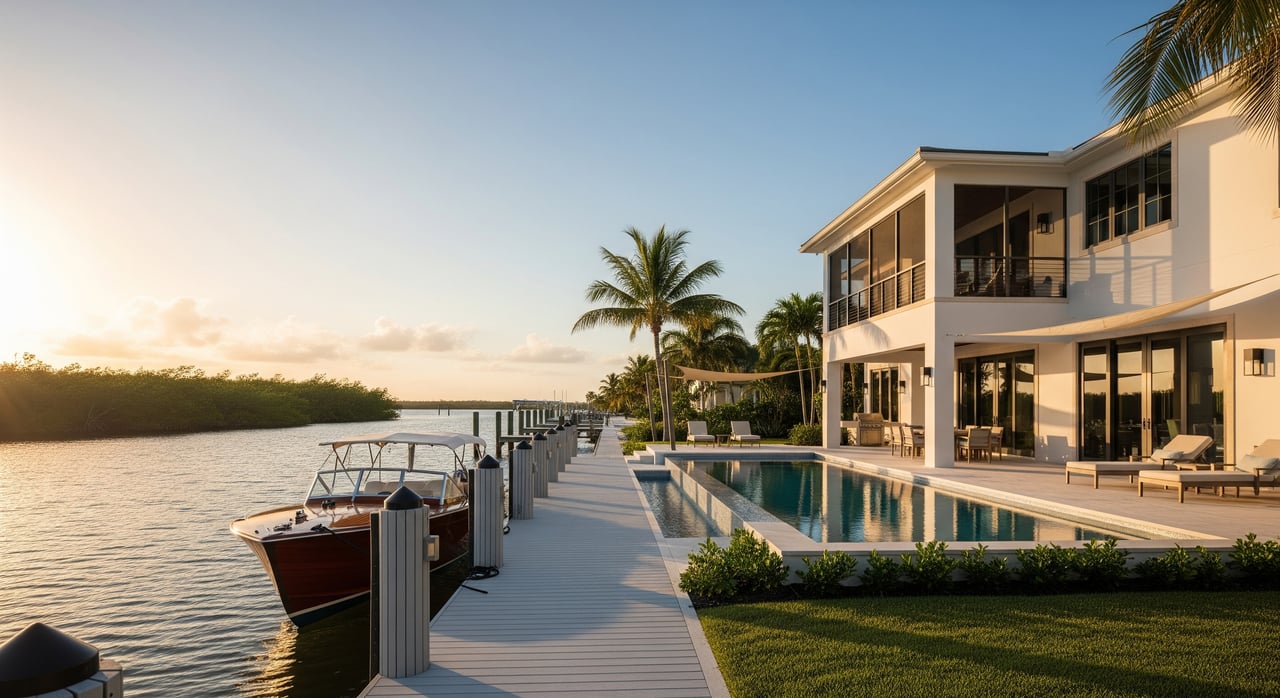
What makes Miami particularly interesting today is its split personality. The single-family home market remains fiercely competitive, with under five months of active inventory keeping trophy waterfront estates and prime residential streets in high demand. The condominium and townhome segment, by contrast, has shifted decisively into buyer territory, carrying roughly ten months of available inventory driven by a wave of new luxury towers coming online. Renters, meanwhile, are navigating an average monthly rate near $3,004, approximately 50% above the national average, reflecting sustained demand from executives and professionals relocating to South Florida.
Miami is often described as a patchwork of cities within a city, and that description holds up under any level of scrutiny. Each district carries its own architectural language, cultural identity, and rhythm of daily life, and choosing the right one is often the single most important decision a buyer will make.
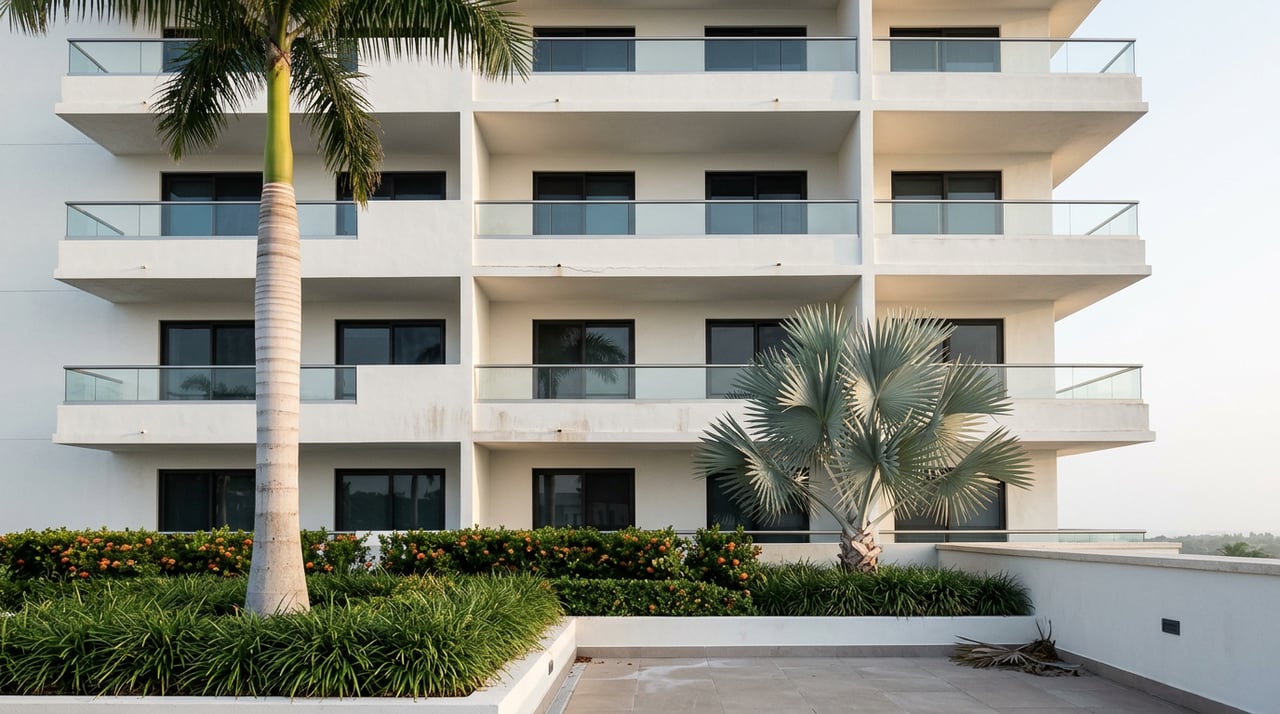
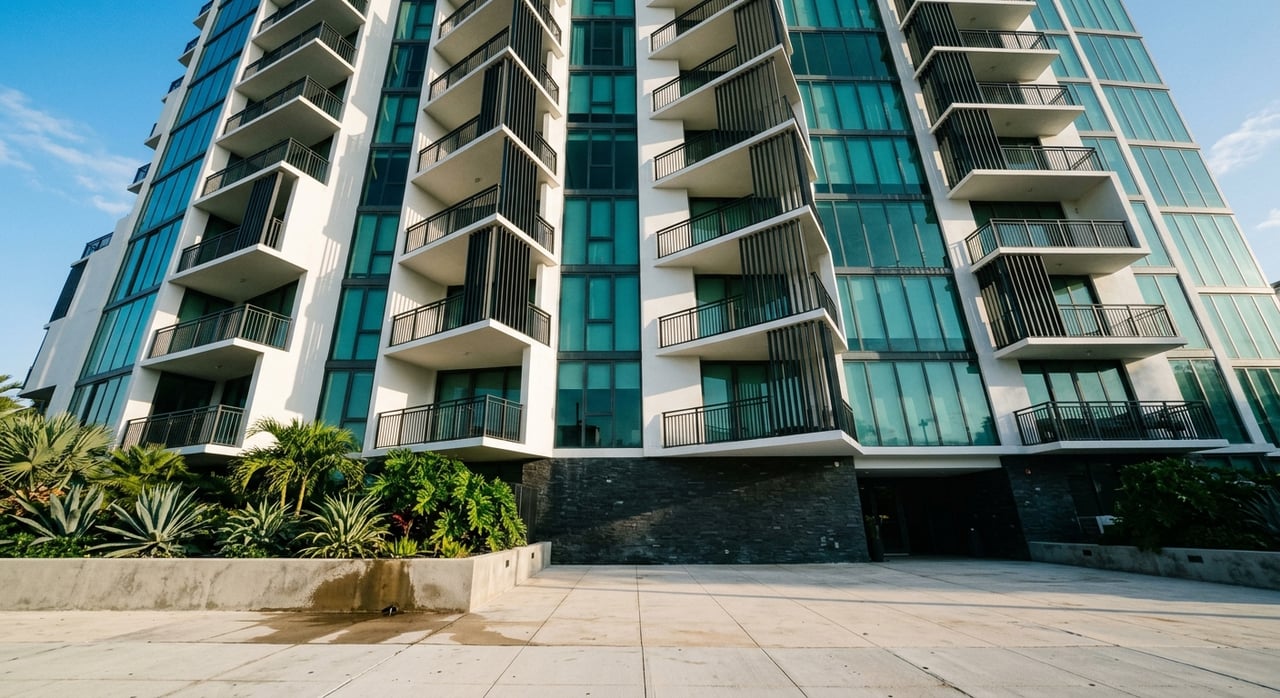
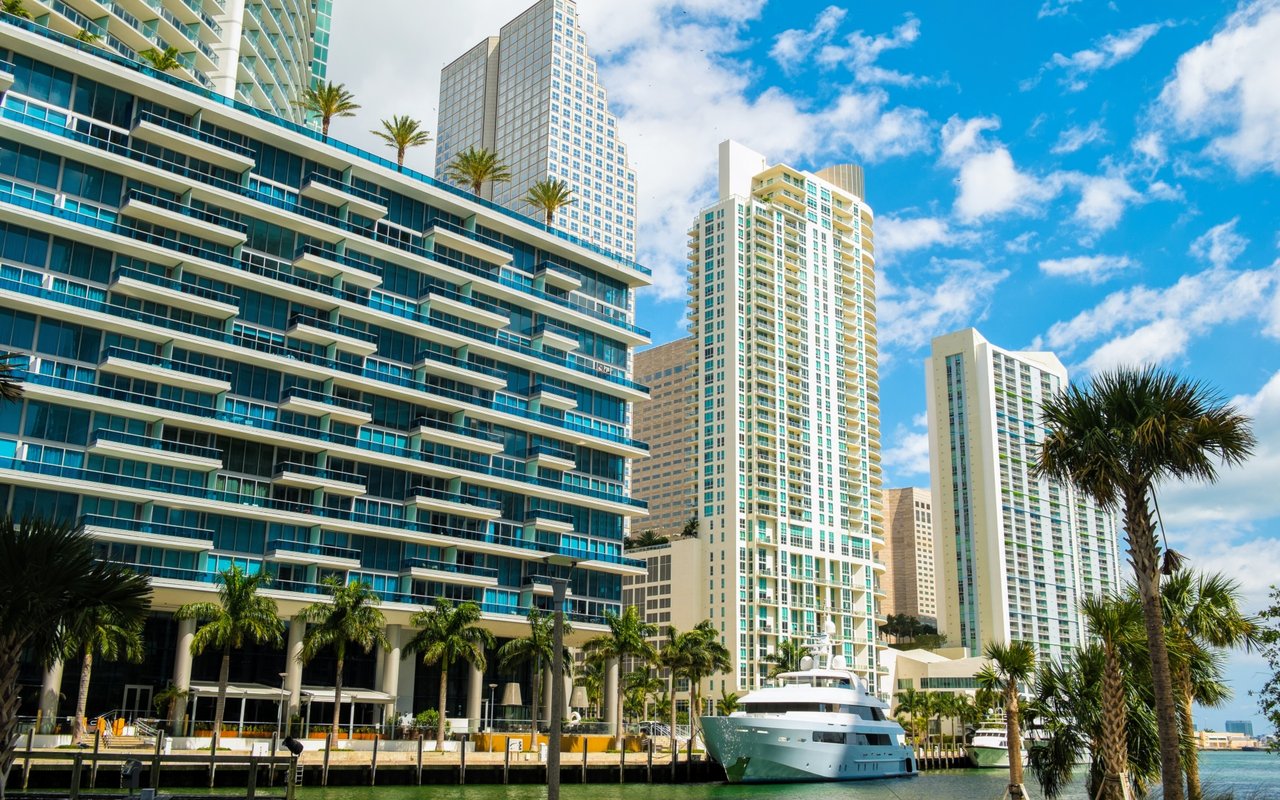
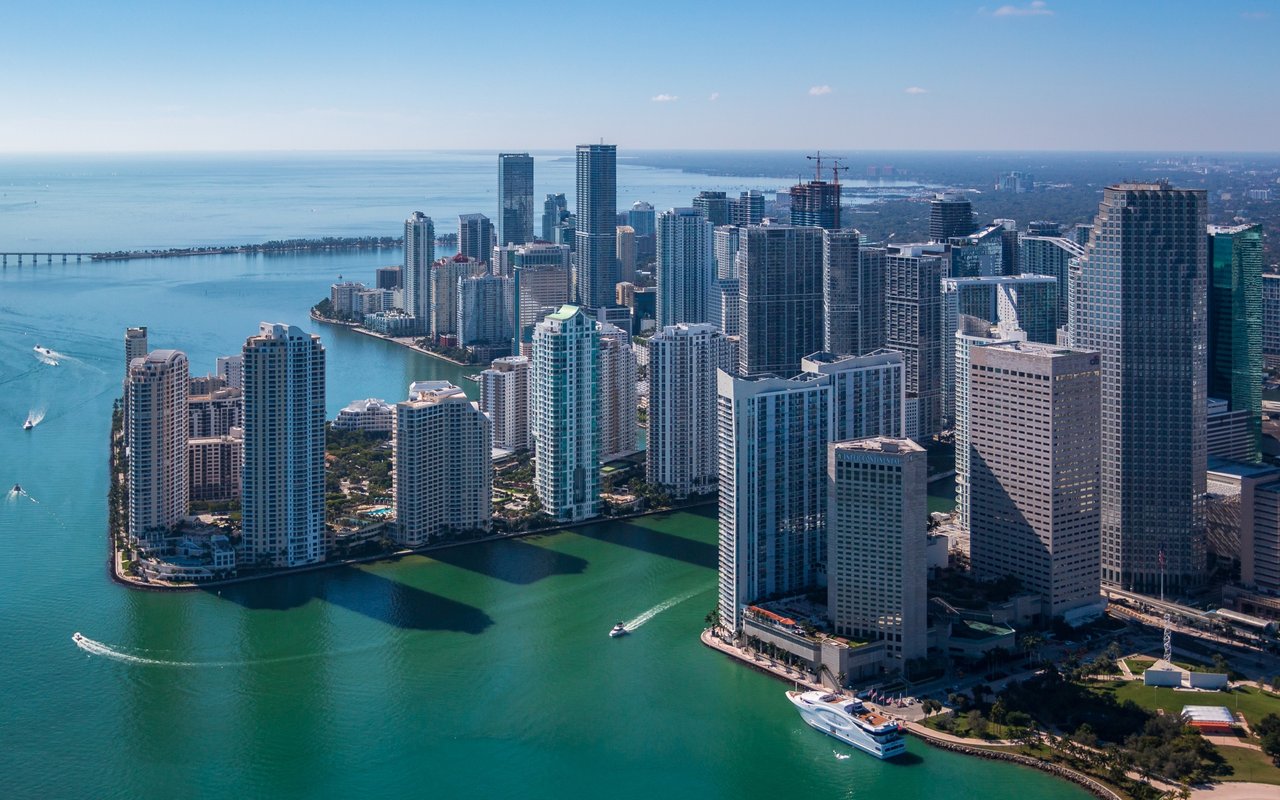
Brickell functions as Miami's financial heart and is frequently called the "Manhattan of the South." Its skyline of glass towers, walkable streets, and anchor developments like Brickell City Centre create a fast-paced urban environment that attracts finance executives, young professionals, and international buyers looking for elevated dining, rooftop nightlife, and immediate access to the region's business core.
South Beach and South of Fifth (SoFi) deliver the classic Miami postcard, though with distinct personalities. South Beach is defined by its neon-lit Ocean Drive, historic Art Deco facades, and legendary beachfront energy. Just south, the SoFi enclave offers a quieter and considerably more prestigious atmosphere, home to some of the most sought-after oceanfront high-rises and Michelin-recognized dining in the state.
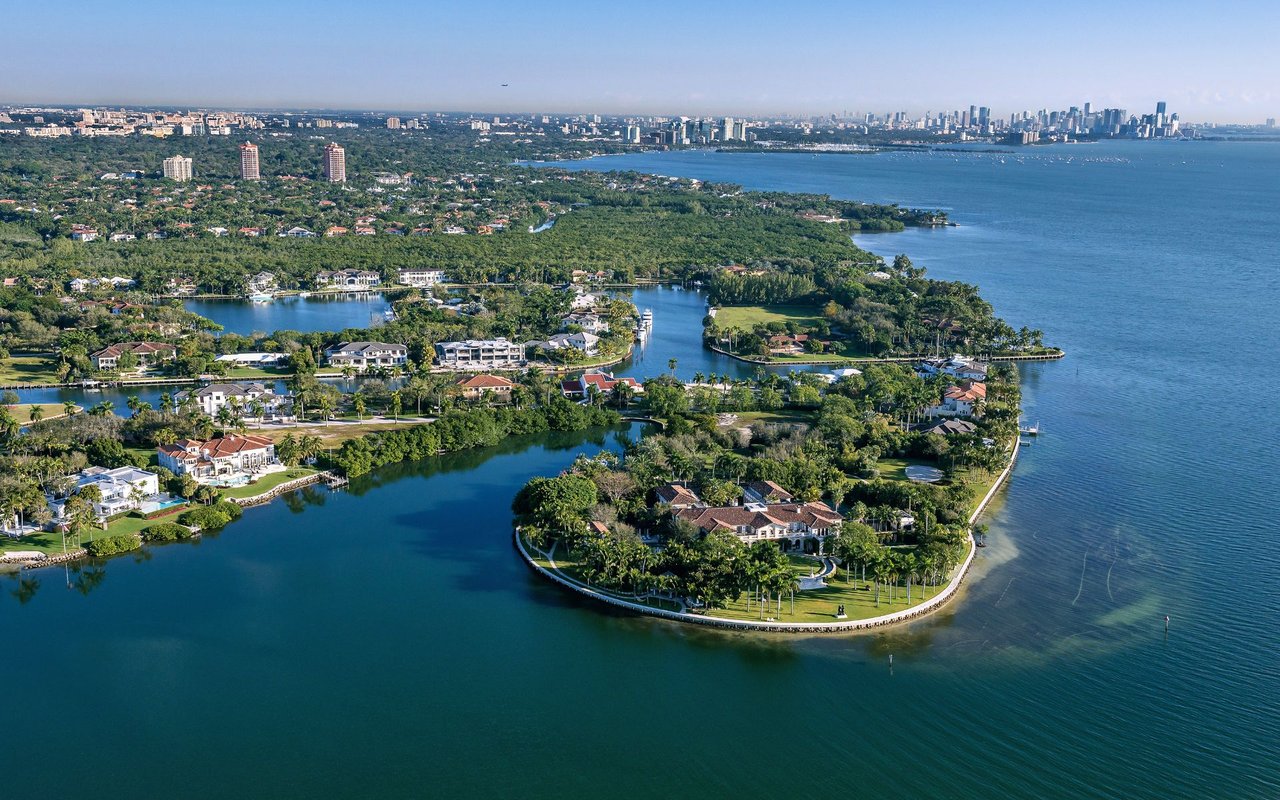
Coconut Grove, Miami's oldest continuously inhabited neighborhood, feels almost like a separate world. Massive banyan trees canopy its winding streets, and historic estates sit alongside a revitalized waterfront centered on CocoWalk. The Grove is a favorite among families, sailors, and those who want a bohemian, tree-shaded rhythm without sacrificing proximity to the city center.
Coral Gables, master-planned by George Merrick in the 1920s, remains one of the most elegant and architecturally consistent communities in South Florida. Its Mediterranean Revival streets, historic landmarks like the Venetian Pool and the Biltmore Hotel, and reputation for exceptional schools make it a longstanding choice for established families and executives seeking refined estate living.
Wynwood and Edgewater represent Miami's newer creative and residential frontier. Wynwood, once an industrial garment district, is now a globally recognized arts hub anchored by the Wynwood Walls, bold murals, breweries, and tech-forward tenants. Edgewater, running along Biscayne Bay just east of Wynwood, has quickly become a high-rise residential corridor prized for uninterrupted bay and Miami Beach views.
Little Havana remains the cultural pulse of Miami's Cuban diaspora. Anchored by Calle Ocho, the neighborhood buzzes with the sound of dominoes at Maximo Gomez Park, live Afro-Cuban jazz, open-air fruit stands, and the aroma of freshly brewed espresso drifting from every corner.
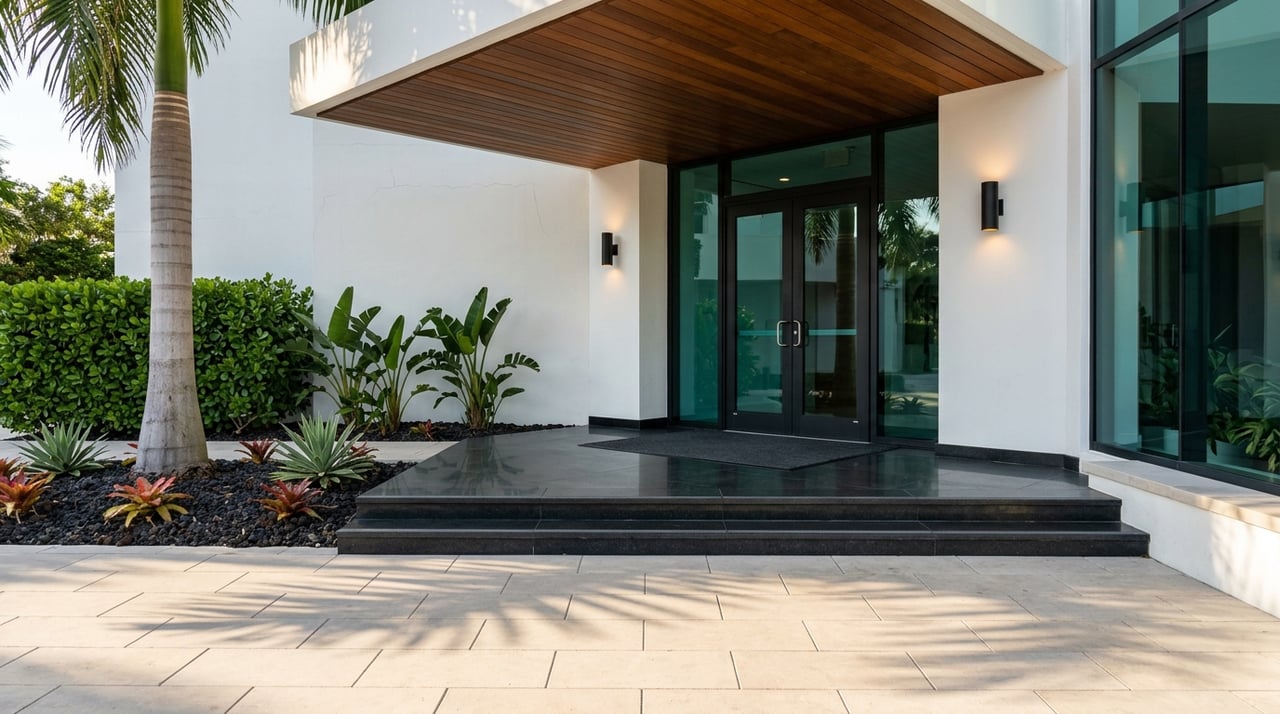
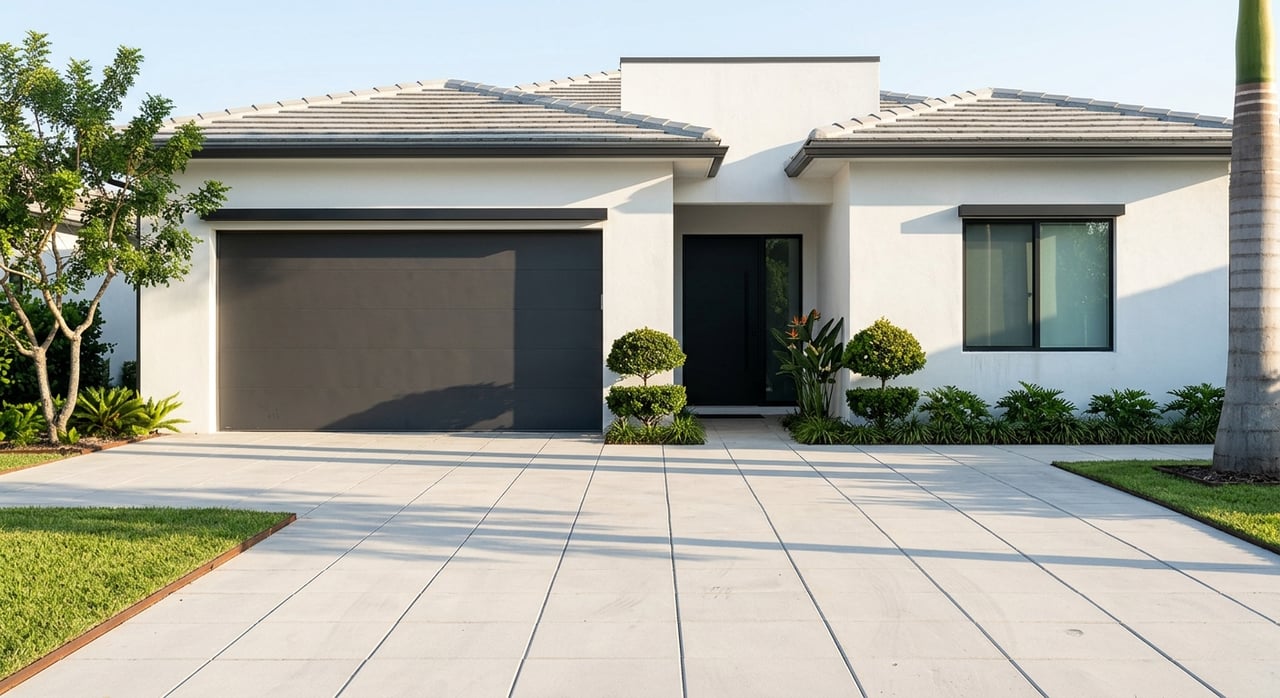
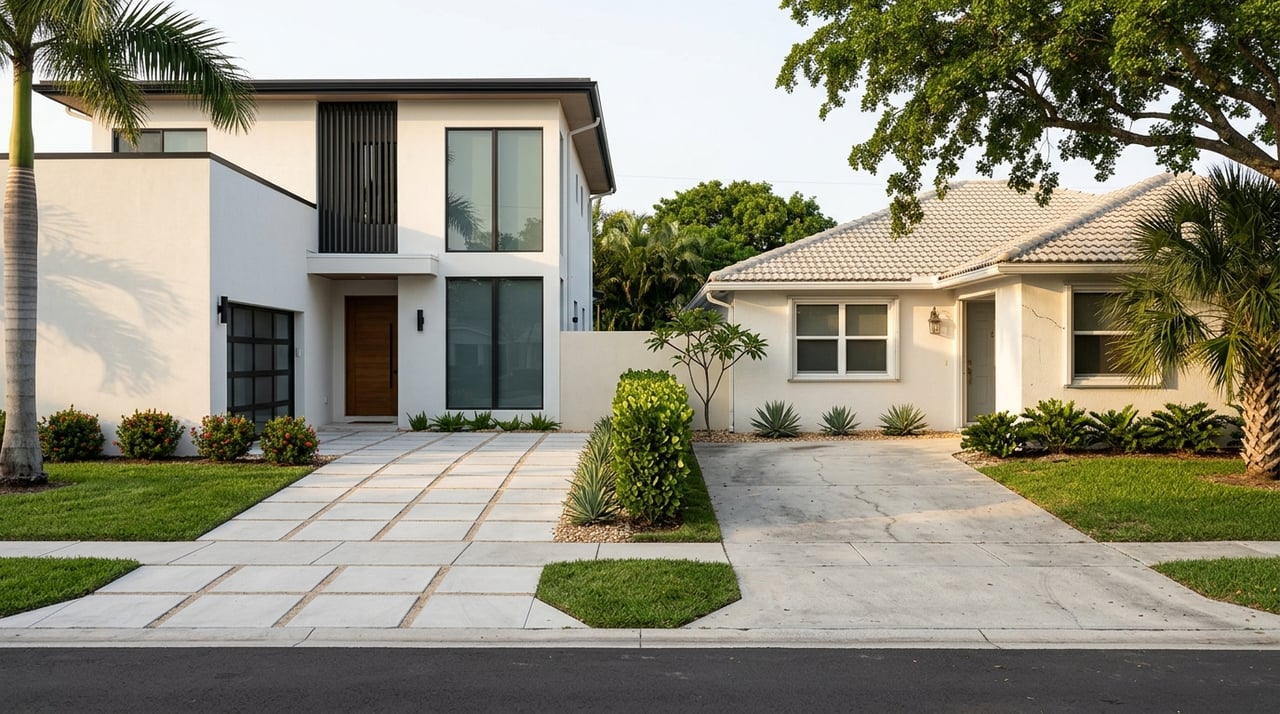
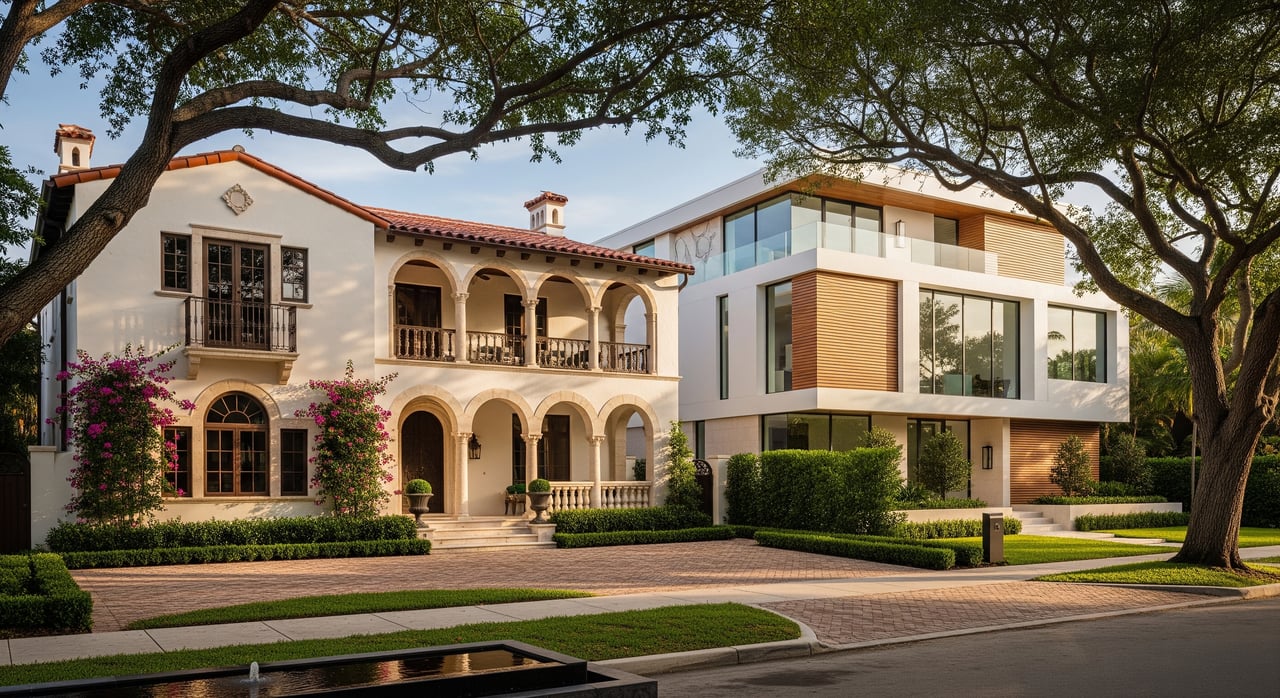
Few American cities can rival Miami's architectural range. The region flows seamlessly from historic coral-stone estates to sculptural glass towers, and its residential language reflects both a reverence for heritage and an appetite for forward-thinking design.
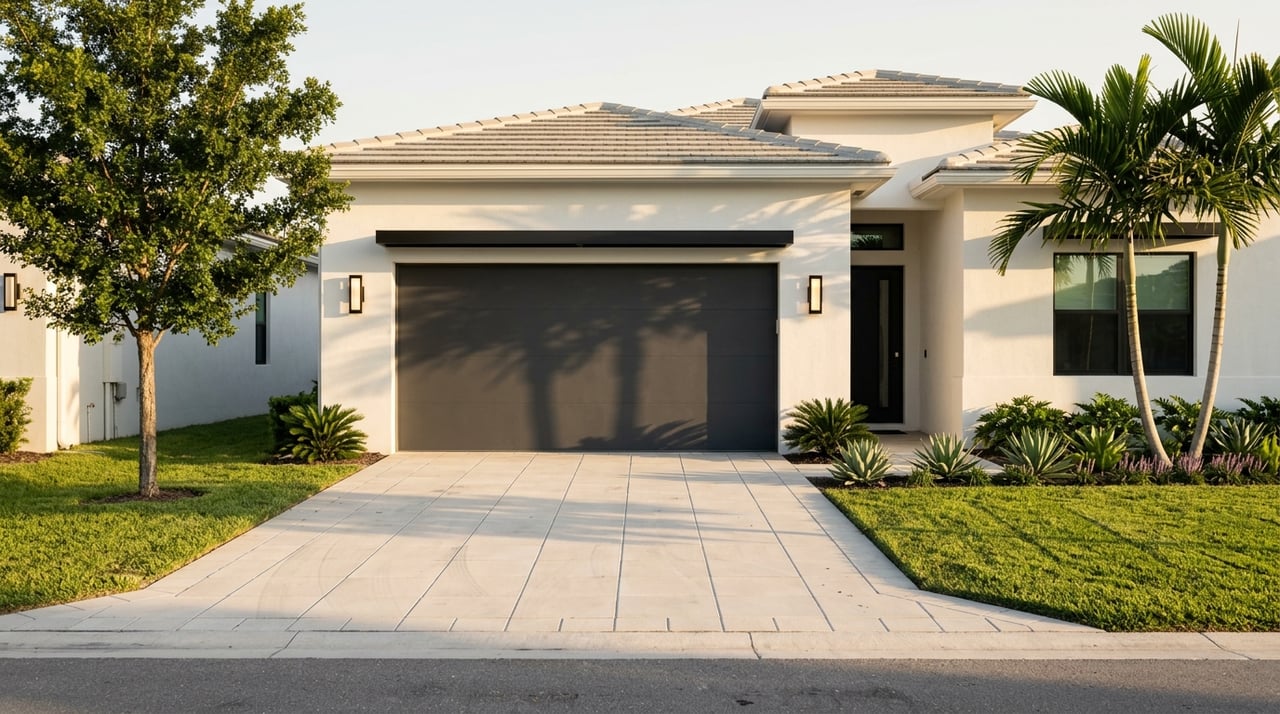
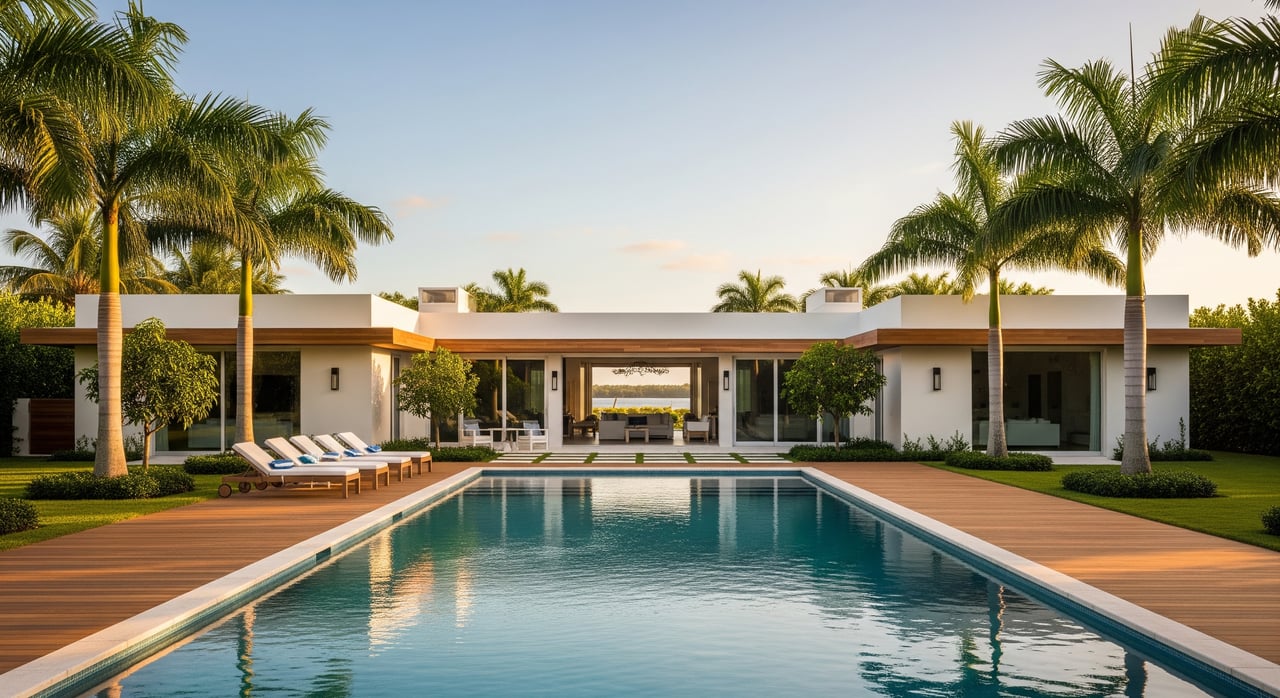
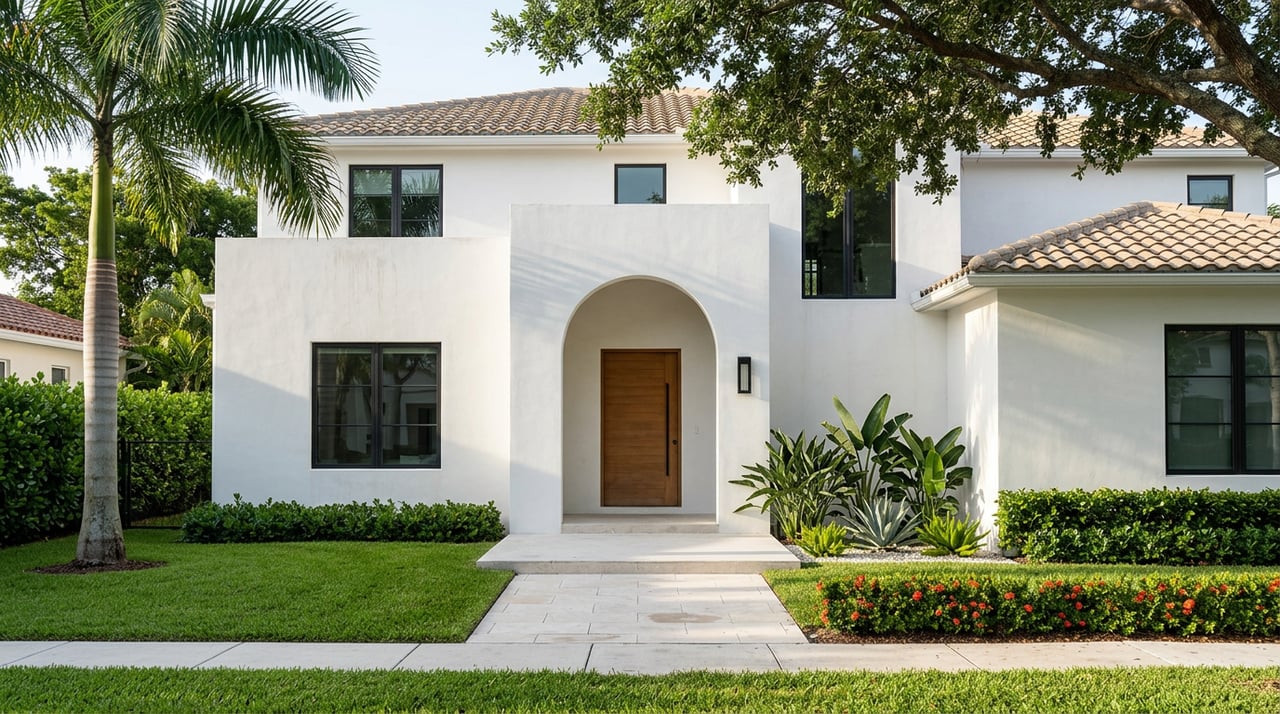
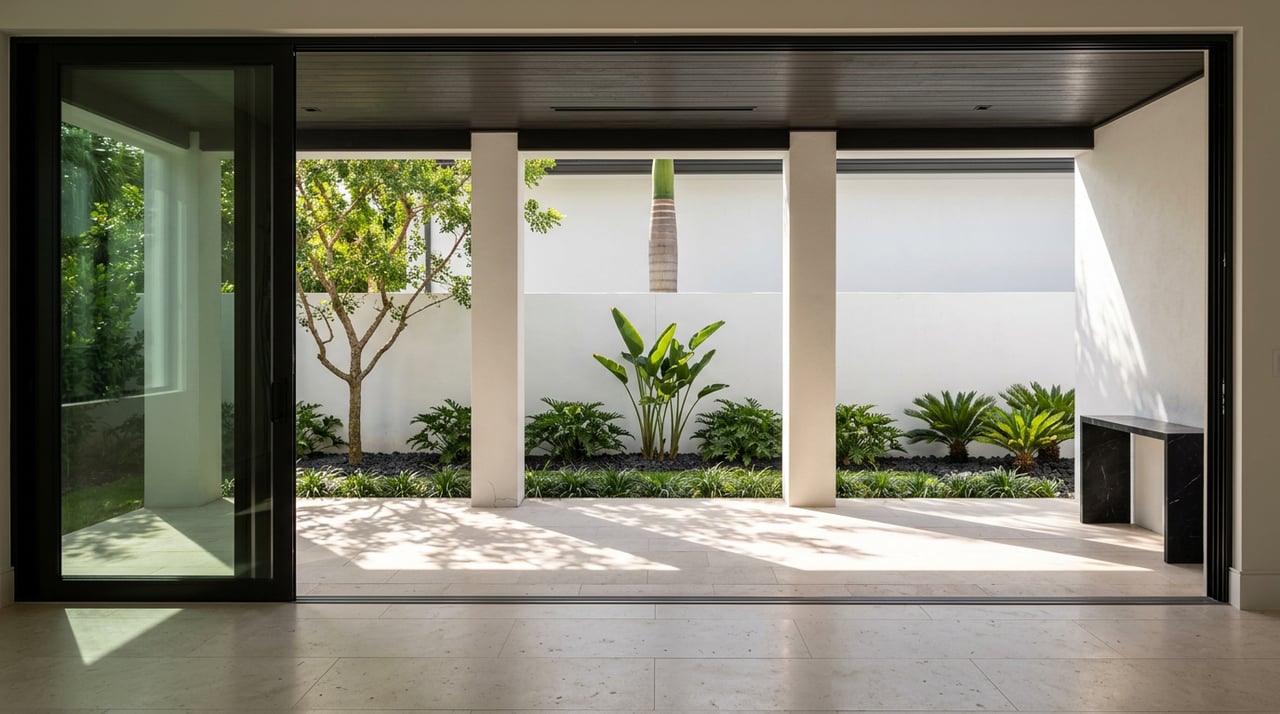
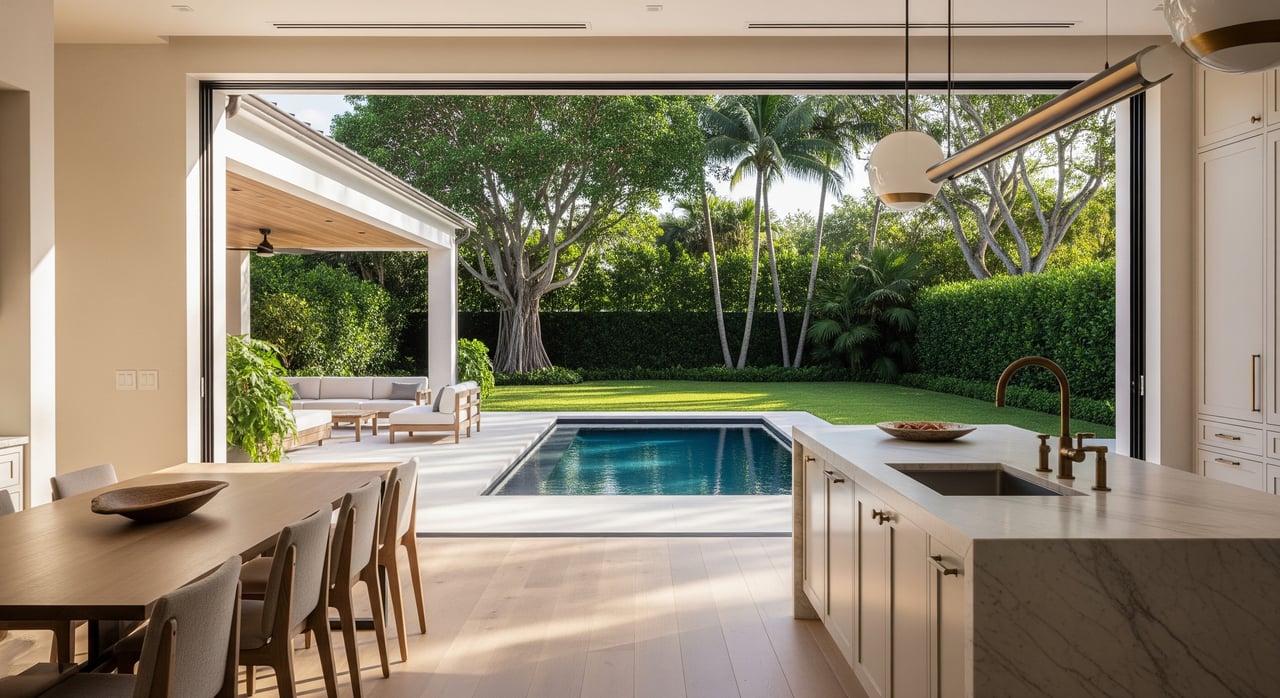
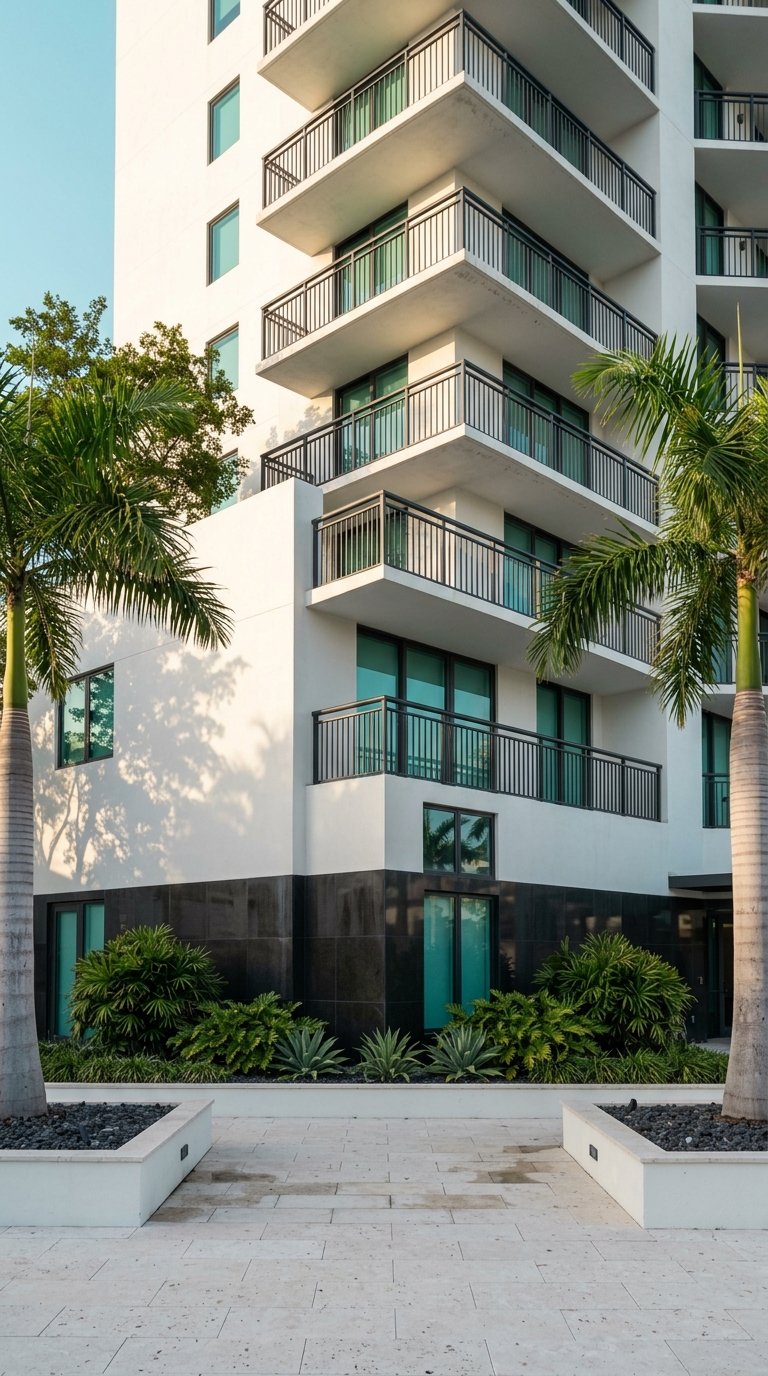
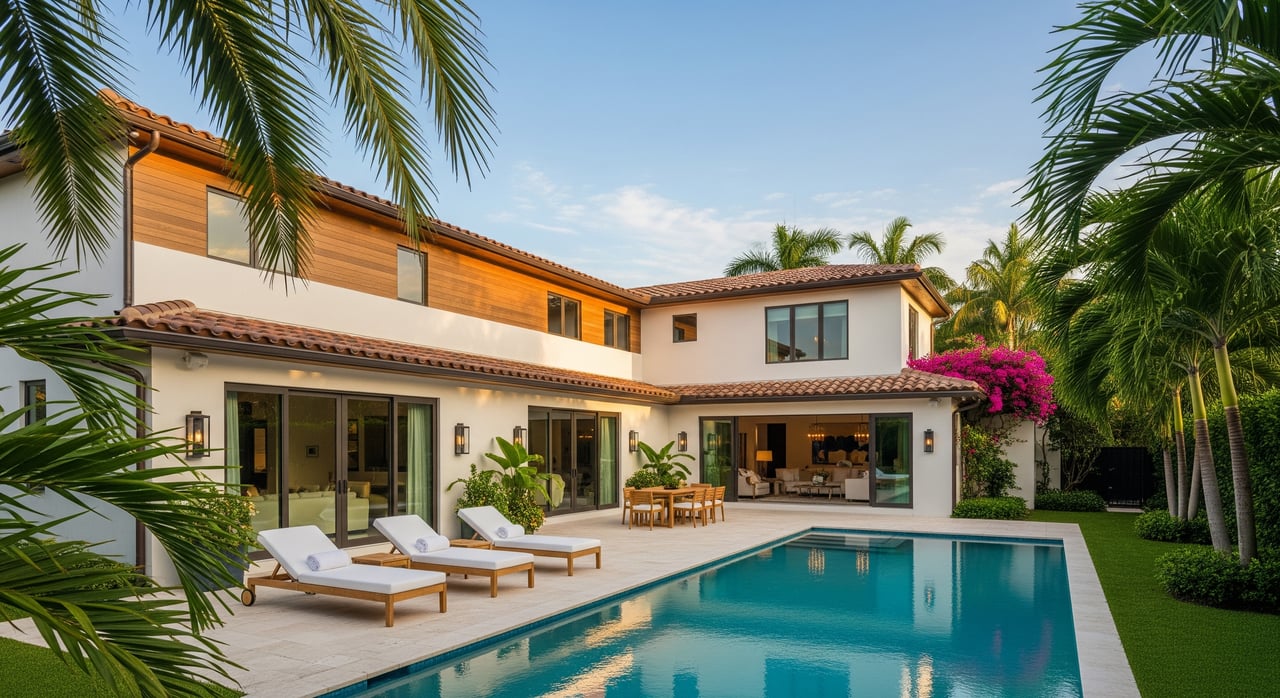
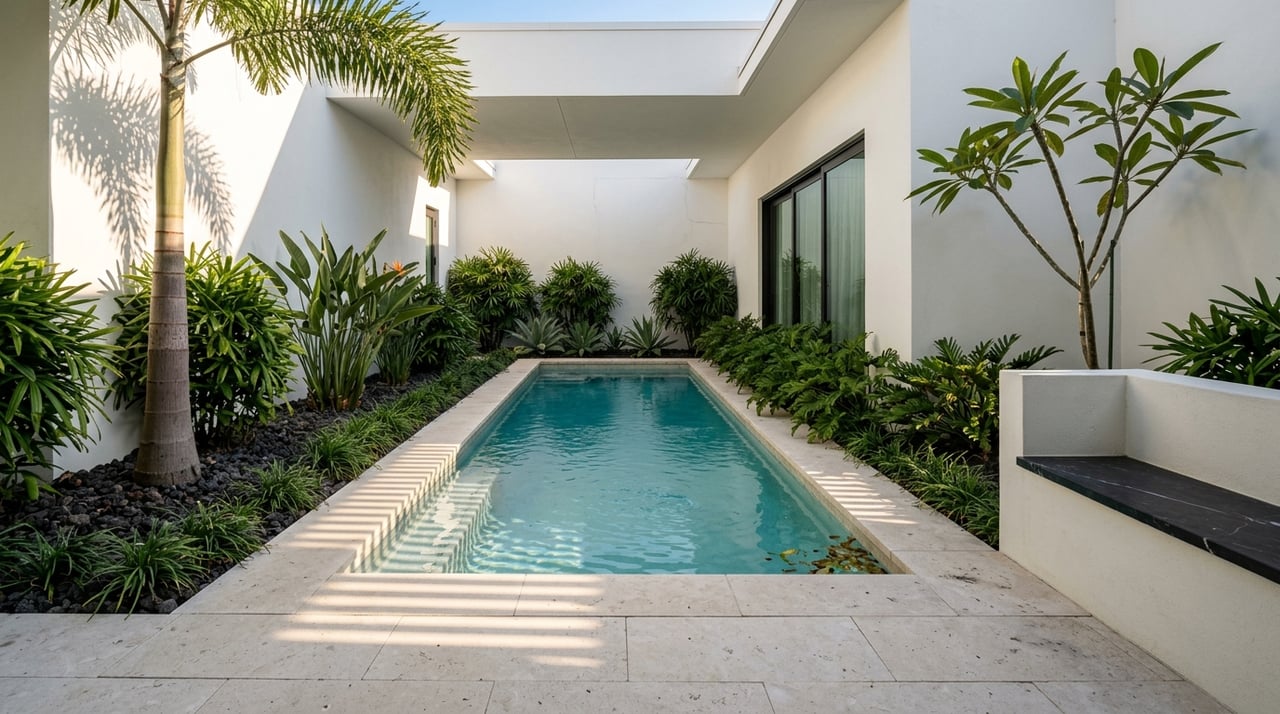
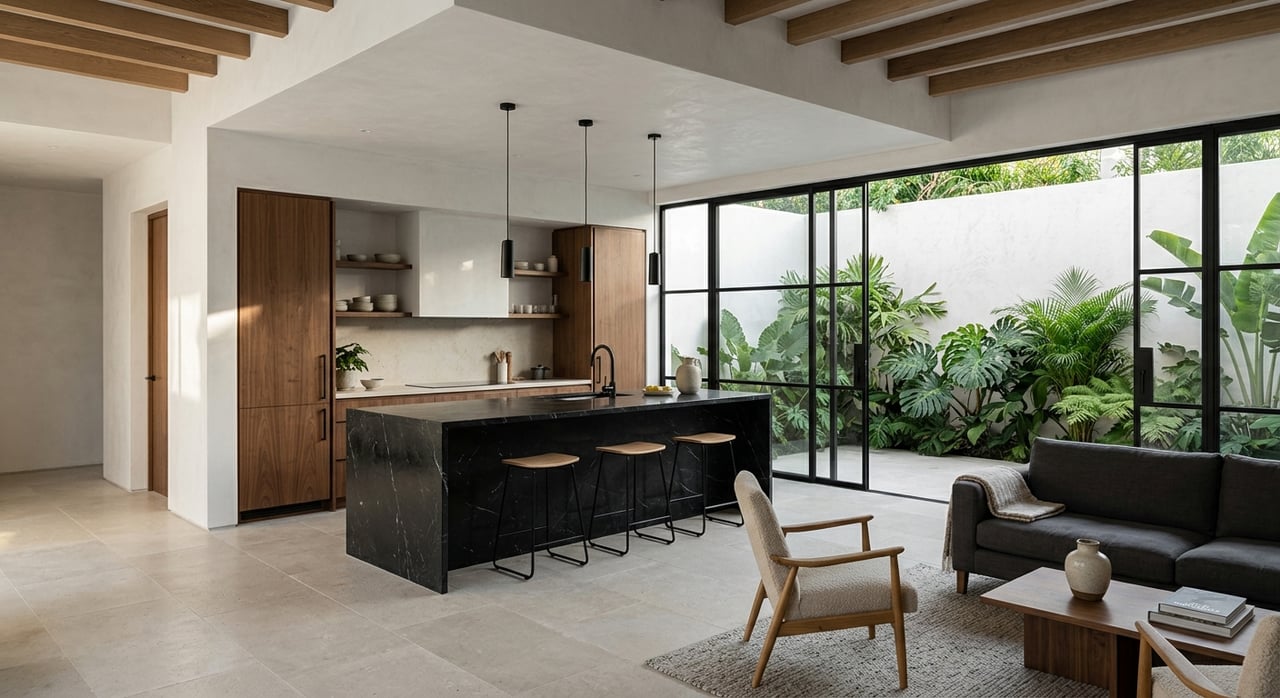
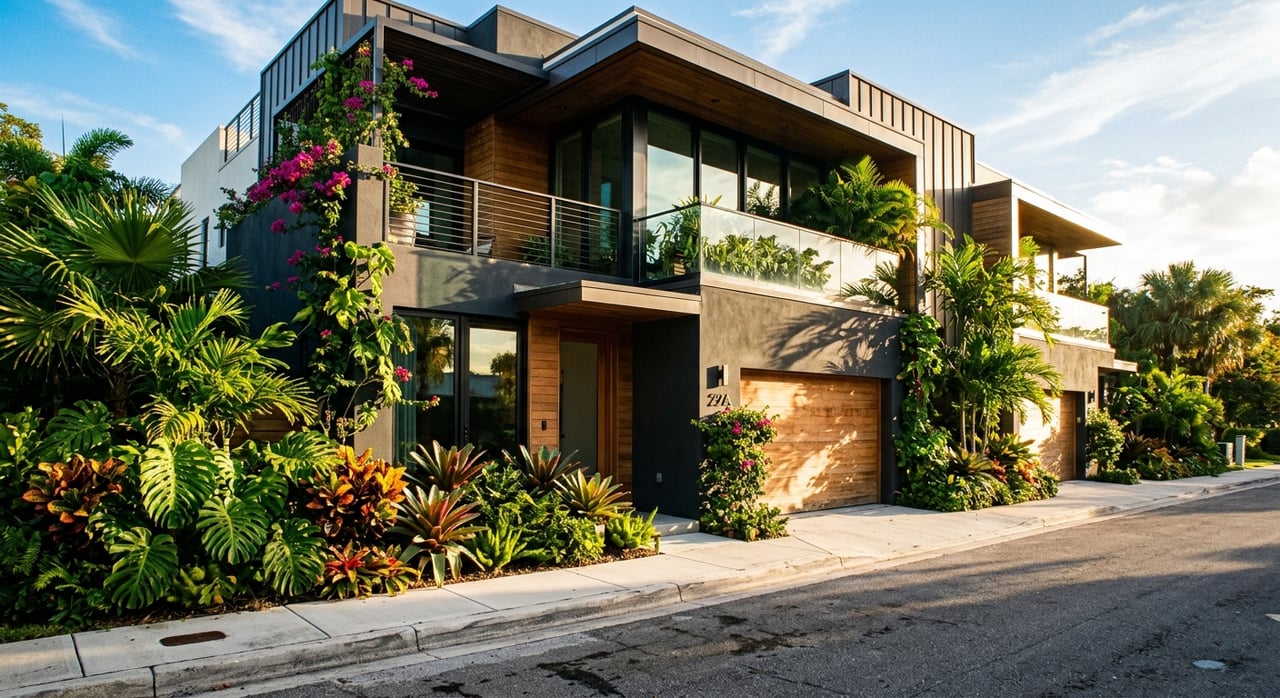
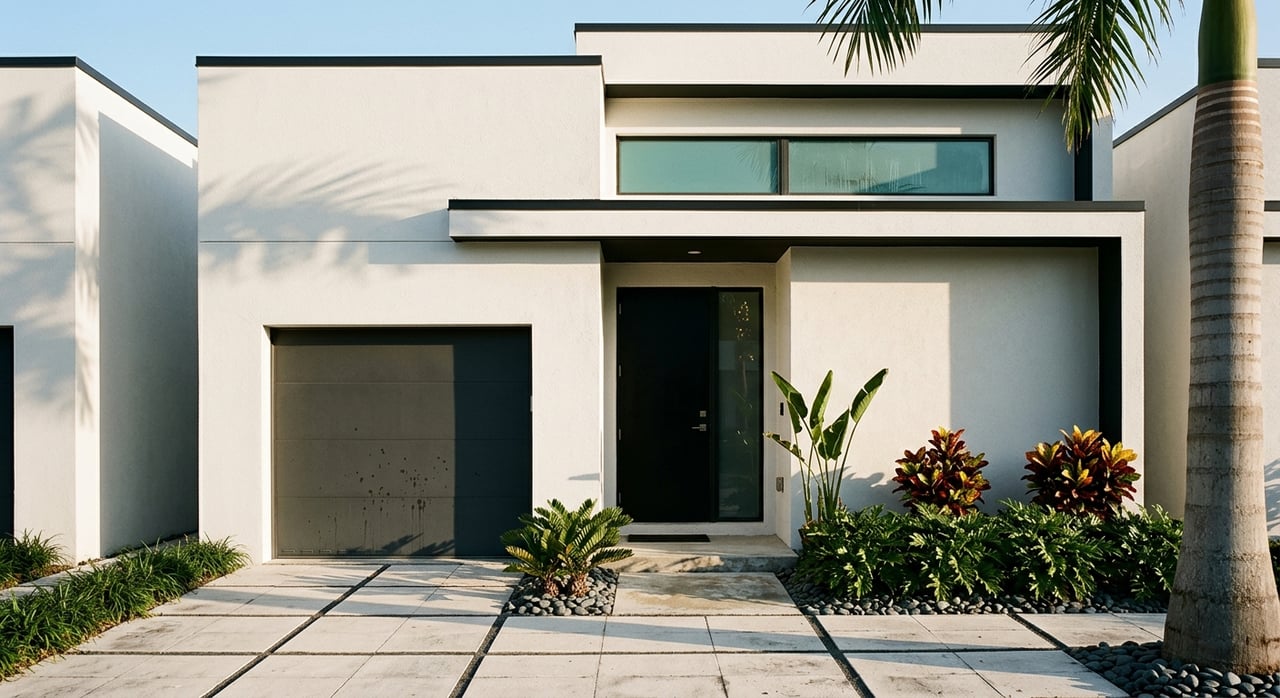
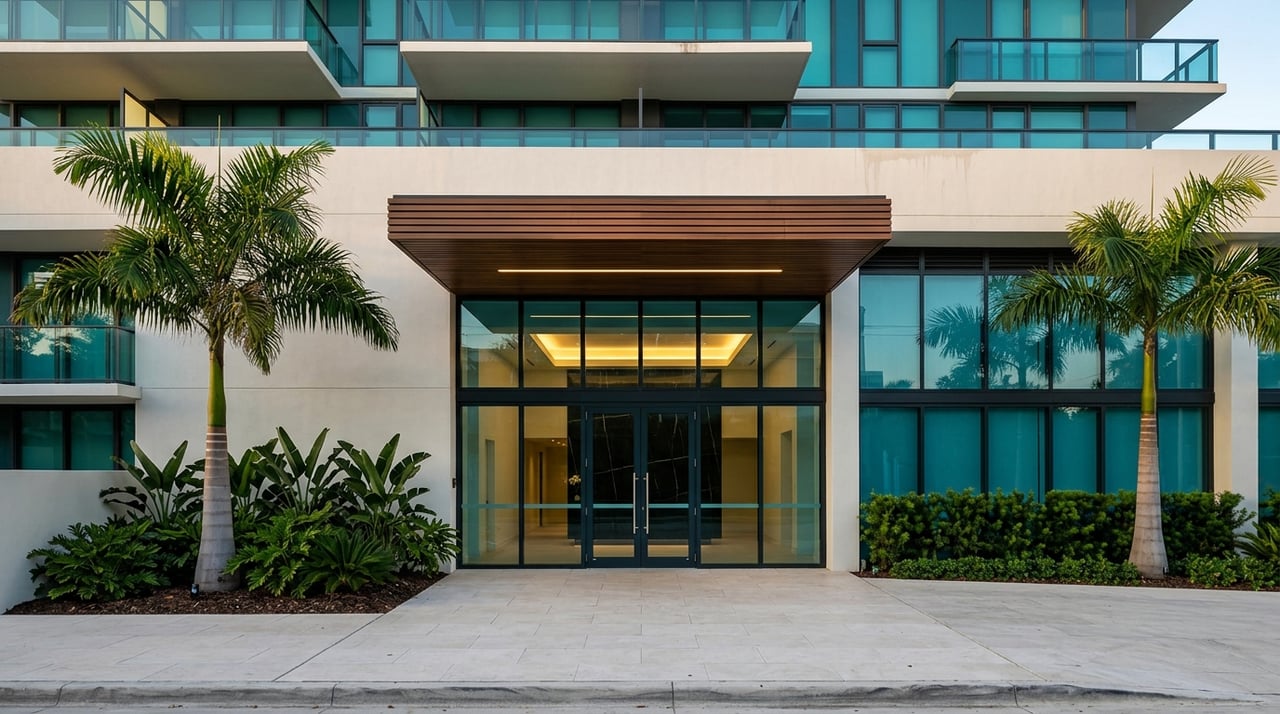
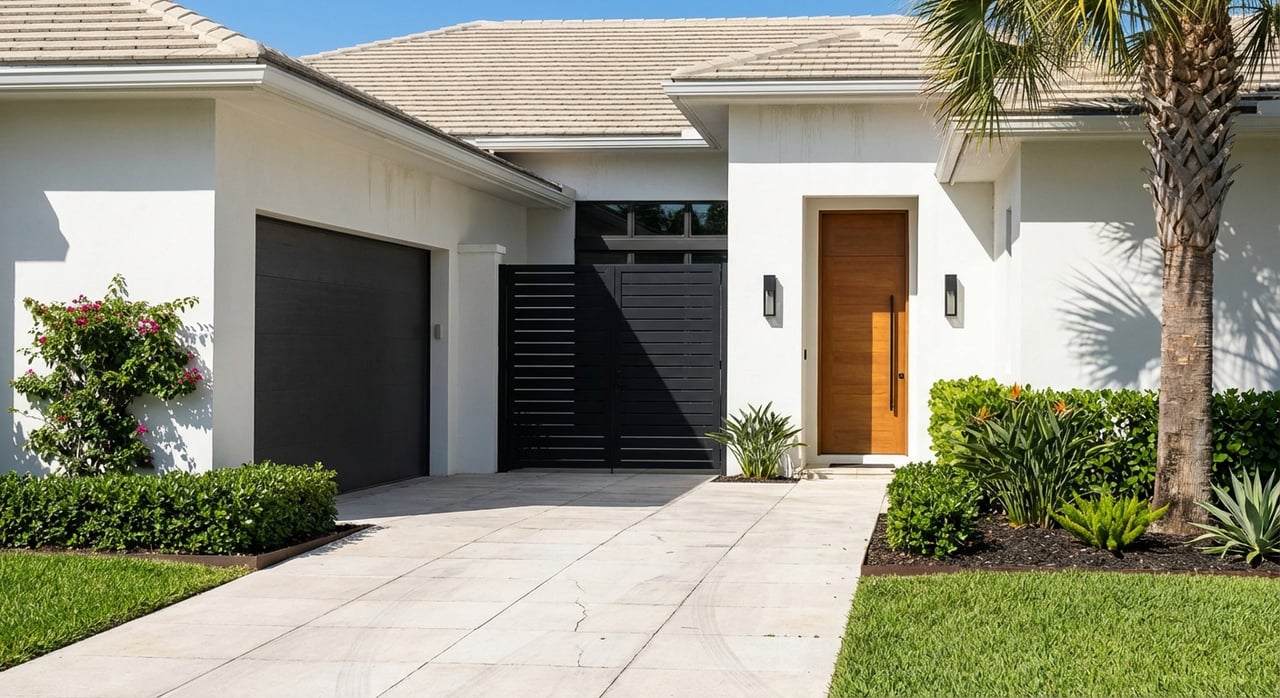
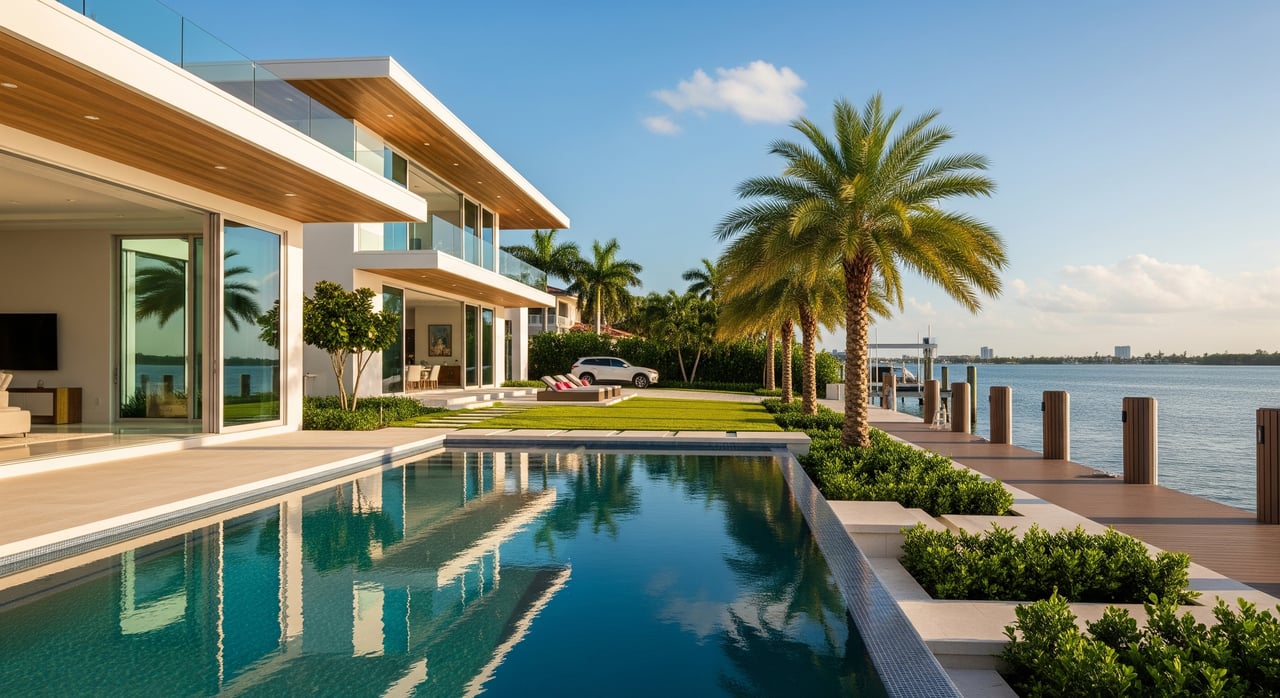
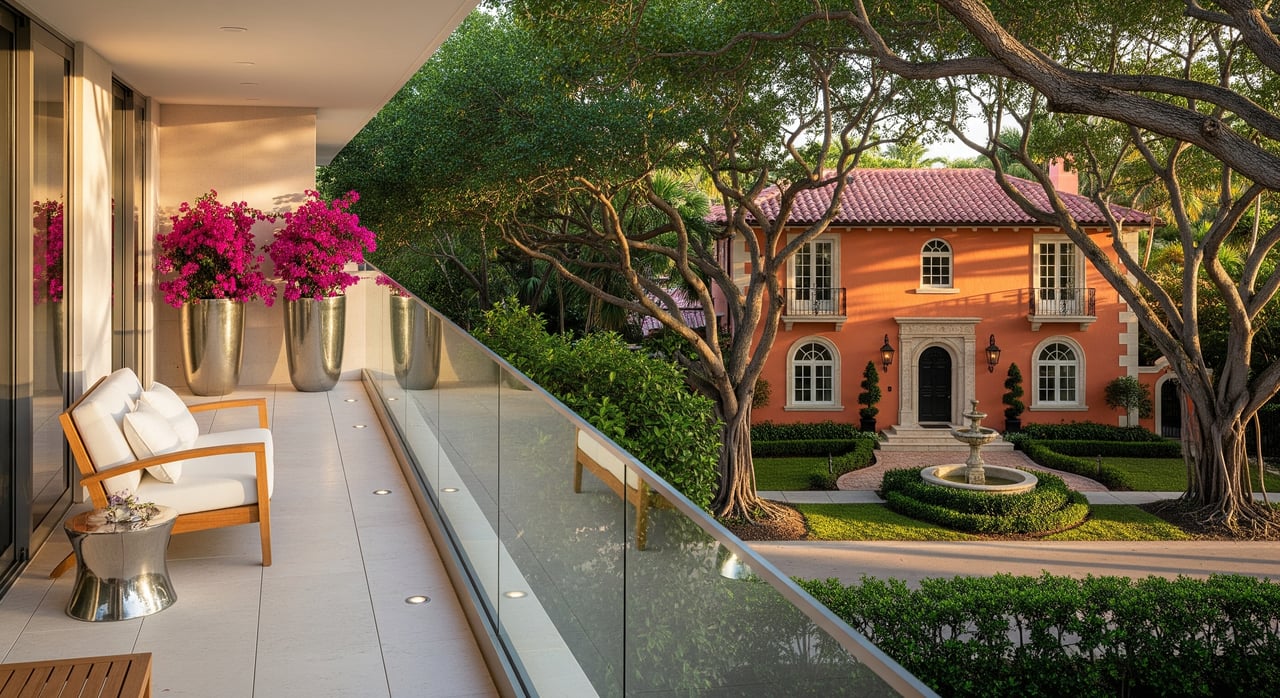
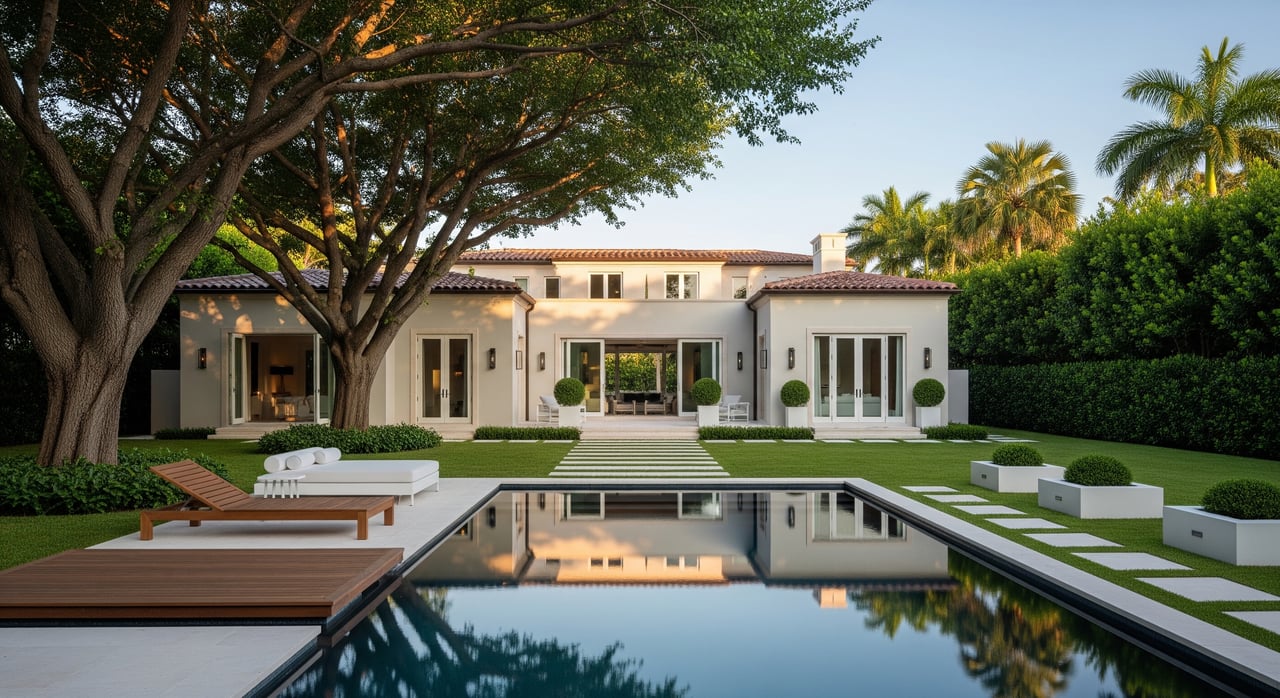
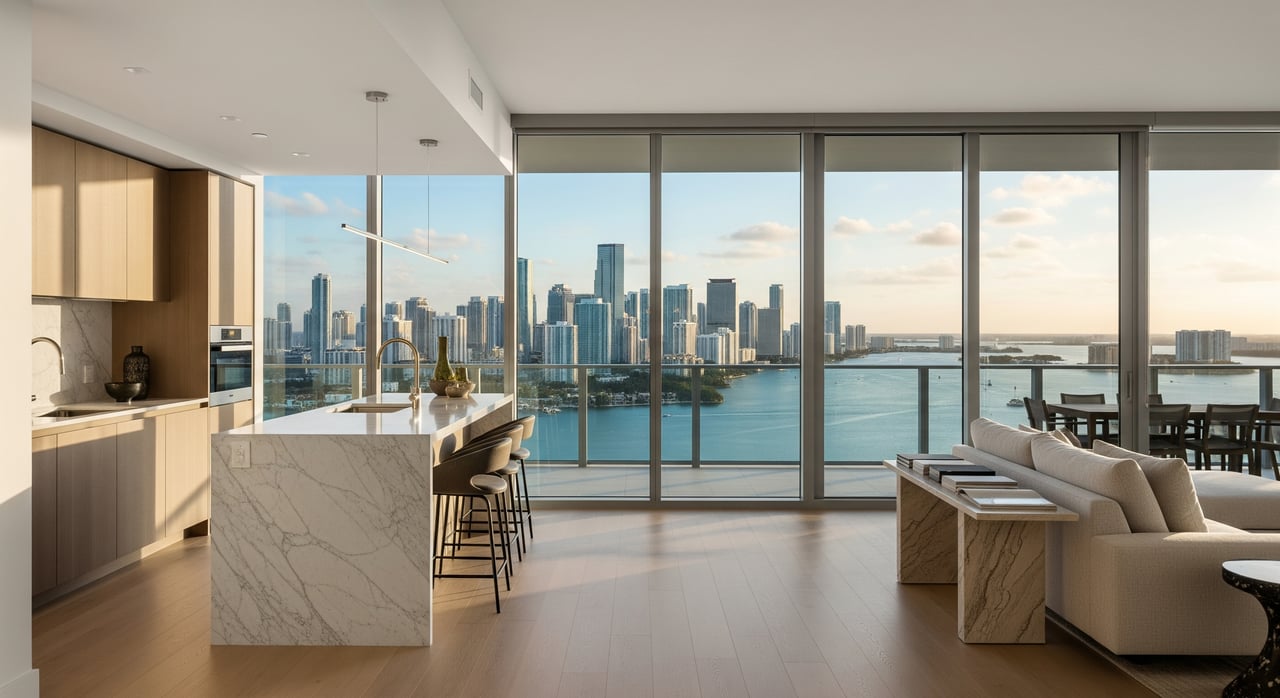
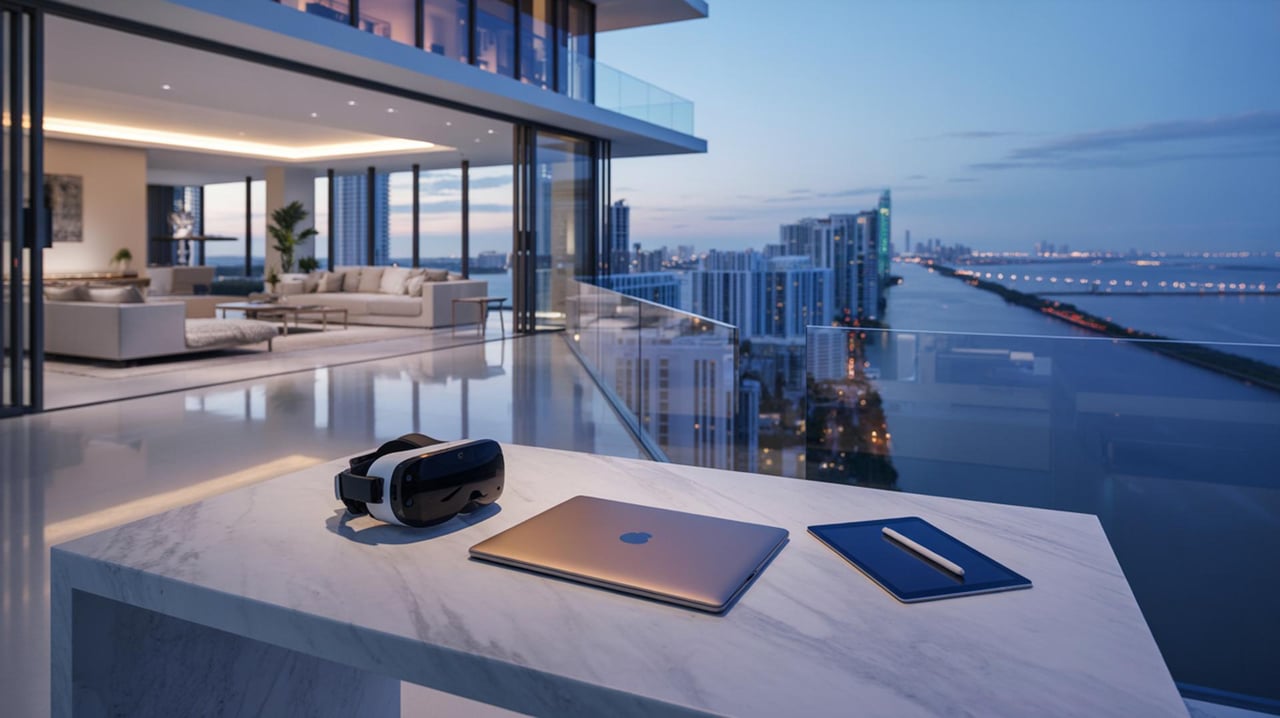
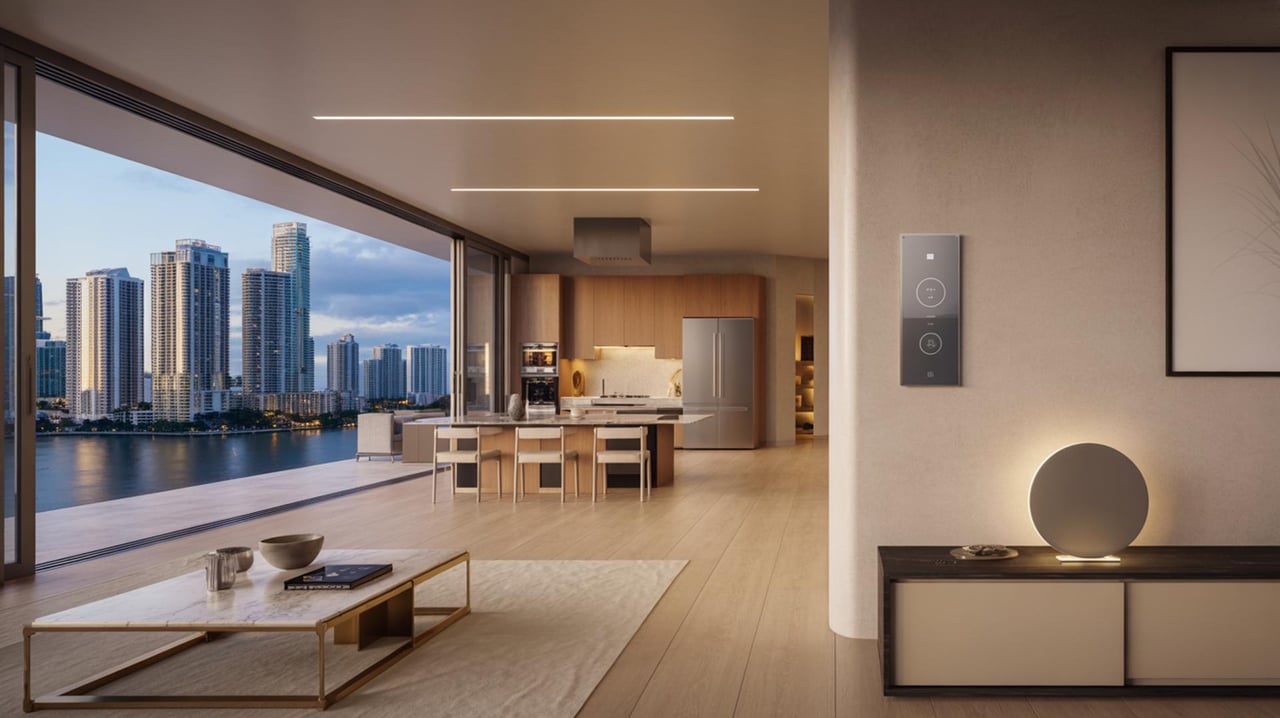
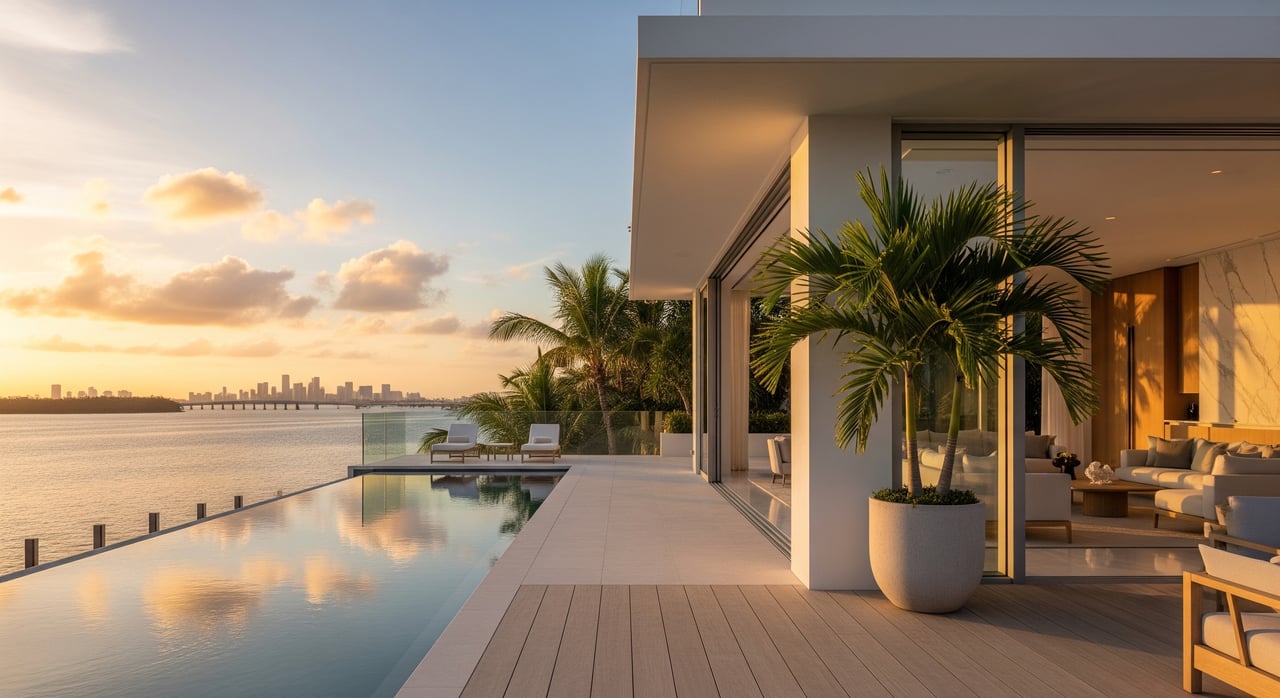
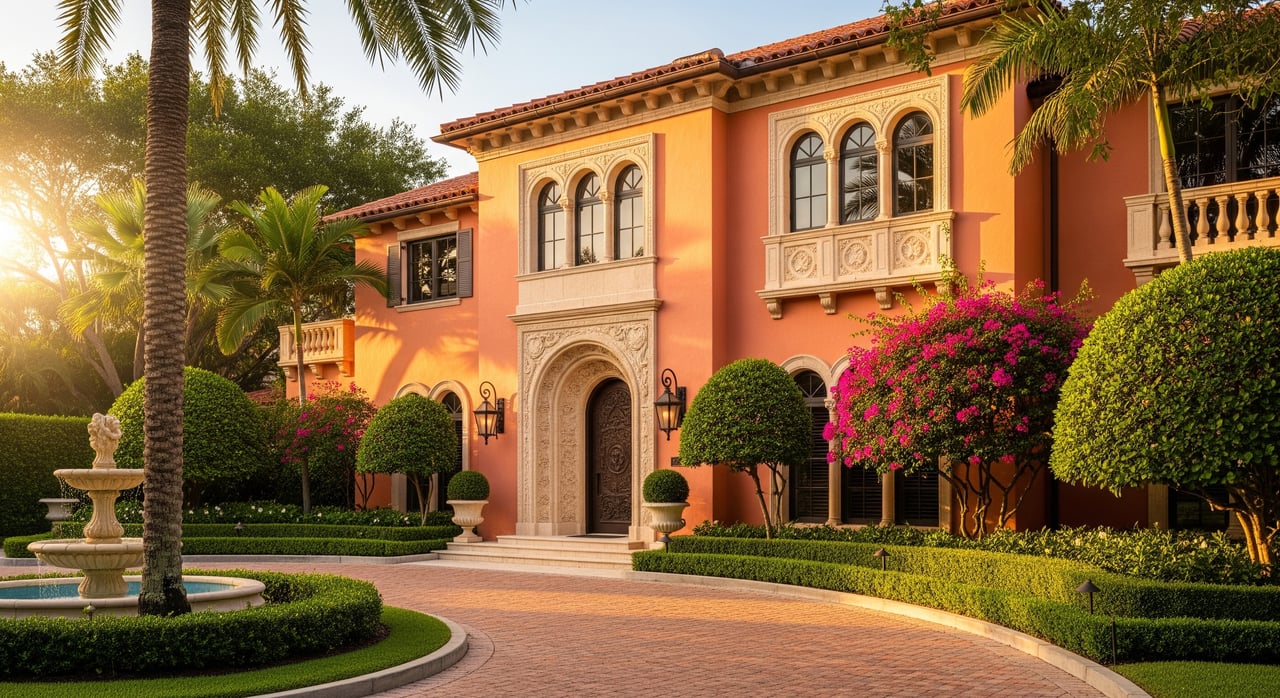
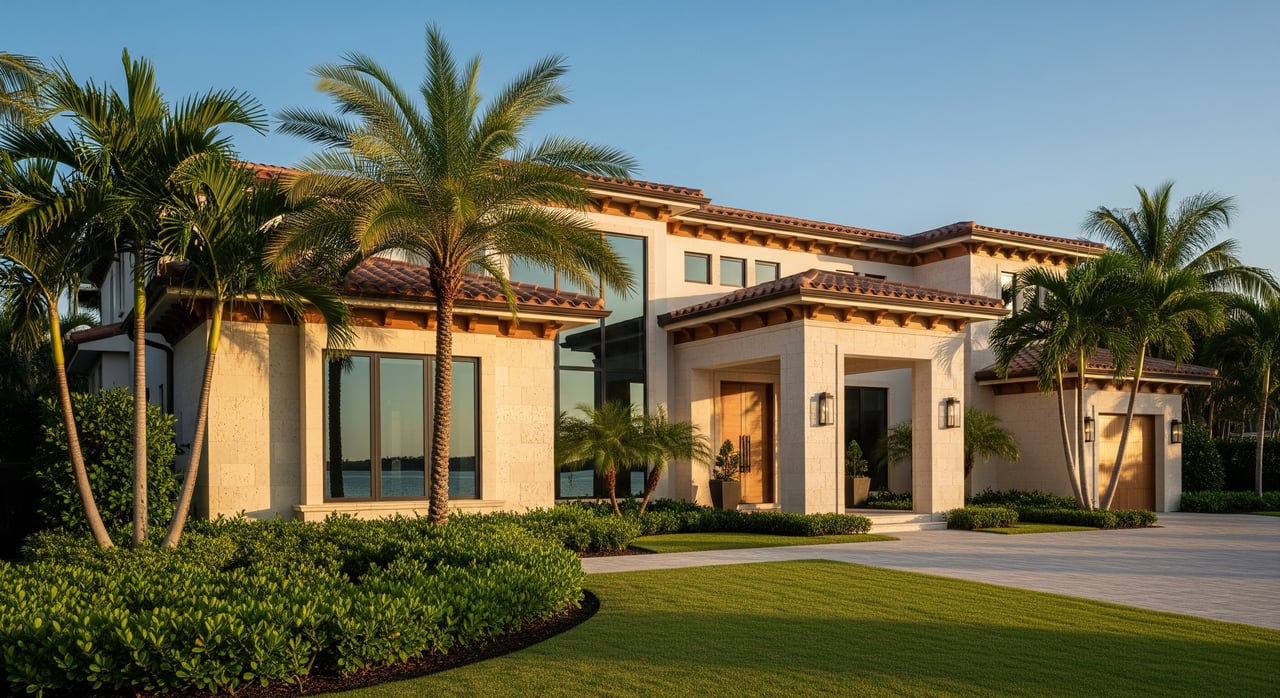
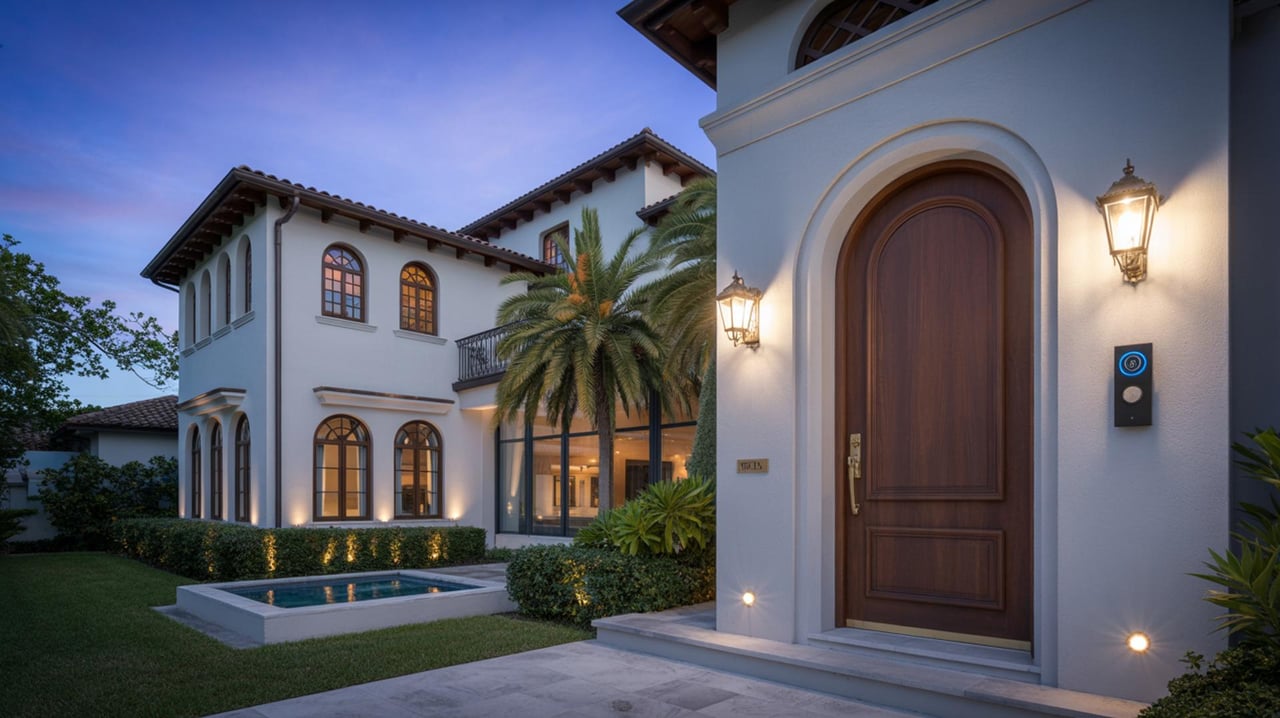
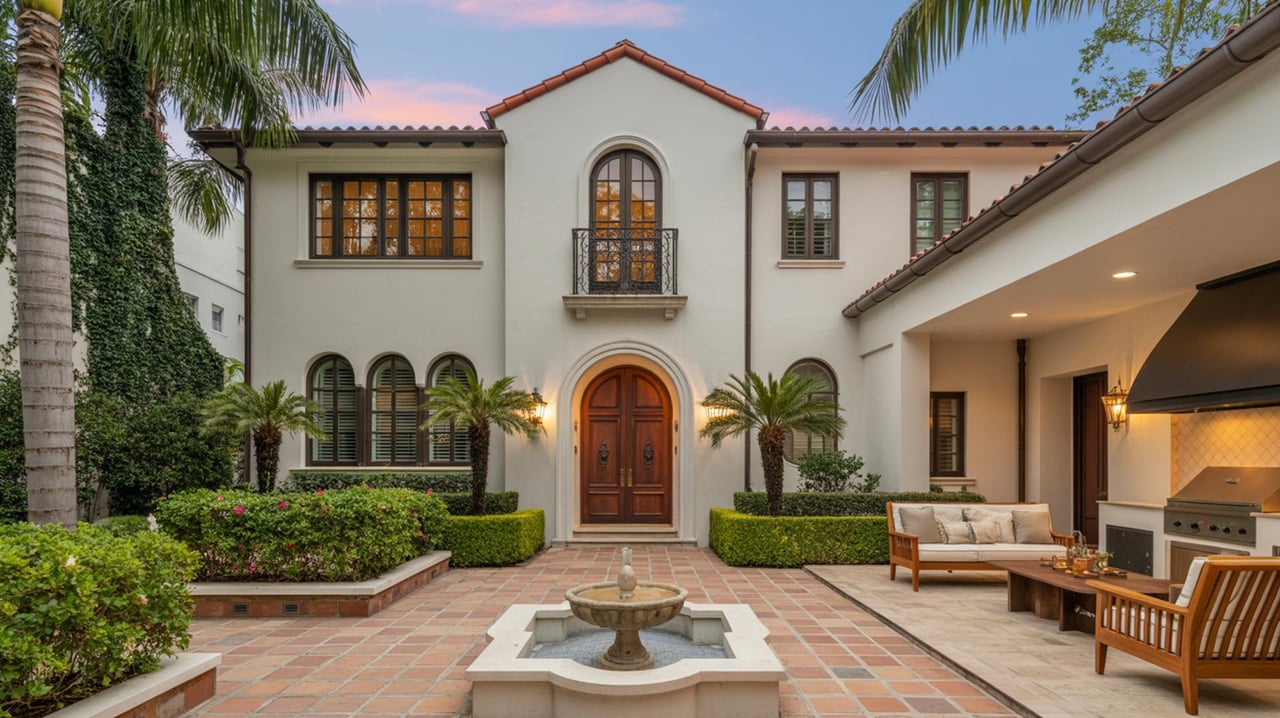
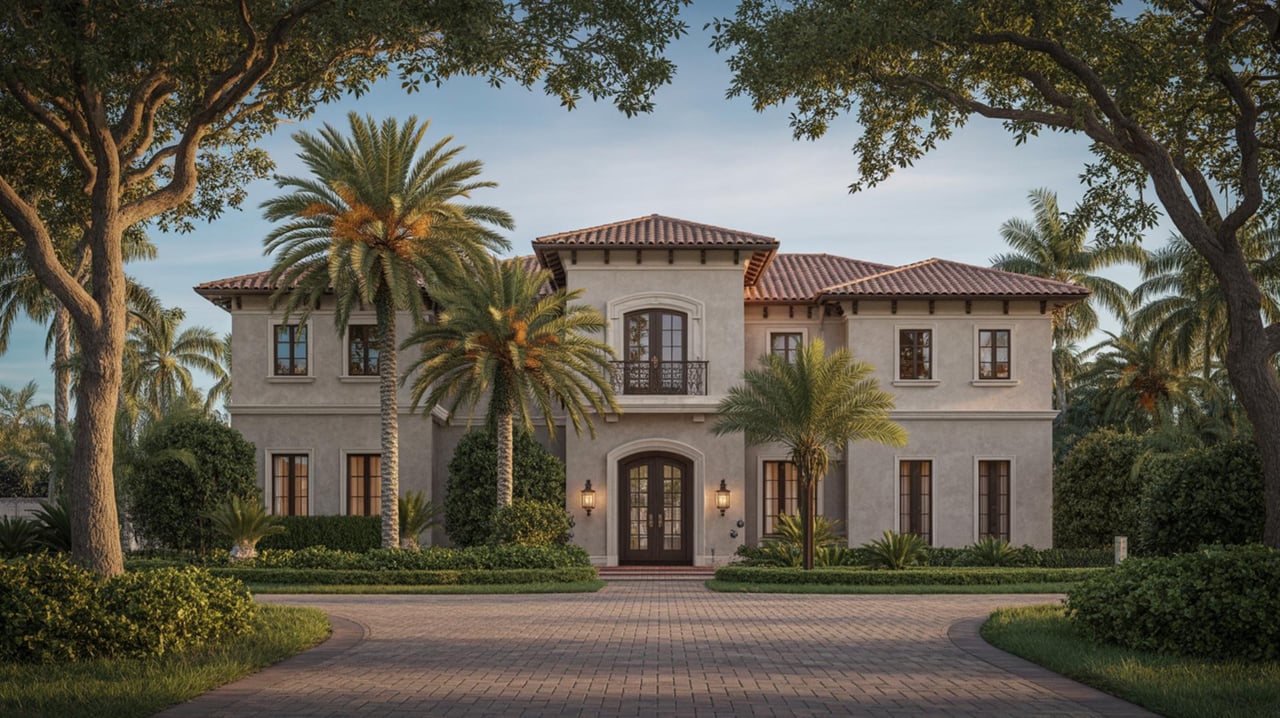
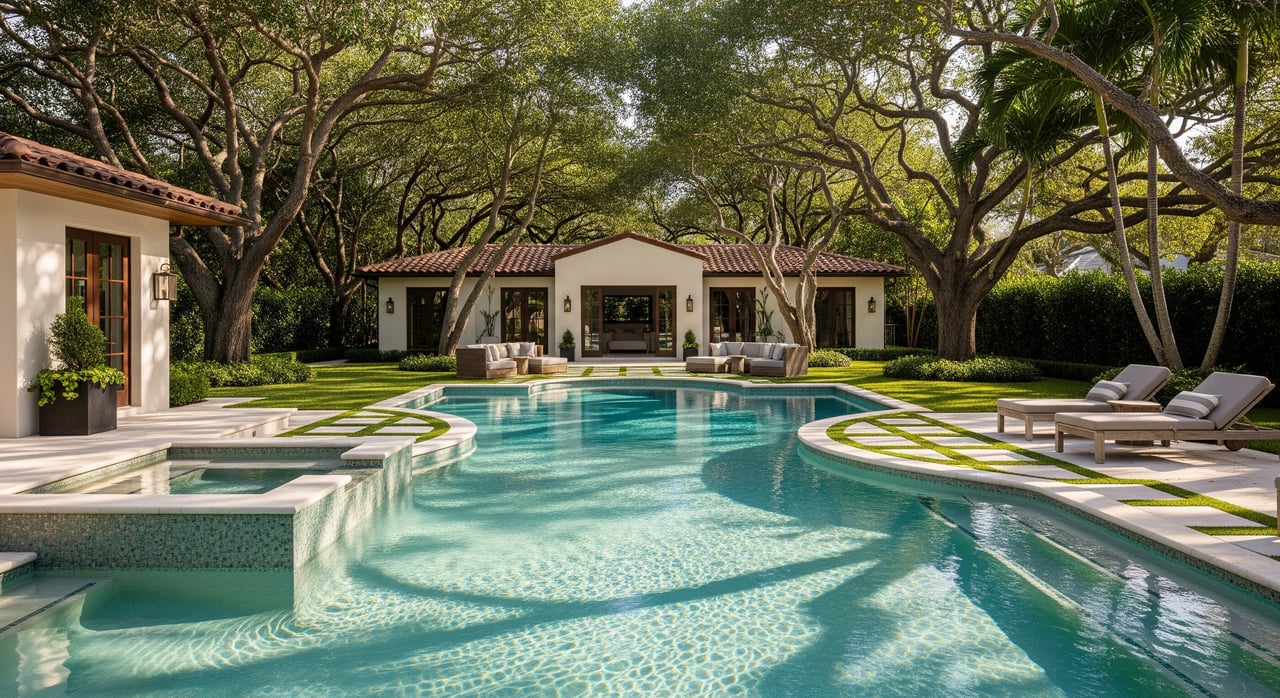
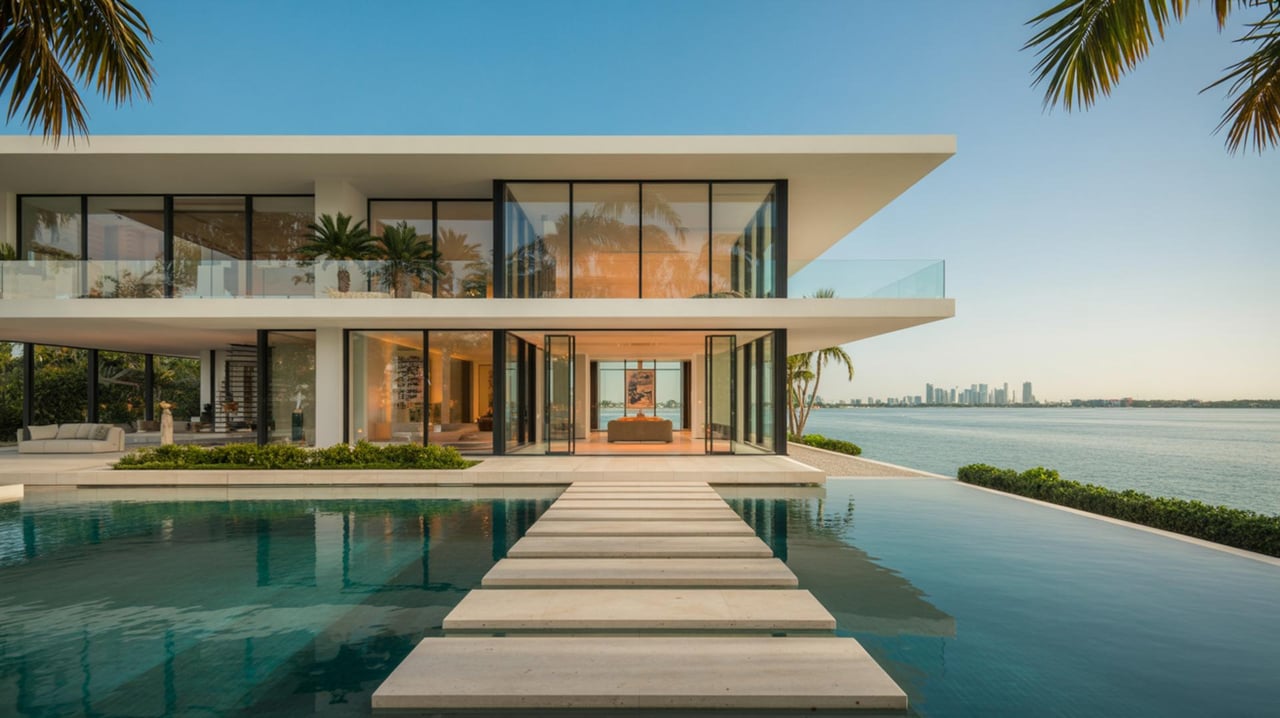
Mediterranean and Spanish Revival homes dominate historic enclaves like Coral Gables and Coconut Grove, defined by warm stucco walls, hand-painted tile, wrought-iron detailing, and clay tile roofs suited to the region's climate. Art Deco remains Miami Beach's signature, with its bold geometry and rounded corners now frequently paired with fully modernized interiors. Miami Modern, or MiMo, brings a mid-century tropical sensibility with flat rooflines, wood-paneled interiors, and playful architectural cutouts. And across the newest luxury projects, Coastal Contemporary design has become the default language, with soaring ceilings, floor-to-ceiling glass, and open-concept plans engineered to frame water and skyline views.
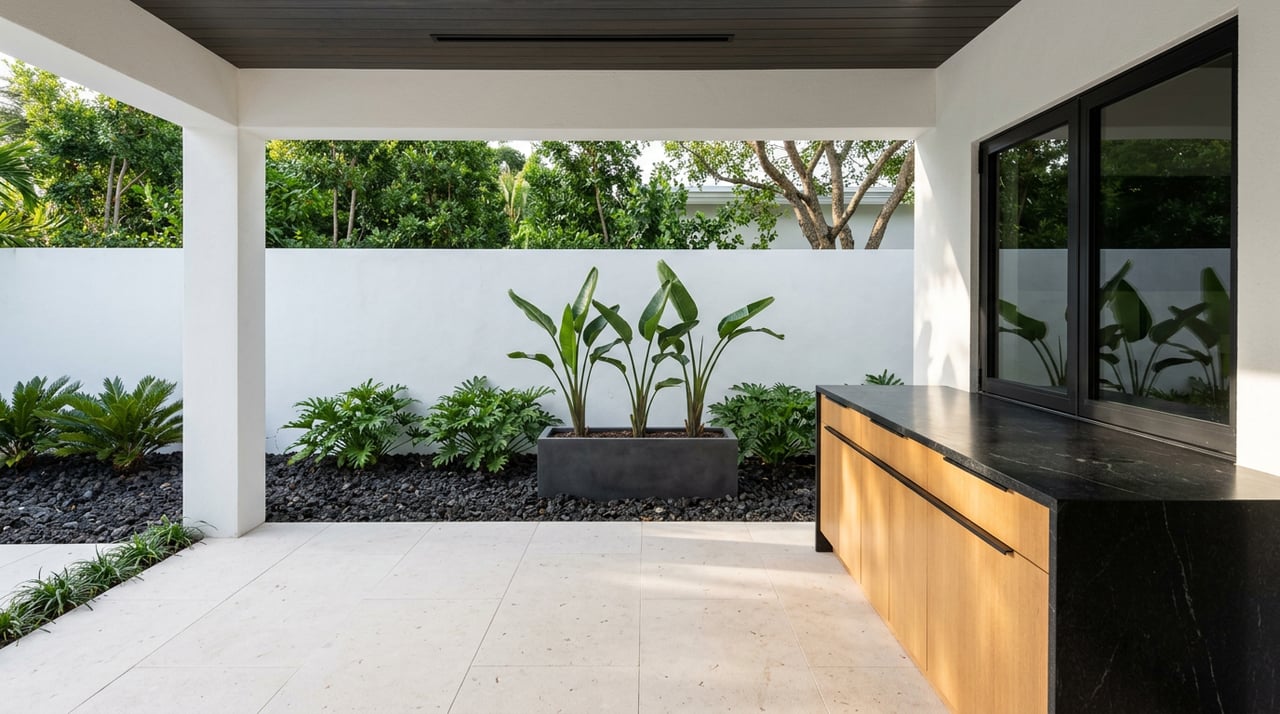
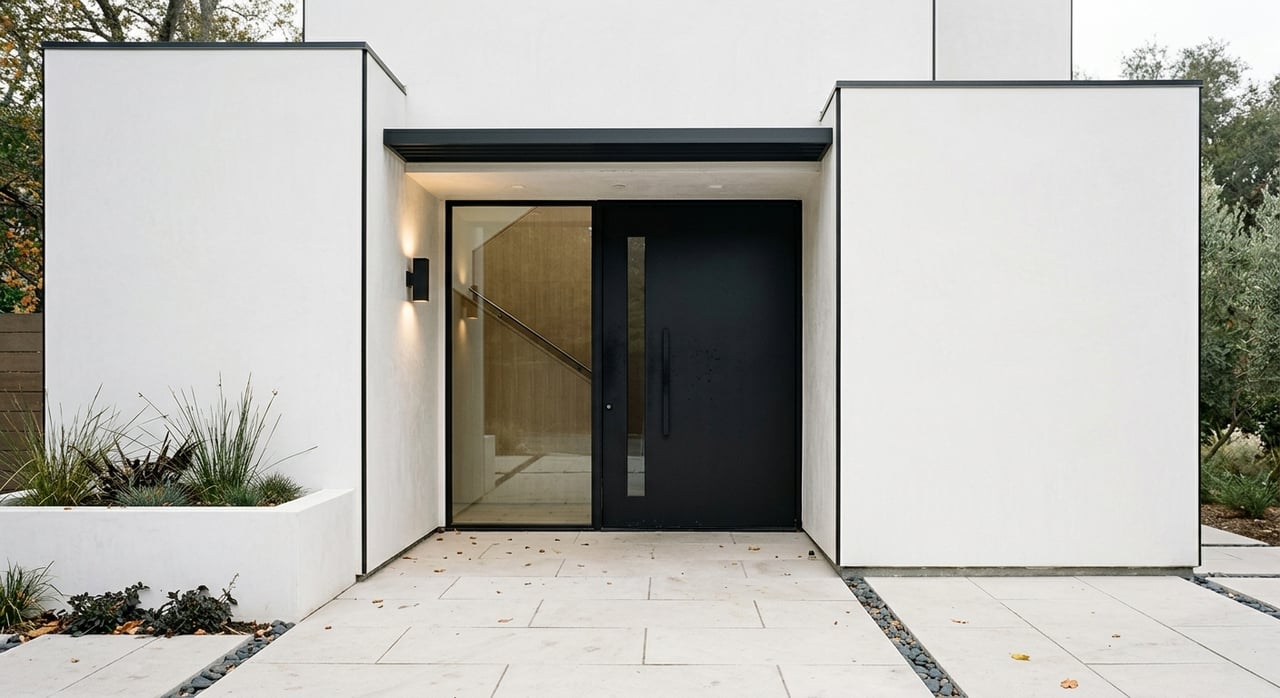
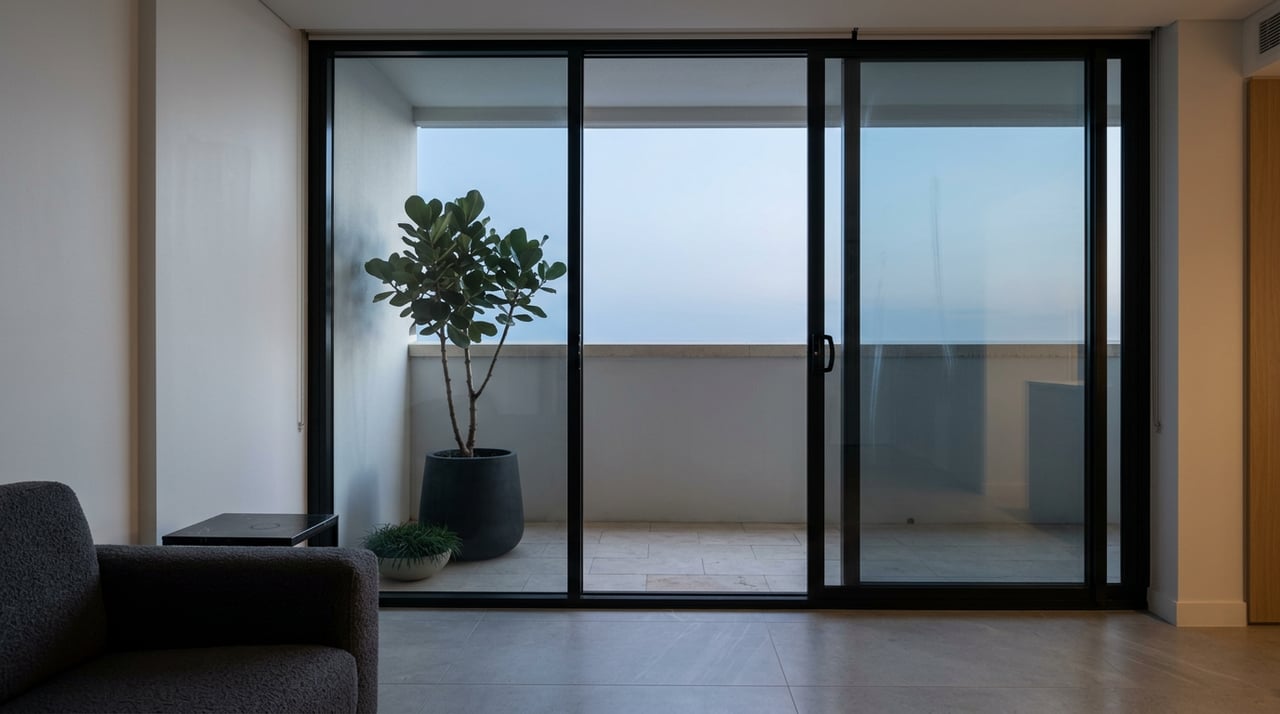
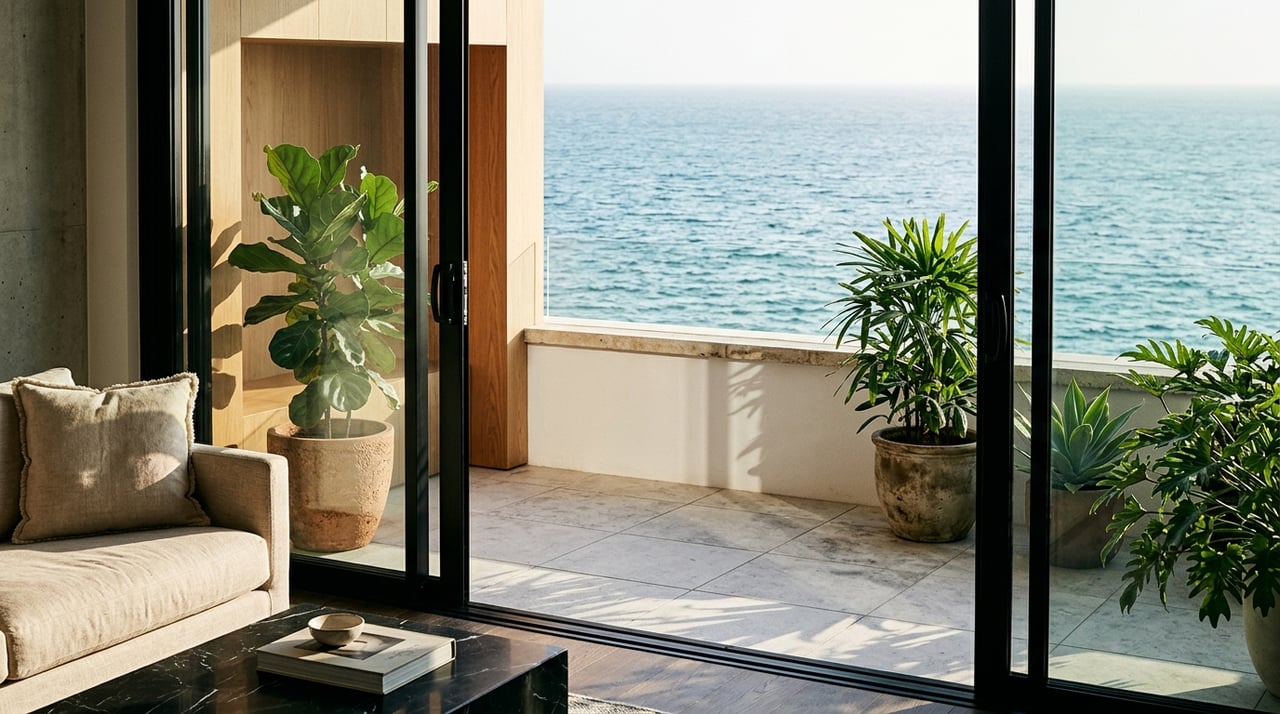
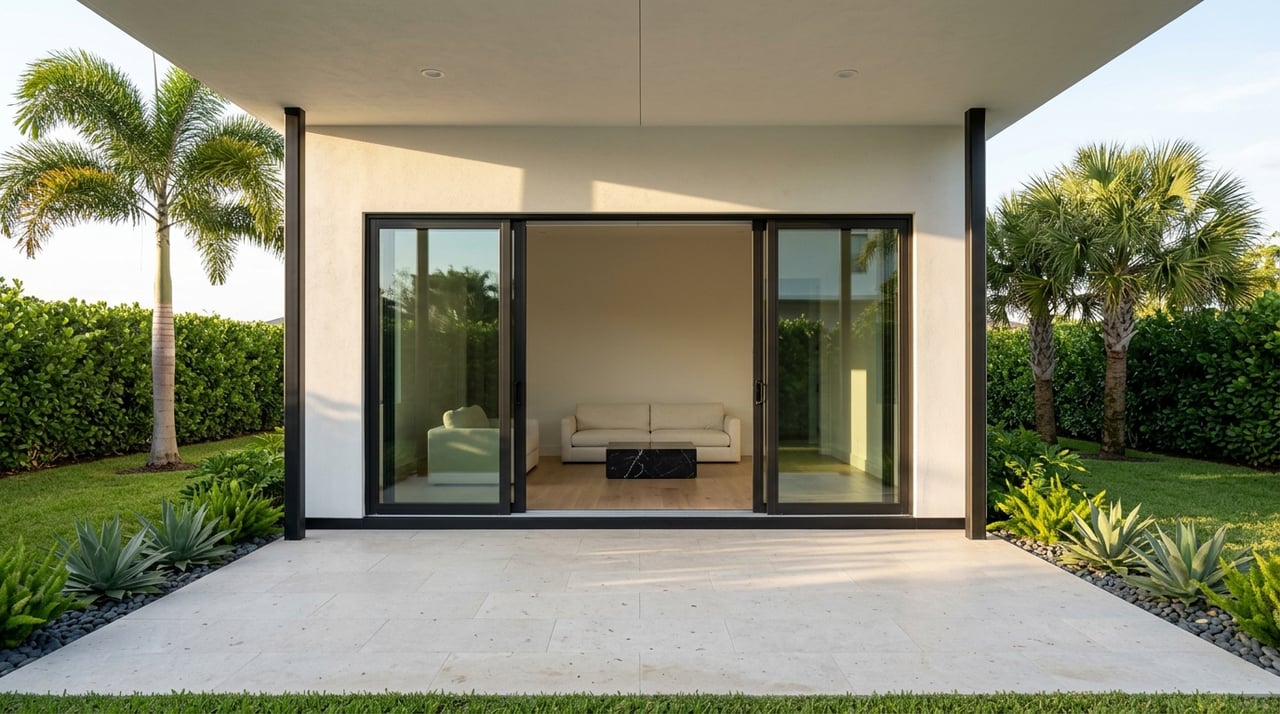
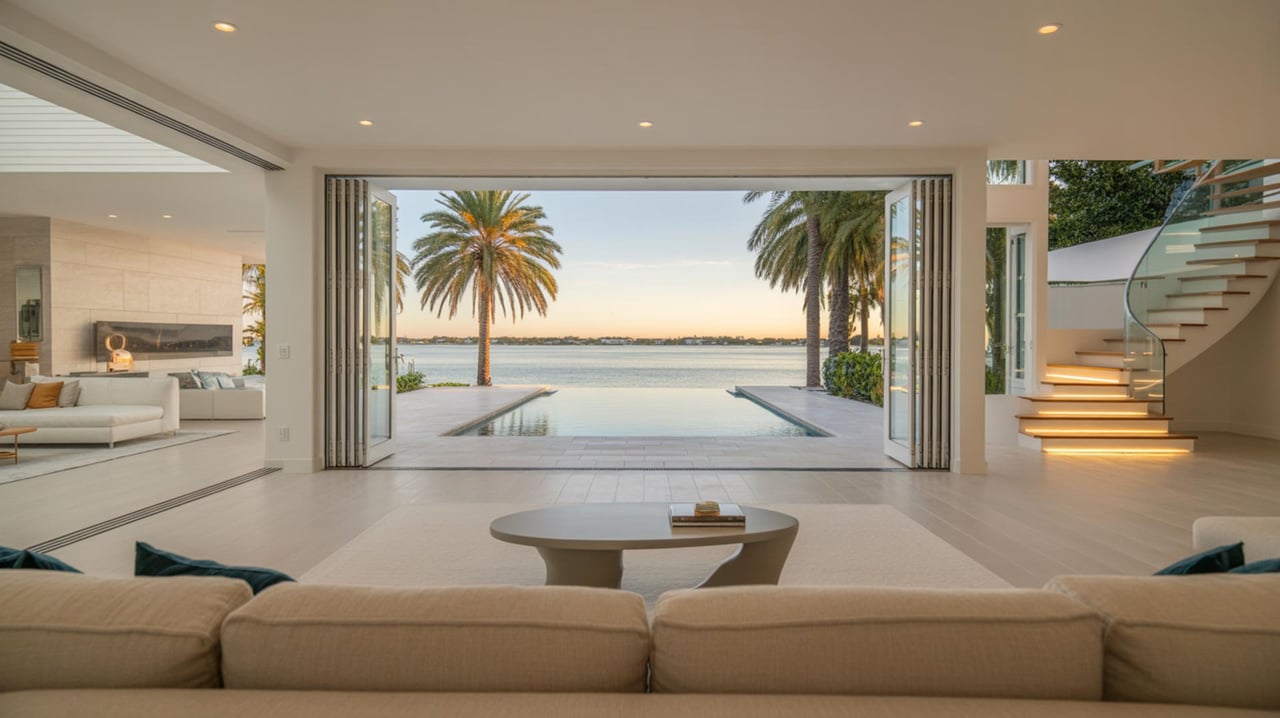
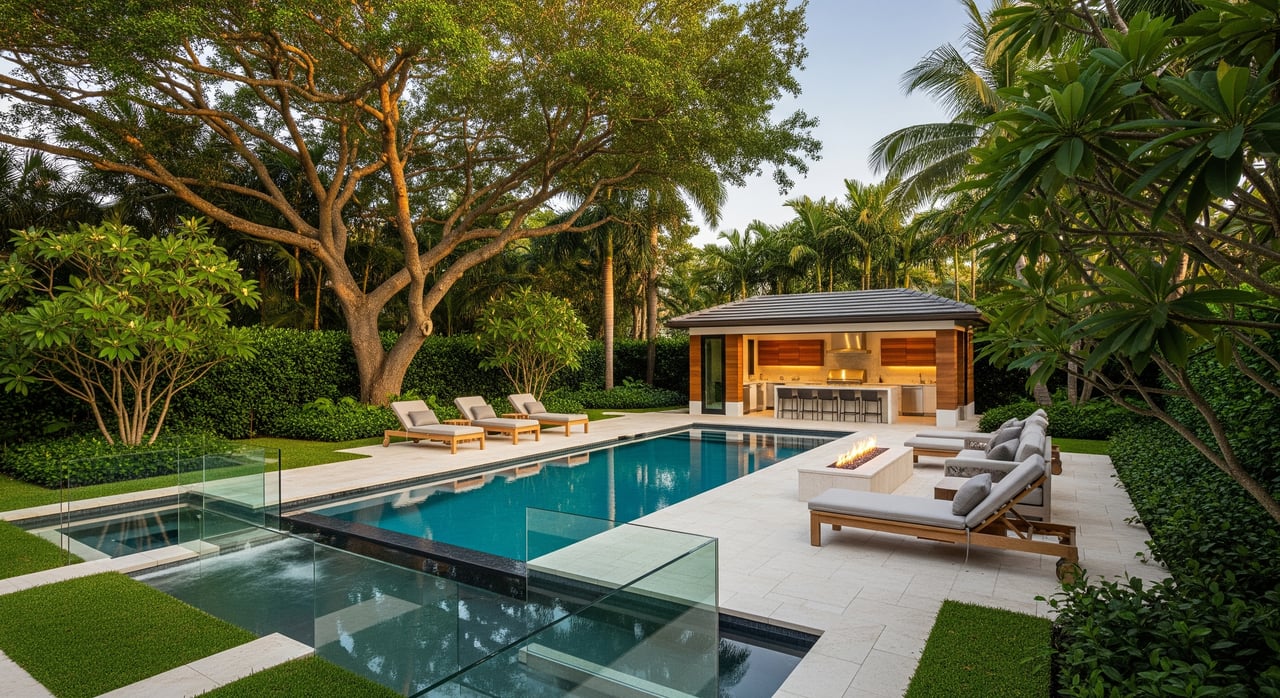
Recent design trends have pushed the market toward what many describe as quiet luxury. Sterile white minimalism has given way to warmer neutrals, tactile materials like raw plaster and honed stone, and a stronger emphasis on organic textures. Seamless indoor-outdoor transitions have become expected at the higher tiers, with continuous flooring bridging living spaces and terraces to eliminate visual breaks. And climate-resilient construction, including elevated foundations, hurricane-impact glass, and automated shading systems, is increasingly standard rather than optional.
Miami has firmly outgrown its old reputation as a seasonal playground. Today it operates as a year-round global metropolis where the intensity of New York meets the ease of the Caribbean. More than 70% of the population identifies as Hispanic or Latino, and over half of residents were born outside the United States, making the city a genuine cultural and commercial bridge to Central and South America. Spanish and English are spoken interchangeably, and daily life is shaped by Cuban, Venezuelan, Colombian, and broader Caribbean traditions.
The city's cultural calendar is anchored by Art Basel Miami Beach, and neighborhoods like the Design District and Wynwood function as living galleries year-round. Museums such as the Pérez Art Museum Miami keep the creative pulse steady between major events, while the culinary scene has climbed into elite territory with a wave of Michelin-recognized restaurants and world-class chef-owners.
Outdoor and wellness culture is central to the Miami lifestyle. With around 248 sunny days per year and a baseline temperature near 75°F, daily life is oriented outdoors. Running clubs, weekend sailing, cycling, and beach sports are woven into the social fabric, and residential towers increasingly integrate longevity-focused amenities such as cold plunges, red-light therapy, and advanced filtration systems. Many residents anchor their weekly rhythm around a compact micro-neighborhood, walking between cafés, farmers markets, and waterfront parks within a tight geographic radius.
Miami's educational ecosystem has matured alongside its economic growth, and families relocating here have access to a strong mix of high-performing public magnet schools, competitive charter networks, and elite private academies.
Miami-Dade County Public Schools consistently ranks among Florida's strongest districts and is particularly known for its specialized Magnet Programs in STEM, international relations, and the arts. Standout public and charter institutions include Doral Academy of Technology, which regularly places among the top middle schools in the state, TERRA Environmental Research Institute, a gold-standard magnet focused on environmental science and biomedical research, and MAST Academy on Key Biscayne, a maritime and science-focused campus perched directly on the water.
At the private level, Miami offers some of the most prestigious institutions in the Southeast. Ransom Everglades in Coconut Grove is widely regarded as one of the premier co-educational day schools in the region, offering rigorous college-prep alongside championship sailing. Gulliver Preparatory in Pinecrest is the largest top-tier private option and features a distinguished International Baccalaureate program. Carrollton School of the Sacred Heart in Coconut Grove offers an all-girls Catholic education with a strong leadership focus, while Belen Jesuit and Christopher Columbus remain influential all-boys Catholic preps whose alumni networks are woven deeply into Miami's business and civic life.
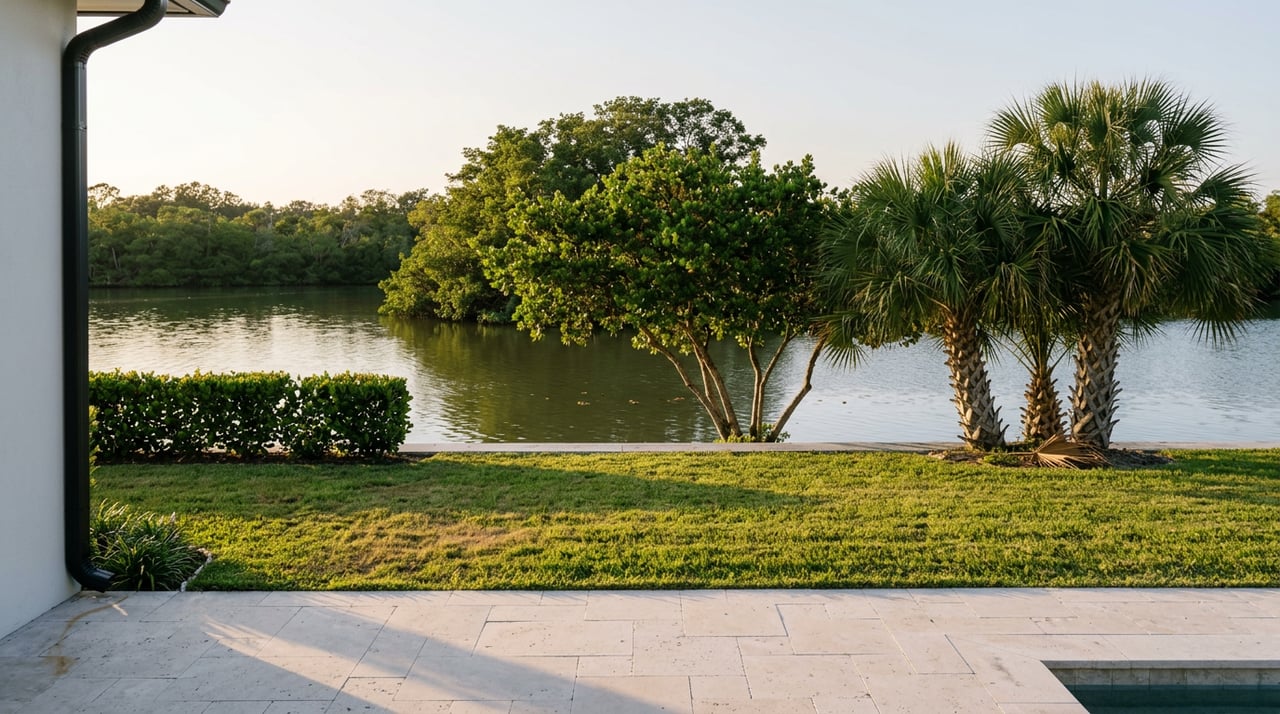
Miami's geography, bordered by the bay, the Atlantic, and the Everglades, gives residents access to an extraordinary range of outdoor experiences within a short drive of nearly any neighborhood. Recent investment in urban green space has only expanded those options.
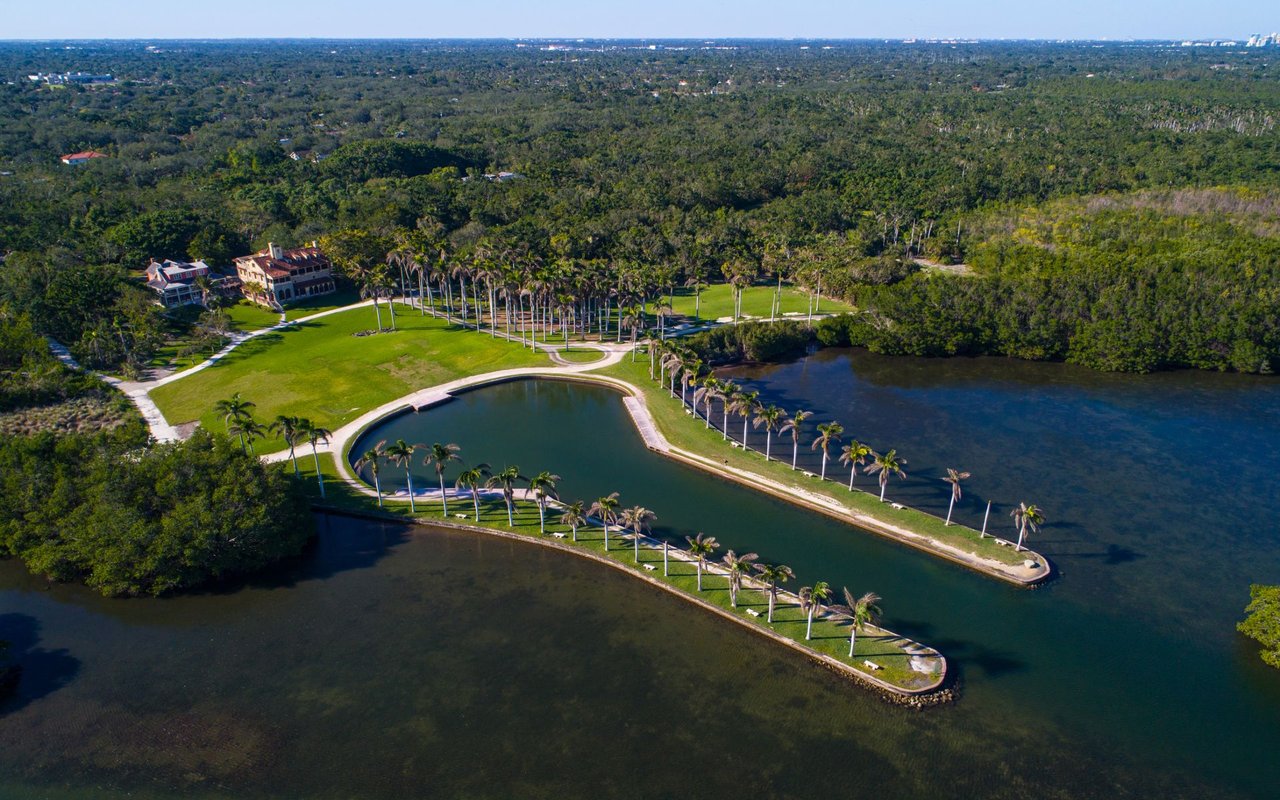
On the beach front, Crandon Park and Bill Baggs Cape Florida State Park on Key Biscayne offer a quieter, family-oriented counterpoint to the crowds of South Beach, complete with historic lighthouses, mangrove trails, and roaming peacocks. South Pointe Park sits at the southern tip of Miami Beach with panoramic views of cruise ships passing through Government Cut, while Matheson Hammock Park in Coral Gables is beloved for its tide-fed atoll pool and easy access to paddleboarding and kiteboarding.
The city has also invested heavily in new urban green infrastructure. The Underline, an ambitious ten-mile linear park being built beneath the Metrorail, is steadily connecting Brickell to Coral Gables and Doral with walking paths, native gardens, public art, and outdoor fitness zones. Miami Freedom Park, currently in active development, will introduce the 58-acre Jorge Mas Canosa Park alongside the new Inter Miami CF stadium, representing the largest new public green space built in Miami in generations.
For those drawn to the water, Biscayne National Park sits just south of the city and is 95% water-based, offering exceptional diving, fishing, and access to the historic stilt houses of Stiltsville. Farther north, Oleta River State Park delivers Florida's largest urban park experience, with miles of off-road bike trails and mangrove channels ideal for kayaking and manatee spotting.
Miami's culinary reputation has climbed into elite territory. The city now moves fluidly between hyper-exclusive tasting counters and neighborhood spots serving some of the best Cuban, Peruvian, Argentine, and Haitian food in the country.
The Michelin Guide's Florida edition has recognized several Miami establishments at the highest level. L'Atelier de Joël Robuchon in the Design District remains the state's only two-star destination, offering a signature French counter-style experience. In a groundbreaking development, Mutra in North Miami became the first kosher restaurant in the world to earn a Michelin Star. One-star standouts include COTE Miami, a modern Korean steakhouse in the Design District, The Surf Club Restaurant by Thomas Keller in Surfside, Ariete in Coconut Grove, and Boia De, a 30-seat contemporary Italian gem tucked into an unassuming Buena Vista strip.
Beyond the Michelin roster, the scene is being reshaped by major international arrivals. Hugo Toro's Gigi Rigolatto and Mimi Kakushi have opened within the reimagined Delano on South Beach, while Gaia made its U.S. debut in the South of Fifth enclave. Coral Gables has seen a steakhouse revival led by Daniel's, which ranked among the top ten steak restaurants in America within months of opening. Elite omakase counters continue to multiply, with Hiden in Wynwood, Ogawa in Little River, and Yasu Tanaka in the Design District leading a movement toward intimate, high-craft Japanese dining.
Shopping in Miami has largely moved beyond the traditional enclosed mall in favor of open-air, master-planned districts that combine luxury retail with public art, architecture, and dining.
The Miami Design District stands as the epicenter of ultra-luxury shopping in the Southeast, with flagship boutiques from Chanel, Hermès, Louis Vuitton, and Dior set against museum-quality public art installations. Bal Harbour Shops, on the northern edge of Miami Beach, offers a legendary open-air experience beneath a lush tropical canopy, blending premium boutiques like Gucci, Prada, and Saint Laurent with buzzy new dining anchors including Stephen Starr's steakhouse concepts.
Brickell City Centre brings the same energy into the financial core, its distinctive Climate Ribbon canopy channeling bay breezes across a multi-block development that pairs premium retail with entertainment and dining destinations like Casa Tua Cucina. Miami Worldcenter, the $6 billion downtown master-plan project, continues to unveil new experiential retail, lifestyle staples, and dining concepts across several blocks. Wynwood, meanwhile, has emerged as the frontier for trend-forward shopping, with ground-floor boutiques inside cutting-edge mixed-use towers focusing on streetwear, indie labels, immersive galleries, and artisan markets.
Miami's entertainment identity blends high culture, immersive street art, and world-class nightlife in a way few cities can match. During the day, Maurice A. Ferré Park anchors the downtown cultural corridor, home to the Pérez Art Museum Miami with its striking Herzog & de Meuron architecture, and the Phillip and Patricia Frost Museum of Science, which houses a 500,000-gallon gulf stream aquarium. The Adrienne Arsht Center, the second-largest performing arts complex in the country, hosts Broadway productions, the Miami City Ballet, and the Florida Grand Opera across state-of-the-art halls. For a less formal creative experience, Wynwood functions as an open-air street art gallery continuously refreshed by globally recognized muralists.
After dark, Miami reveals its legendary nightlife layers. E11EVEN operates as a 24/7 ultra-lounge, and Club Space remains famous for marathon sunrise terrace sets that have drawn top-tier electronic DJs for decades. For those preferring something more intimate, Dante's HiFi in Wynwood offers a vinyl-only listening bar experience, and hidden speakeasies tucked behind restaurants in Brickell and the Design District cater to a more elevated evening crowd. In Little Havana, Ball & Chain continues to define authentic Miami nightlife with live salsa, hand-crafted mojitos, and open-air dancing.
While Miami has historically been automobile-centric, major transit investments have significantly expanded connectivity and walkability across the region. Brightline, the higher-speed rail system operating out of the sleek MiamiCentral station, has redefined intercity travel by linking Miami with Fort Lauderdale, West Palm Beach, and Orlando in a fraction of the drive time. The Metrorail provides a 25-mile elevated spine running from Kendall through Coral Gables, Brickell, and Downtown to Miami International Airport, while Tri-Rail extends regional commuter service into Broward and Palm Beach counties.
At the local level, the fully automated Metromover offers free service throughout Downtown and Brickell and has become a daily lifeline for office commuters. The Underline continues to build out as a dedicated bike and pedestrian corridor beneath the Metrorail, and municipal trolley systems in Miami, Miami Beach, and Coral Gables provide free last-mile connections between neighborhoods. On the international side, Miami International Airport remains one of the busiest global hubs in the world and the primary U.S. gateway to Latin America and the Caribbean, while PortMiami holds its title as the Cruise Capital of the World.
Miami operates on a distinct tropical monsoon climate, and understanding that rhythm is essential for anyone considering a move here. The winter dry season, running from November through April, is the region's peak. Daily highs settle comfortably between 75°F and 82°F with low humidity and minimal rainfall, and life shifts almost entirely outdoors during this stretch. The summer rainy season, from May through October, brings consistent heat and humidity, with daily highs between 89°F and 92°F and heat index readings often pushing into the triple digits.
Afternoon convective thunderstorms are a defining feature of Miami summers, arriving with near-clockwork reliability between two and four in the afternoon and typically clearing within an hour. In the autumn months, particularly between September and November, King Tides can bring occasional sunny-day flooding to low-lying coastal enclaves like Miami Beach and Edgewater. Atlantic hurricane season runs from June 1 through November 30 and peaks between late August and October, which is precisely why Miami-Dade County enforces some of the strictest building codes in the country, requiring reinforced concrete construction and hurricane-impact glass on all new residential projects.
Miami's calendar is one of the busiest in the country, mixing multi-million dollar global spectacles with deeply rooted neighborhood traditions. Art Basel Miami Beach in December remains the crown jewel of North American art festivals, transforming the entire city into an experiential canvas with anchor exhibitions at the Miami Beach Convention Center and satellite fairs, pop-up lounges, and fashion afterparties scattered across Wynwood and the Design District. The Miami International Boat Show in February is one of the largest marine events in the world, and Ultra Music Festival in March draws over 150,000 electronic music fans to Bayfront Park. The Miami Open brings elite ATP and WTA tennis to Hard Rock Stadium each spring, followed shortly after by the Formula 1 Miami Grand Prix, a high-octane weekend that turns the stadium complex into a global destination for celebrities, executives, and racing fans.
At the neighborhood level, the annual Calle Ocho Music Festival in March takes over dozens of blocks in Little Havana as the largest Hispanic street festival in the Southeast. The Coconut Grove Arts Festival brings three days of juried fine art and waterfront strolling every February, and Viernes Culturales, held on the last Friday of every month along SW 8th Street, celebrates local Cuban-American heritage with open-air art, live music, and late-night gallery tours.
Buying, selling, or leasing in Miami is not something that should be navigated with generic advice or a surface-level understanding of the market. Every neighborhood carries its own pricing dynamics, architectural character, school considerations, and lifestyle rhythm, and the right guidance can meaningfully change both the outcome and the experience of a transaction.
Noel Barrientos of The Miami Home Group brings more than 14 years of sales and client service experience to buyers, sellers, and renters across Miami-Dade County, from luxury waterfront estates in Coral Gables and family homes in Pinecrest and South Miami to high-rise leases in Brickell and Miami Beach. Known for responsiveness, honesty, and a genuine commitment to his clients' goals, Noel treats every real estate journey as a personal one, guiding families through every step of the process with clarity and care.
Whether you are relocating to South Florida for the first time, moving up into a new home, or exploring the investment potential of the Miami market, Noel is available to help you make a confident and informed move.
Noel Barrientos | The Miami Home Group 📞 (786) 757-2838 📧 [email protected] 🪪 License #3521348
There's plenty to do around Miami, including shopping, dining, nightlife, parks, and more. Data provided by Walk Score and Yelp.
Explore popular things to do in the area, including Coquito de Puerto Rico, Walgreens, and Stop N'shop.
| Name | Category | Distance | Reviews |
Ratings by
Yelp
|
|---|---|---|---|---|
| Dining | 0.92 miles | 0 reviews | 0/5 stars | |
| Dining | 1.1 miles | 0 reviews | 0/5 stars | |
| Dining | 1.51 miles | 2 reviews | 1/5 stars | |
| Shopping | 0.73 miles | 0 reviews | 0/5 stars | |
| Shopping | 0.73 miles | 0 reviews | 0/5 stars | |
| Shopping | 0.88 miles | 1 review | 5/5 stars | |
| Shopping | 1.51 miles | 0 reviews | 0/5 stars | |
| Active | 0.48 miles | 0 reviews | 0/5 stars | |
| Active | 0.87 miles | 0 reviews | 0/5 stars | |
| Beauty | 0.23 miles | 0 reviews | 0/5 stars | |
| Beauty | 0.48 miles | 0 reviews | 0/5 stars | |
| Beauty | 0.48 miles | 0 reviews | 0/5 stars | |
| Beauty | 0.48 miles | 0 reviews | 0/5 stars | |
| Beauty | 0.6 miles | 0 reviews | 0/5 stars | |
| Beauty | 0.67 miles | 0 reviews | 0/5 stars | |
| Beauty | 0.73 miles | 0 reviews | 0/5 stars | |
| Beauty | 0.92 miles | 0 reviews | 0/5 stars | |
| Beauty | 0.98 miles | 0 reviews | 0/5 stars | |
| Beauty | 1.08 miles | 0 reviews | 0/5 stars | |
| Beauty | 1.14 miles | 4 reviews | 4/5 stars | |
| Beauty | 1.36 miles | 0 reviews | 0/5 stars | |
| Beauty | 1.4 miles | 0 reviews | 0/5 stars | |
| Beauty | 1.48 miles | 0 reviews | 0/5 stars | |
| Beauty | 1.55 miles | 0 reviews | 0/5 stars | |
|
|
||||
|
|
||||
|
|
||||
|
|
||||
|
|
||||
|
|
Miami has 649,452 households, with an average household size of 3. Data provided by the U.S. Census Bureau. Here’s what the people living in Miami do for work — and how long it takes them to get there. Data provided by the U.S. Census Bureau. 1,854,092 people call Miami home. The population density is 12,811 and the largest age group is Data provided by the U.S. Census Bureau.
Total Population
Population Density Population Density This is the number of people per square mile in a neighborhood.
Median Age
Men vs Women
Population by Age Group
0-9 Years
10-17 Years
18-24 Years
25-64 Years
65-74 Years
75+ Years
Education Level
Total Households
Average Household Size
Average individual Income
Households with Children
With Children:
Without Children:
Blue vs White Collar Workers
Blue Collar:
White Collar:
Miami FL
Miami FL